


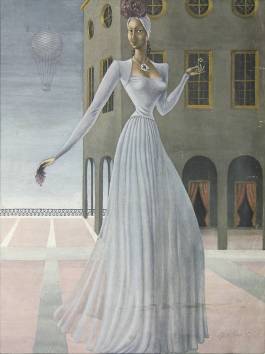
Milena Pavlović Barilli , Illustration for Vogue, December 1939, https://archive.vogue.com/article/1939/12/french-women-in-time-of-war
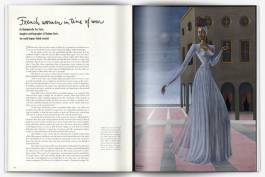
Milena Pavlović Barilli, Illustration for Vogue (American Edition), December 1939, https://archive.vogue.com/article/1939/12/french-women-in-time-of-war
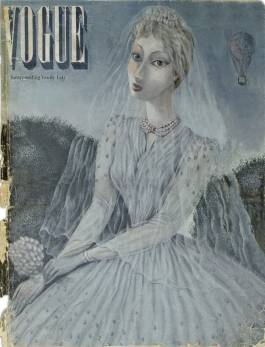
Milena Pavlović Barilli, “Blue Wedding Dress”, Cover of Vogue (American Edition), April 1940, https://archive.vogue.com/issue/19400401/print
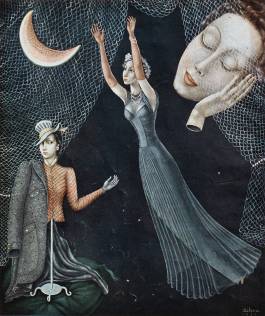
Milena Pavlović Barilli, “Hot Pink with Cool Grey”, Illustration published in Vogue (American Edition), January 15th, 1940.
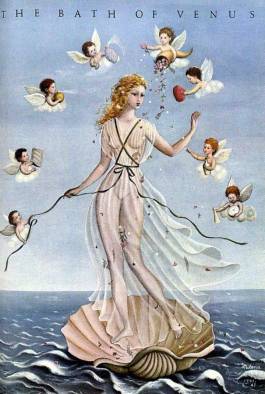
Milena Pavlović Barilli, “The Bath of Venus”, Illustration for Vogue (American Edition), May 1941.
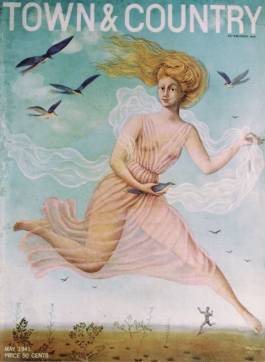
Milena Pavlović Barilli, Cover page, Town & Country, May 1941.
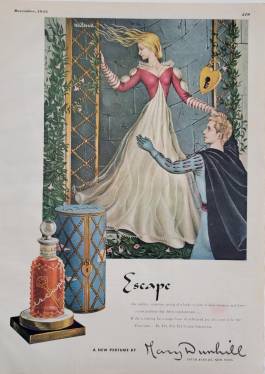
Milena Pavlović Barilli, Advertisement for Mary Dunhill perfume Escape, Esquire, 1943.
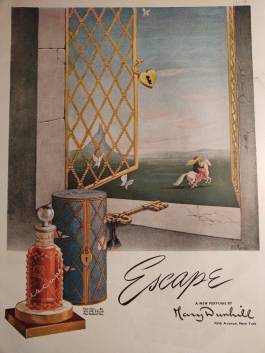
Milena Pavlović Barilli, Advertisement for Mary Dunhill perfume Escape, Esquire, 1944.
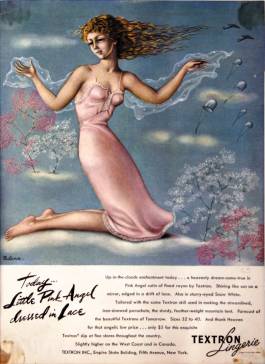
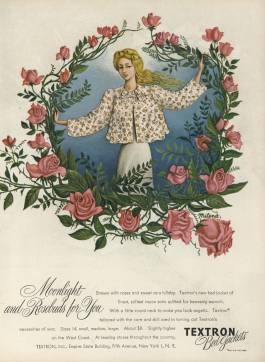
Milena Pavlović Barilli, Advertisement for Textron, 1944.
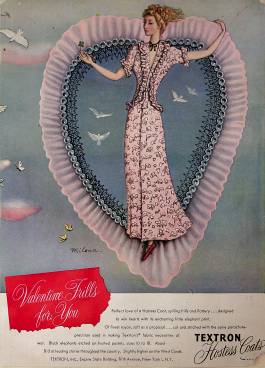
Milena Pavlović Barilli, Advertisement for Textron, 1944.
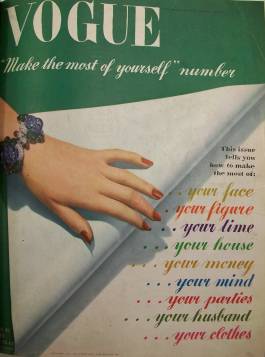
Milena Pavlović Barilli, Cover of Vogue (American Edition), April 1945, https://archive.vogue.com/issue/19410415
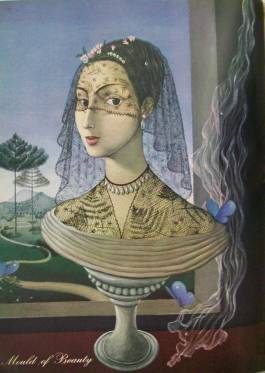
Milena Pavlović Barilli, “Model of Beauty”, Vogue (American Edition), April 1945.
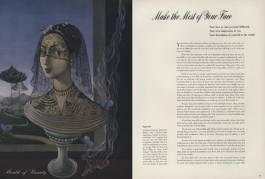
Milena Pavlović Barilli, “Model of Beauty”, Vogue (American Edition), April 1945.
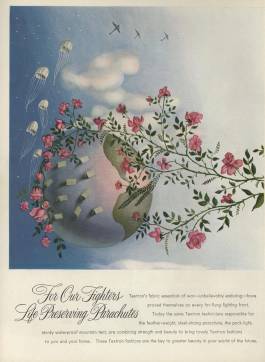
Milena Pavlović Barilli, Advertisement for Textron’s fabric, Vogue, 1945.
2009
MILENA PAVLOVIĆ BARILLI “BETWEEN WORLDS...”
Being between different worlds and inhabiting them all at the same time: the world of words and images, the East and the West, the past and the present, the world that tends upwards and the one that expands on the surface... This is what fascinates us most about Milena: her ability to “live” all these worlds simultaneously and to float freely between them. This painter and poetess of dual Italian-Serbian origin still fascinates us today with her perfect knowledge of five languages, her erudition gained from her art studies and deepened by her travels and stays in major European capitals, but above all her nomadic spirit, which has always pushed her further, towards different places in the real world and even more so towards those in her inner world.
The multitude of worlds she touched “forces” us to undertake an interpretative journey that is ultimately a voyage. Not to move or to “travel” towards a fixed destination, but for the delight of “wandering” between different universes created by human imagination in search of analogies and correspondences that can offer a more intricate and kaleidoscopic view of her quite distinctive poetics.
Milena's “nomadism” has often been the subject of critical analysis. Viewed from the perspective of the 1980s, it was associated with the behaviour of contemporary artists at the time: being a “nomad” not so much in a physical sense as in a poetic one, exercising total freedom to move along the vertical axis of time, immersing oneself in art history and choosing, quoting and mixing different stylistic or thematic motifs.
In fact, among the different “phases” of Milena's multifaceted production, the one created in the 1930s is formally closest to the spirit of her painting in the 1980s. Seen from today's perspective, however, the previous phase, created in the second half of the 1920s, appears more “contemporary”. It has rarely been the subject of critical reflection, as it is still considered too closely linked to the academic experiences of Munich and the teachings of von Stuck. Yet that sense of stylisation, that taste for oriental decoration, that vibration emanating from sinuous lines and strong colours seems to us to correspond more to the contemporary spirit. Perhaps this is because, today more than ever, art is infused with influences from the East or from cultural areas that aim to take centre stage on the global scene; or perhaps it is because the barriers between different languages and disciplines, such as art, design, and fashion, have almost completely disappeared.
The fact is that Milena's early works, viewed from today's perspective, offer us various insights for a reinterpretation in both historical and contemporary terms. The same applies to the other phases of her oeuvre and to her unique and rich artistic personality.
While at the height of post-modern trends, it was possible to recognise anticipatory impulses in her painting and in the way she embodied the role of artist, there are others that make her appear relevant today, when we talk about a condition of being between different cultural realities (“in between”) in order to embrace a notion of hybrid or multiple identity that is more complex and unanchored, and above all capable of bringing together, combining or separating different cultural codes.
Due to her origins, which blend different cultural DNA, her multilingualism and statelessness, Milena once again appears as a pioneering figure.
Her “being between worlds” does not only indicate an existential condition, a propulsion towards physical and geographical displacement motivated by the search for a more suitable cultural and intellectual environment, but also indicates a condition of openness and assimilation of different cultural impulses, which she channelled into a hybrid language that did not fear contamination, not only cultured but also “popular”.
In this context, Milena's works from the late 1920s merit attention. Seeing pop icon faces in artworks now seems entirely normal to us. Since the 1960s, our visual landscape has been flooded with images from cinema, fashion, advertising, and comics. Art, along with communication theory, semiotics, and other disciplines, have made us aware of the profound impact these “worlds” have had on our collective imagination. This is what makes this very young painter so fascinating, as she chose to depict the faces of celluloid legends, such as Valentino and others, on her canvases as early as the late 1920s. Other motifs she selected for her watercolours are also compelling: images that appear to come from the pages of the earliest glossy magazines, such as Vogue or similar, which throughout the decade that Scott Fitzgerald refers to as the “roaring Twenties”, dictated fashion and taste alongside cinema. As the exuberance of the “crazy years” came to an end, these works emerged as a “side project” to her academic pursuits.
Between 1927 and 1928, Milena, following her parents Bruno Barilli and Danica Pavlović, studied in Munich. However, unlike her parents, she did not enrol at the music academy but at the Academy of Fine Arts, where she was notably accepted into the class of one of the leading figures of the German Secession: Franz von Stuck.
Secession, Jugendstil, Liberty: these are all declinations of the first significant aesthetic movement, which, starting in 1884 when the term “Art Nouveau” was coined by Octave Maus and Edmund Picard, founders of the magazine “Les XX”, swept across Europe, radically changing its face. This powerful revolution, which began in Belgium and spread rapidly through Austria, Germany, France, Great Britain and Italy before extending to the rest of Europe and beyond, united all the arts for the first time, seeking to achieve a higher degree of social emancipation through aesthetic emancipation and environmental transformation. From this perspective, any Kantian distinction between the autonomous arts and the applied arts lost its raison d'être, because they were all part of this great wave of renewal. Thus, the 20th century began with the impulse to merge art and life as much as possible. Henri van der Velde not only designed buildings and their interiors, but also designed clothes for the ladies who would live in them, so that every structural and decorative element was part of the same design: that of a total aesthetic “revolution”. The same revolution that would then reach Vienna, gaining even more strength thanks to the workshops of the “Wiener Werkstatte”, which united art and craftsmanship under the guidance of its two founders, Josef Hoffmann and Koloman Moser, and a large number of collaborators, including Gustav Klimt, Oskar Kokoschka and Egon Schiele. But where this impulse had the greatest resonance was undoubtedly Paris: the absolute and undisputed capital of the “new”, which meant not only fashion but above all the way in which it is still perceived today.
In the 1920s and 1930s, Paris was the realm of Paul Poiret, the first true interpreter of the figure of the fashion designer as we understand it today, a tireless innovator and social catalyst who enriched fashion with numerous artistic impulses. He built a bridge between fashion and art through collaborations with Raul Dufy and other artists from the “Fauves” circle, collaborated with leading figures from the “Wiener Werkstatte”, wove into his creations an incredible fascination for exoticism and the Orient brought to Paris by Sergei Diaghilev's “Ballets Russes”, but above all, he initiated a more refined form of fashion illustration with the involvement of artists such as Paul Iribe, Georges Lepape and others. He pioneered the trend of involving artists in the creation of advertisements and illustrations for fashion magazines. One of the first to adopt this approach was Madeleine Vionnet, who enlisted the help of the futurist Thayaht. She was followed by other big names such as Jannine Lanvin, Jean Patou and Madamme Grès, who boasted collaborations with Iribe, Lepape, Georges Barbier, Christopher Demiston and others, until the 1930s, with major partnerships such as that of Elsa Schiaparelli, who collaborated with Salvador Dalí, and then with Christian Bérard, Marcel Vertes, Jean Cocteau, Leonor Fini, Alberto Giacometti and Kees Van Dongen. Among the artists who created some of the most original fashion illustrations and advertisements of this period were René Magritte, Giorgio de Chirico, Max Ernst, as well as the aforementioned Cocteau, Van Dongen and others. Although considered by artists to be a kind of compromise for economic purposes, the activity of an illustrator or “Cinderella art”, as it was often called, was of great importance, and for fashion magazines such as Vogue and Harper's Bazaar, it was the main source for the most beautiful and striking covers.
Vogue in particular, thanks to the editorial line set out by Conde Nast and Edna Woolman Chase, cultivated a team of exceptional illustrators such as Helen Dryden, George Wolf Plank, Georges Lepape, J.C. Leyendecker, Eduardo Benito, Charles Martin, Pierre Brisaud, André Marty and Mario Simon, whose drawings gave the magazine its cultured and refined tone, which has remained its trademark, and who dominated its pages until fashion photography took over in the 1950s.
This brief and summary excursion along the boundaries between art and fashion at the beginning of the 20th century could serve as a backdrop against which to place Milena and some of her works created during the late Art Deco period, which came to a definitive end with the Wall Street crash of 1929.
From 1927 to 1930, she created several works using watercolour techniques, entitled “Maja”, “Seville”, “Fantastic Composition - Ghost”, 'Fantasma', “Paesaggio Giapponese”, “Iris”, “La Danza di Salomè” and others depicting young women with titles such as “Donna in poltrona”, “Donna in abito nero” and similar. These are stylised drawings that combine the sinuous lines typical of Art Nouveau with the more characteristic tones of the Art Deco style, which dominated the second half of the 1920s. These images strike the right balance between expressive and decorative power, creating harmony between the extreme schematisation of lines and coloured surfaces and the dynamic and vibrant visual effect. First and foremost, they are compositions that capture the eye and the imagination through their choice of subjects, which include samurai and Japanese masks, Egyptian dancers or travellers on the Nile delta, seductive women in colourful, fairy-tale dresses, or imaginary portraits of high society women, with a slightly decadent and elusive allure, emancipated and dressed in the latest fashion.
Undoubtedly, some images echo the Secessionist spirit that Milena had assimilated from Maestro von Stuck, a great interpreter of romantic symbolism and decadence in the 1920s. This can be seen most clearly in works that draw on mythological themes, such as “The Dance of Salome” – a motif that fascinated and obsessed French and German Symbolists, from Odilon Redon to Gustave Moreau and Franz von Stuck himself. Unlike these artists, who captured the dark and demonic charm of Salome – a seductive female figure in whom Eros and Thanatos are sublimated – Milena seems more attracted to the sense of dance, movement and absolute female protagonism that dominates the scene, immersed in a mysterious nocturnal passage. In addition to Salome, what transpires from other works in this series is a marked fascination with exoticism, sensual and enigmatic, but above all theatrical, just as the reception of the Orient was at the time, mediated through fashion and art. An obsession with Japanese art had already taken hold in Europe by the end of the 19th century, as evidenced by the paintings of Claude Monet, James McNeill Whistler, and James Tissot, as well as the writings of Émile Zola. This trend then deepened with the arrival of the Ballets Russes, which enchanted Paris with the fantasy of Léon Bakst's costumes and sets, the skill of dancers such as Vladislav Nizinsky and the music of Igor Stravinsky. The interest in all things distant and exotic was such that Jean Cocteau founded the art and literature magazine Shéhérazade in 1910, for which Paul Iribe himself designed the cover. This spirit, which tended to combine exoticism with luxury, forging a new type of elegance based on the most unexpected combinations of styles and eras, found its great prophet in the figure of Paul Poiret. History and geography intertwine in his imaginative creations, giving fashion the possibility of infinite excursions into “other” worlds, both real and imaginary. These excursions were also captured by great illustrators such as Georges Barbièr, who, in addition to creating highly refined fashion illustrations, dedicated wonderful drawings to scenes inspired by the Ballets Russes. These illustrations combine a taste for decoration and oriental stylisation with elegance and dynamic movement. The same taste for ornamentation combined with a sense of arabesque composition that transforms the human figure into a fantastic and exotic mask, barely discernible in the tangle of lines and colours, characterises the work of another great illustrator of Eastern European origin: Romain de Tirtoff, known as Erté. In these illustrations, which, like cinema, marked an era, we find several formal correspondences with Milena's aforementioned works.
This does not mean that there were direct influences or relationships, but it helps to complete the picture of this young painter who, as she ventured out into the world beyond her native land, picked up on certain impulses that could indicate that her references were not only academic and historical-artistic, but also more “popular”, coming from what was the seed of mass culture, such as Hollywood cinema or other sources where fashion, design, graphic design and art intersect. Above all, these works testify to her keen interest in fashion and decoration in general, a talent that has sometimes been underappreciated but which today undoubtedly deserves to be re-evaluated.
The decorative aspect of a work of art is a highly valued element. It is an essential quality. It is not pejorative to say that an artist's painting is decorative.' In his book “DesignArt”, recently published by the Tate Museum, Alex Coles begins by citing reflections on the decorative value of the art of a great artist such as Henri Matisse. Starting from this significant historical reference, he examines the works of some of the most influential contemporary artists whose work marked the transition between the 20th and 21st centuries.
With the term “designart”, borrowed from Sonia Delaunay, Coles encompasses a series of crossovers between art, fashion and design that have characterised the work of Takashi Murakami, Tobias Rehberger, Jorge Pardo, Sylvie Fleury and Andrea Zittel.
Today, in a climate of renewed interest in some of the fundamental stages of Modernism and reinterpretations by contemporary artists, the perspective has changed, allowing approaches that make it possible to observe Milena's works, such as those mentioned above, in a different light; a light that makes them appear closer and more in tune with the spirit of our time.
An indication of Milena's interest in fashion, albeit indirect, can be found even earlier, in some “experiments” that arose during her studies at the Munich Academy: in particular, in a copy of Thomas Gainsborough's famous “Portrait of a Boy in a Blue Suit”. The choice of this specific motif may indicate that the painter felt a particular affinity with the English portraitist, who was able to leave his mark on an era due to his keen sense of fashion and style. Gainsborough, the son of tailors, cultivated a strong interest in fashion and sought to increasingly refine the techniques and ways of representing it in his portraits of the protagonists of English high society, through which he recounted an era that truly marked the birth of fashion.
The second half of the 18th century, the Rococo period, marked the beginning of that highly complex phenomenon we know today as fashion; a phenomenon that French painters first captured gathered around the court of Louis XV, but whose first theoretical hints, at the dawn of the Neoclassical period, were given by English artists such as Sir Joshua Reynolds and his contemporaries, including Gainsborough. Reynolds' theoretical reflections in “Discourses on Art” laid the foundations for a specific component, which he defined as “timelessness”, which art would attribute to fashion whenever it approached this heterogeneous universe that feeds on the ephemeral and the changeable.
Judging by Milena's works created between 1927 and 1928, it is precisely her fascination with the ephemeral, glamour and luxury that captures her attention.
Fashion is her main theme: a world inhabited by sinuous female bodies wrapped in fabrics decorated in the manner of Poiret or half-hidden by transparent veils, a realm of seduction and desire; a world made up of idealised projections, which appears as elusive as a dream.
Her works are like illustrations for magazines, which she enhances by adding titles such as “Vogue” or “Life”, as if they were real covers. They were created following a series of sketches for clothing designs (1926), where the young painter showed off her imagination as a fashion designer, playing with geometric shapes and transparencies, designing clothes that interpreted a taste for elegance that did not fear excess and was nourished by the exotic impulses that characterised the fashion of the 1920s.
From the attempt to “reconstruct” the affinities that Milena perceived in her early days, several potential ideas emerge, in which fashion, style and taste – all undisputed bearers of the spirit of the times – played a significant role. Being the “daughter” of an era that tended to flatten the differences between the visual arts and the applied arts, approaching these worlds was certainly not heretical for her. On the contrary, this first phase is only the beginning of a much more complex journey, comprising trespassing and “immersions” into worlds that, over time, will appear increasingly distant and mysterious. If, in the phase preceding the great crisis, these imaginary journeys took her to evanescent and exotic worlds that cinema and fashion were able to represent so well, in the next phase, which coincided with the call for a “return to order”, she turned to other, more intimate and inner dimensions, which she explored through painting and poetry. After the 1920s, an era that moved with a strong expansive impulse, seeking to “embrace” other worlds and unite all the arts, another era began, moving along the axis of time, immersing itself in history and memory, where it sought refuge from external torments.
A similar transition also occurred in Milena's life and work, for whom travels between Germany, Spain, France, and England marked the 1920s. This way of being “between places” was reflected in a continuous “floating” between different poetic worlds that nourished her early work. With the 1930s and her arrival in Rome, her expressive language crystallised, becoming a reflection on the meaning of that mental, psychological and physical condition of being “between” worlds, both real ones and those brought to life by the painters and poets of the time. The 1930s in Rome were characterised by a strong spirit that united art and poetry under the sign of a dark, baroque, and surrealistic aesthetic, rich in historical reminiscences and visionary images.
The painters of the Roman School, poets, intellectuals and all those who frequented meeting places such as Caffè Aragno, debating the ideas of “Valori Plastici” and “La Ronda”, were members of a cultural circle in which Milena's father, Bruno Barilli, was one of the most highly esteemed figures.
We see him portrayed in Amerigo Bartoli's painting “Gli amici al caffè” (Friends at the Café, 1930), which is a sort of “group photo” in which we find many of the leading figures of the cultural and artistic world: Emilio Cecchi, Vincenzo Cardarell, Carlo Socrate, Ardengo Soffici, Antonio Baldini, Pasqualina Spadini, Giuseppe Ungaretti, Mario Broglio, Armando Ferri, Quirino Ruggeri, Roberto Longhi, Riccardo Francalancia, Aurelio Saffi, as well as Bartoli himself and the imperturbable waiter Malatesta.
Milena moved in this milieu, which was also frequented by Giorgio de Chirico, Alberto Savinio, Mario Mafai, Antonietta Raphael, Alberto Moravia and his sister, the painter Adriana Pincherle, and then Scipione, Capogrossi, Guttuso, Pirandello, Levi and many others.
Milena exhibited twice: in 1932 at the “Galleria di Roma” and in 1937 at the “Galleria della Cometa”. Inaugurated by the Duce himself in 1930 and curated by journalist and writer Pier Maria Bardi, the Galleria di Roma developed a remarkable exhibition programme involving artists such as Spadini, Mafai, Scipione, de Pisis, Pirandello, Kokoschka, de Chirico, Modigliani, as well as writers and poets, initiating a practice that would develop even more radically in the Galleria della Cometa, founded in 1935 with the support of Countess Mimmi Pecci-Blunt and curated by painter Corrado Cagli and poet Libero de Libero. The exhibitions of artists, among whom Cagli himself stood out, followed by Mirko, Janni, Manzù, Afro, Mafai, Guttuso, Severini and Milena Barilli, were accompanied by presentations by writers such as Ungaretti, Bontempelli, Alvaro, Cecchi, Solmi, de Chirico, Savinio, Soffici, Sinisgalli, Moravia and Montale.
This suggests that the relationship between art and poetry here appears to be a game of mirrors, and it is no coincidence that the motif of the portrait and self-portrait dominates, as poets and painters often mirrored each other, sharing the same references that emerged from ancient and biblical mythology.
They evoked the Muses and Sirens, hoping for a return to a “nouvel humanisme” and resurrected 15th-century masters such as Masaccio, Mantegna, Piero della Francesca, Paolo Uccello, and Botticelli, as well as great poets like Boccaccio and Dante.
Convinced that “art is a mythological fact”, they imbued their rhymes and canvases with references in which epic history intersects with commedia dell'arte; heroes and harlequins seemed to inhabit the same “limbo” where the air is saturated with mystery and melancholy.
The interest in humanism that emerged in the 1930s was nothing more than the resumption of a search for renewal in the field of art with models of great cultural depth (such as humanism), which had begun about ten years earlier with Longhi and Carrà and, at the same time, through the theoretical experience linked to the Rondist circle, of which Bruno Barilli himself was a member.
From this perspective, it is interesting to observe Milena's work, which is poetically and spiritually close to the Roman intellectual climate but distinguishable for its expressive language, which has more subtle tones than the pictorial style of the other protagonists of the Roman School, whose imprint was much more expressionist.
Her exhibitions aroused interest and were positively received by the Roman art world; they were “in tune” with the cultural debate, but at the same time, they maintained a specificity that testifies to the fact that Milena's language channelled more complex and varied cultural experiences. While her work initially drew on less “cultured” influences, such as the world of cinema and fashion, in the second phase, her references became explicitly linked to history and art history. In this sense, they correspond to an era that tends to look back to past eras, to an archaic or classical “elsewhere” that seeks to evoke a sense of peace and stability.
The need for renewal and echoes of the fifteenth century, when attempts were first made to revive antiquity, are evident not only in art but also in fashion illustrations.
Georges Lepape revisited Botticelli's Venus motif for the cover of Vogue (1931), inaugurating a new trend in fashion illustrations that abandoned orientalist features and tones in favour of a more classical, Renaissance style.
Looking back not only leads us to explore the boundless horizons of the past, but also takes us into an even vaster and more unfathomable realm, that of the psyche, the unconscious, dreams and memories.
And so inner worlds emerge on the surface, settling on the skin and body, changing the meaning of "inside" and "outside," of dressing and undressing.
Surrealism marks the beginning of a love affair between art and fashion, taking both to the highest peaks of extravagance and provocation. Nothing was too shocking for Elsa Schiaparelli and her “playmates” Salvador Dalí and Jean Cocteau, and there were no photos or illustrations more imaginative and enigmatic than those created by Man Ray, Cecil Beaton, Horst P. Horst, Christian Berard and Eduardo Benito at the dawn of the Second World War.
The inclination towards proto-Renaissance models or towards a multitude of worlds hidden beyond the threshold of consciousness, which animated art, literature, cinema, and even fashion in the 1930s, also influenced Milena, giving rise to a unique poetics built on a complex network of references. She moved according to a nomadic impulse, which first led her to roam through the ethereal worlds of cinema and fashion, and then to immerse herself in history and art history, whose mythological and metaphorical dimensions offered her the opportunity to speak about the present. A subjective and intimate present, which emerges in all its emotional intensity as soon as we attempt to piece together the various fragments that made up her verses and paintings. Poetry and painting gave shape to her changing inner landscapes, detached and distant from the contingencies of the surrounding world.
Reality, harshly shaken by war, instead enters her work through the “back doors”: on the margins of the fairy-tale and dreamlike scenes created for fashion and lifestyle magazines such as Vogue, Harper's Bazaar and the like, small grey aeroplanes appear, barely visible against blue backgrounds, parachuting supplies and aid, just as the Allied planes did over the battlefronts that inflamed the old continent.
While in the late 1920s in Munich and Paris, she sought to grasp the features of this seductive world, in the early 1940s in New York, Milena was welcomed by the fashion world as a mature artist, whose contribution was appreciated precisely for her very particular pictorial language. Fashion, which once again became part of her work, offered a new perspective, adding another piece to the puzzle that helped complete her kaleidoscopic image.
Built on the desire to push herself further, to explore unknown and elusive realms, to drift “between the different worlds” of fashion, cinema, art, and poetry, Milena embodies the image of a multifaceted artist who remains relevant today.
Published in the book “Milena Pavlović Barilli - pro futuro (1909 - 1945) - Teme, simboli, značenja”, authors: Lidija Merenik, Irina Subotić, Dobrila Denegri, Zoran Blažina, Snežana Kragulj, Ljiljana Petrović, Ingrid Huljev, Ed. HERAedu, Belgrade, 2010.
Milena Pavlović Barilli , Illustration for Vogue, December 1939, https://archive.vogue.com/article/1939/12/french-women-in-time-of-war
Milena Pavlović Barilli, Illustration for Vogue (American Edition), December 1939, https://archive.vogue.com/article/1939/12/french-women-in-time-of-war
Milena Pavlović Barilli, “Blue Wedding Dress”, Cover of Vogue (American Edition), April 1940, https://archive.vogue.com/issue/19400401/print
Milena Pavlović Barilli, “Hot Pink with Cool Grey”, Illustration published in Vogue (American Edition), January 15th, 1940.
Milena Pavlović Barilli, “The Bath of Venus”, Illustration for Vogue (American Edition), May 1941.
Milena Pavlović Barilli, Cover page, Town & Country, May 1941.
Milena Pavlović Barilli, Advertisement for Mary Dunhill perfume Escape, Esquire, 1943.
Milena Pavlović Barilli, Advertisement for Mary Dunhill perfume Escape, Esquire, 1944.
Milena Pavlović Barilli, Advertisement for Textron, 1944.
Milena Pavlović Barilli, Advertisement for Textron, 1944.
Milena Pavlović Barilli, Cover of Vogue (American Edition), April 1945, https://archive.vogue.com/issue/19410415
Milena Pavlović Barilli, “Model of Beauty”, Vogue (American Edition), April 1945.
Milena Pavlović Barilli, “Model of Beauty”, Vogue (American Edition), April 1945.
Milena Pavlović Barilli, Advertisement for Textron’s fabric, Vogue, 1945.