


2025
2013
KAAT DEBO: WE WOULD START EACH EXHIBITION WITH EMPTY SPACE, AND WE WOULD BUILD A SHOW AS A COMPLETE VISUAL AND SENSUAL EXPERIENCE
“Wonderingmode”
Conversations on Fashion Curating
2013
While working on the exhibition project “Wonderingmode” at the Centre of Contemporary Art in Torun, I carried out in-depth research into emerging designers and creatives. Linda Loppa, Kaat Debo, Helena Hertov, Annemartine van Kesteren, and Stefan Siegel offered valuable insights and connections.
After mainly curating art exhibitions, creating this show on fashion meant I had to adopt a different method, approach, and attitude. This prompted me to reflect on the practice of fashion curation, and I revisited the interviews I conducted with curators who were role models for me at the time.
Therefore, I included edited versions of earlier conversations with some of the curators published in Cura magazine.
Fashion curation was a very new subject in Poland, and republishing interviews was an important addition to the catalogue accompanying the show.
While re-editing interviews, I also received updated visuals from some of my interlocutors, which is why I wanted to include these shorter, reviewed versions here, along with new pictures and their biographical notes from that time.
Kaat Debo
After studying literature at the Universities of Antwerp and Berlin, Kaat Debo joined MoMu, Antwerp’s Fashion Museum, as a curator in 2002. She has curated shows of “The Antwerp Six”, Maison Martin Margiela, Bernhard Willhelm, Veronique Branquinho, and Stephen Jones, among many others. In 2009, she became director of MoMu. Under her supervision, this institution has opted for a dynamic approach that exceeds the static character of the average museum. Debo believes that for a fashion museum to have any relevance, it needs to focus on celebrating and elucidating the designers who are working today. She regularly lectures and writes on contemporary fashion.
Dobrila Denegri: Fashion curator is still a relatively new form of professional profile, which is now getting to be more defined and even thought on an academic level, but it wasn’t so when you were starting. How did you get involved in fashion, and what was your formation as a fashion curator?
Kaat Debo: My involvement in fashion developed gradually and in connection with more practical than theoretical aspects, since it started just at the time when MoMu was opened in Antwerp in 2001. Its first director, Linda Loppa, was looking for collaborators, and I applied for the job. For both of us it was very exciting process because lack of specific academic formation provided us with greater level of openness to experiment and shape the profile of this new-born institution in more empiric and intuitive way. Although for us it was very clear from the very beginning that what interests us is not merely displaying garments, but creating a certain discourse about fashion in its totality. Fashion is a visual field. It deals with images and creates imagery. These were the initial premises for each exhibition project that we undertook and realised in MoMU. We would start each exhibition with entirely empty space and we would build a show as a complete visual and sensual experience, each time around a different concept, theme or author.
Today, this aspect of exhibition design is still very important, as well as the whole collaborative process and dialogue with the designer to whom we are dedicating the show. For example, when preparing the exhibition of Walter Van Beirendonck in MoMU, we have worked intensively with him to give dynamism to the space and to the presentation of his collections, insisting on accessories, shoes, details or on the movement of mannequins to overcome those limitations that an exhibition of garments necessarily has. Clothes are made for the body in movement; they have to be worn. It is always a new challenge to find solutions to present garments in a way which is not static and conventional, and naturally, which hasn’t been seen already.
DD: What were the challenges for you when you started to direct MoMU in Antwerp, and what guided you in the choice of designers to whom you dedicated solo exhibitions like Veronique Branquinho, Maison Martin Margiela, Bernhard Willhelm and others?
KD: When I invite the designer to stage a solo exhibition, what I'm truly offering him/her is the chance to reflect on their work. What we also aim to do, when showcasing contemporary fashion or fashion in general, is to provide context. Many traditional museums don't do this; they focus solely on the garment, which is interesting but doesn't tell the full story of fashion. Sometimes, it can also be engaging to focus an exhibition on a house or a designer, to illustrate how they communicate their fashion or how they sell it. For example, in our Margiela exhibition, we had a theme centred on the stores. For some designers, it's valuable to show their position within the fashion system and how they respond—whether they react against it, or perhaps not at all. To give people perspective on fashion, all these elements need to be considered, and we try to present them visually. Exhibiting the garments alone with a long wall text doesn't truly engage people – it doesn't appeal to them or evoke a feeling. Fashion is closely tied to emotions, so it's not just about understanding but also about feeling. Fashion is a visual medium, and we aim to respect that. We strive to work in the same way—using visual impact to attract our audience’s interest and involvement.
DD: How would you define fashion “curating” in relation to your own practice, especially concerning the exhibitive formats you have developed at the Fashion Museum in such an important centre for contemporary fashion as Antwerp?
KD: One important aspect is selection. There are designers who can create collections and achieve significant commercial success, but for me, as a curator, it is much more interesting to observe how certain designers have been able to build their own strong and recognisable imagery. To present this imagery in a broader context, to showcase all the related aspects of each designer's work rather than focusing solely on garments, is our primary aim. This approach is reflected not only in how we conceive and organise exhibitions but also in the way we approach our collection. It is not only about garments as end products but also about all the additional and supporting elements that form the complete visual identity of a designer.
DD: Do you see pages of the magazine also as a potential “exhibitive” or “curatorial” space? For some time, you have been editor-in-chief of “A Magazine”, which was commissioned and “curated” by a different fashion designer every six months. Among others involved were: Maison Martin Margiela, Yohji Yamamoto, Haider Ackermann, Jun Takahashi / Undercover, Martine Sitbon, Veronique Branquinho, Kris van Assche, etc. How was it to work with designers within this kind of framework?
KD: Yes, of course, a magazine is also a potential space for exhibition, even if it functions in quite a different way, mainly because we have to work within a two-dimensional, plain space. It’s somewhat a limitation but also a prompt for the designer to develop innovative solutions for blending image and text. For me, each issue was a new and exciting experience, which I like to compare to working on the exhibition catalogue, another fascinating medium we need to explore when discussing “curating” and exhibiting. In the case of “A Magazine,” I observed that for all the invited designers, involvement in the visual aspect always took precedence.
Published in “Wonderingmode”, Ed. Centre of Contemporary Art, Torun, 2013.
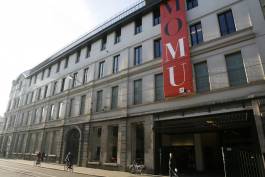
MoMu Building, Photo by Annick Geenen.
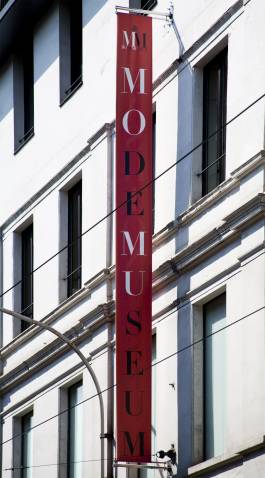
MoMu Building, Photo by Sonja Dewolf.
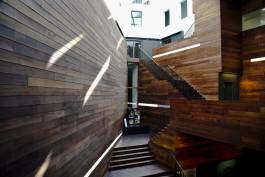
MoMu Building, Photo by Sonja Dewolf.
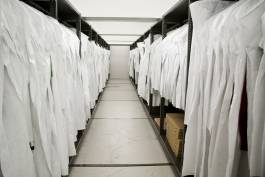
MoMu Archive Collection, Photo by Sonja Dewolf.
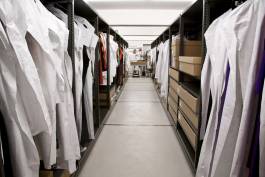
MoMu Archive Collection, Photo by Sonja Dewolf.
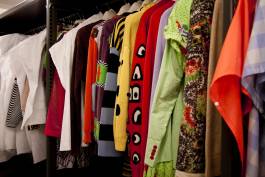
MoMu Archive Collection, Photo by Sonja Dewolf.
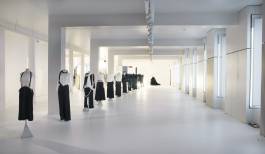
Image of the Yohji Yamamoto exhibition, “Dreamshop”, 2006, Photo by Ronald Stoops.
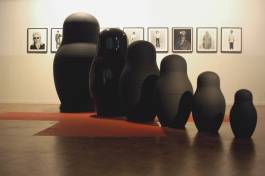
Katharina Prospekt: “The Russians” by AF Vandevorst, 2006, Photo by Ann Vallé.
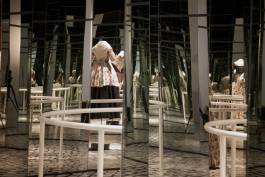
“Living Fashion: Women’s Daily Wear 1750–1950 from the Jacoba de Jonge Collection”, 2012, Photo by Ronald Stoops.
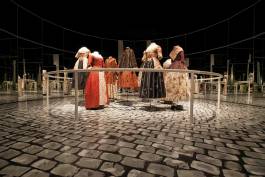
“Living Fashion: Women’s Daily Wear 1750–1950 from the Jacoba de Jonge Collection”, 2012, Photo by Ronald Stoops.
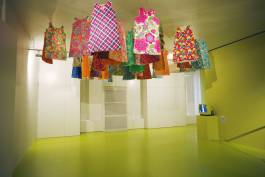
“Paper Fashion!”, 2009, Photo Boy Kortekaas.
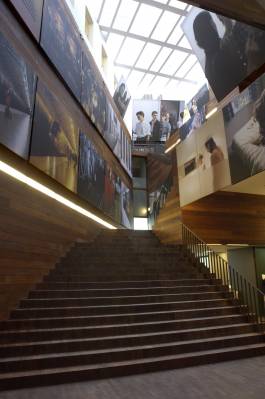
“Jerwood. Free & Framed”, Photo by Jacques Sonck.
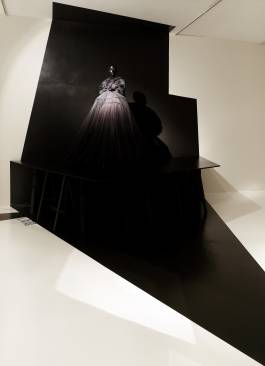
“Zwart / Black”, Photo by Frederik Vercruysse.
2025
“Wonderingmode”
Conversations on Fashion Curating
2013
While working on the exhibition project “Wonderingmode” at the Centre of Contemporary Art in Torun, I carried out in-depth research into emerging designers and creatives. Linda Loppa, Kaat Debo, Helena Hertov, Annemartine van Kesteren, and Stefan Siegel offered valuable insights and connections.
After mainly curating art exhibitions, creating this show on fashion meant I had to adopt a different method, approach, and attitude. This prompted me to reflect on the practice of fashion curation, and I revisited the interviews I conducted with curators who were role models for me at the time.
Therefore, I included edited versions of earlier conversations with some of the curators published in Cura magazine.
Fashion curation was a very new subject in Poland, and republishing interviews was an important addition to the catalogue accompanying the show.
While re-editing interviews, I also received updated visuals from some of my interlocutors, which is why I wanted to include these shorter, reviewed versions here, along with new pictures and their biographical notes from that time.
Kaat Debo
After studying literature at the Universities of Antwerp and Berlin, Kaat Debo joined MoMu, Antwerp’s Fashion Museum, as a curator in 2002. She has curated shows of “The Antwerp Six”, Maison Martin Margiela, Bernhard Willhelm, Veronique Branquinho, and Stephen Jones, among many others. In 2009, she became director of MoMu. Under her supervision, this institution has opted for a dynamic approach that exceeds the static character of the average museum. Debo believes that for a fashion museum to have any relevance, it needs to focus on celebrating and elucidating the designers who are working today. She regularly lectures and writes on contemporary fashion.
2013
KAAT DEBO: WE WOULD START EACH EXHIBITION WITH EMPTY SPACE, AND WE WOULD BUILD A SHOW AS A COMPLETE VISUAL AND SENSUAL EXPERIENCE
Dobrila Denegri: Fashion curator is still a relatively new form of professional profile, which is now getting to be more defined and even thought on an academic level, but it wasn’t so when you were starting. How did you get involved in fashion, and what was your formation as a fashion curator?
Kaat Debo: My involvement in fashion developed gradually and in connection with more practical than theoretical aspects, since it started just at the time when MoMu was opened in Antwerp in 2001. Its first director, Linda Loppa, was looking for collaborators, and I applied for the job. For both of us it was very exciting process because lack of specific academic formation provided us with greater level of openness to experiment and shape the profile of this new-born institution in more empiric and intuitive way. Although for us it was very clear from the very beginning that what interests us is not merely displaying garments, but creating a certain discourse about fashion in its totality. Fashion is a visual field. It deals with images and creates imagery. These were the initial premises for each exhibition project that we undertook and realised in MoMU. We would start each exhibition with entirely empty space and we would build a show as a complete visual and sensual experience, each time around a different concept, theme or author.
Today, this aspect of exhibition design is still very important, as well as the whole collaborative process and dialogue with the designer to whom we are dedicating the show. For example, when preparing the exhibition of Walter Van Beirendonck in MoMU, we have worked intensively with him to give dynamism to the space and to the presentation of his collections, insisting on accessories, shoes, details or on the movement of mannequins to overcome those limitations that an exhibition of garments necessarily has. Clothes are made for the body in movement; they have to be worn. It is always a new challenge to find solutions to present garments in a way which is not static and conventional, and naturally, which hasn’t been seen already.
DD: What were the challenges for you when you started to direct MoMU in Antwerp, and what guided you in the choice of designers to whom you dedicated solo exhibitions like Veronique Branquinho, Maison Martin Margiela, Bernhard Willhelm and others?
KD: When I invite the designer to stage a solo exhibition, what I'm truly offering him/her is the chance to reflect on their work. What we also aim to do, when showcasing contemporary fashion or fashion in general, is to provide context. Many traditional museums don't do this; they focus solely on the garment, which is interesting but doesn't tell the full story of fashion. Sometimes, it can also be engaging to focus an exhibition on a house or a designer, to illustrate how they communicate their fashion or how they sell it. For example, in our Margiela exhibition, we had a theme centred on the stores. For some designers, it's valuable to show their position within the fashion system and how they respond—whether they react against it, or perhaps not at all. To give people perspective on fashion, all these elements need to be considered, and we try to present them visually. Exhibiting the garments alone with a long wall text doesn't truly engage people – it doesn't appeal to them or evoke a feeling. Fashion is closely tied to emotions, so it's not just about understanding but also about feeling. Fashion is a visual medium, and we aim to respect that. We strive to work in the same way—using visual impact to attract our audience’s interest and involvement.
DD: How would you define fashion “curating” in relation to your own practice, especially concerning the exhibitive formats you have developed at the Fashion Museum in such an important centre for contemporary fashion as Antwerp?
KD: One important aspect is selection. There are designers who can create collections and achieve significant commercial success, but for me, as a curator, it is much more interesting to observe how certain designers have been able to build their own strong and recognisable imagery. To present this imagery in a broader context, to showcase all the related aspects of each designer's work rather than focusing solely on garments, is our primary aim. This approach is reflected not only in how we conceive and organise exhibitions but also in the way we approach our collection. It is not only about garments as end products but also about all the additional and supporting elements that form the complete visual identity of a designer.
DD: Do you see pages of the magazine also as a potential “exhibitive” or “curatorial” space? For some time, you have been editor-in-chief of “A Magazine”, which was commissioned and “curated” by a different fashion designer every six months. Among others involved were: Maison Martin Margiela, Yohji Yamamoto, Haider Ackermann, Jun Takahashi / Undercover, Martine Sitbon, Veronique Branquinho, Kris van Assche, etc. How was it to work with designers within this kind of framework?
KD: Yes, of course, a magazine is also a potential space for exhibition, even if it functions in quite a different way, mainly because we have to work within a two-dimensional, plain space. It’s somewhat a limitation but also a prompt for the designer to develop innovative solutions for blending image and text. For me, each issue was a new and exciting experience, which I like to compare to working on the exhibition catalogue, another fascinating medium we need to explore when discussing “curating” and exhibiting. In the case of “A Magazine,” I observed that for all the invited designers, involvement in the visual aspect always took precedence.
Published in “Wonderingmode”, Ed. Centre of Contemporary Art, Torun, 2013.
MoMu Building, Photo by Annick Geenen.
MoMu Building, Photo by Sonja Dewolf.
MoMu Building, Photo by Sonja Dewolf.
MoMu Archive Collection, Photo by Sonja Dewolf.
MoMu Archive Collection, Photo by Sonja Dewolf.
MoMu Archive Collection, Photo by Sonja Dewolf.
Image of the Yohji Yamamoto exhibition, “Dreamshop”, 2006, Photo by Ronald Stoops.
Katharina Prospekt: “The Russians” by AF Vandevorst, 2006, Photo by Ann Vallé.
“Living Fashion: Women’s Daily Wear 1750–1950 from the Jacoba de Jonge Collection”, 2012, Photo by Ronald Stoops.
“Living Fashion: Women’s Daily Wear 1750–1950 from the Jacoba de Jonge Collection”, 2012, Photo by Ronald Stoops.
“Paper Fashion!”, 2009, Photo Boy Kortekaas.
“Jerwood. Free & Framed”, Photo by Jacques Sonck.
“Zwart / Black”, Photo by Frederik Vercruysse.
INSTAGRAM
@EXPERIMENTS.FASHION.ART