


TEACHING EXPERIMENTAL FASHION: A PANEL DISCUSSION ON RADICAL FASHION EXERCISES: A WORKBOOK OF MODES AND METHODS
With Daphne Mohajer va Pesaran and Laura Gardner, in conversation with Alessandra Vaccari and Matthew Linde
Laura:
I'm here with my colleague Daphne. We’re the editors of Radical Fashion Exercises: A workbook of modes and methods, published by Valiz and designed by Line Arngaard. We are joined by two contributors to the book—curator and educator Matthew Linde and educator and researcher Alessandra Vaccari—for a discussion about the book and some of the broader issues and opportunities facing fashion education and industry today.
Both Daphne and I are lecturers, and we’ve noticed a clear shift in how fashion is taught in universities today. It has moved away from traditional craft and design skill—once foundational in how we were taught—towards an induction into the worldview and ethos of globalised industrial fashion. In contrast to this trend, we’ve also seen the emergence of what we call radical fashion practices—approaches that engage with fashion critically, often from outside the forces of the industry. Radical Fashion Exercises is a workbook that seeks to capture these changes in a para-institutional reference for approaching fashion not simply as an industry but as a complex phenomenon. It is a book of step-by-step exercises that can be used by anyone, outside of formal fashion education, though it is also a resource for fashion educators. The exercises in the book are practical, imaginative and cheap, created by a global network of designers, curators, artists, educators and students who are imagining an alternative future often from the radical peripheries of the fashion industry. We compiled the book through an open call in late 2021, which received over 360 submissions that, with the help of a jury, were honed into the 100 activities that are included in the book.
Daphne:
The idea of the book is the antithesis of the kind of textbook that was used in our fashion education: we didn't want to include exercises that had a really specific outcome. The activities included in Radical Fashion Exercises are exploratory and open-ended. Each exercise in the book could be part of a larger design methodology or strategy. They can be put together in different ways, they can be interpreted, they can be adapted, and could potentially lead to new directions for a designer or a project. Some exercises are speculative and intellectual and cerebral; others are more hands-on and based on lived experience and observation. Some employ chance, relay making, unmaking, remaking; others simply ask you to notice more deeply. The book is organised around nine thematic chapters that represent territory where fashion practice and education is changing. After we received the submissions from the open call, we sat down and said, “okay, how do we put them together? What are the themes that are emerging?” And we worked out that there were key areas that represent sites of change in fashion practice, education, and industry, and also research. This became: ‘Imagining and Dreaming’, ‘Going Outside’, ‘Using the Body’, ‘Working Together’, ‘Reading and Writing’, ‘Making, Finding, Tracing’, ‘Reviewing Images’, ‘Digging Deep’, and ‘Sourcing and Resourcing’.
I’ll start by first asking Alessandra to introduce her exercise, ‘Spending Time’, or in Italian, ‘Spendere Tempo’, which asks you to spend your time instead of your money, to reflect on some of the dynamics of luxury fashion retail spaces, and how it sits within your practice as an educator or your research.
Alessandra:
First, thank you to Laura and Daphne for this beautiful book. It's really well done and beautifully edited. I worked with an assistant, a lecturer assistant in our university, Iuav University of Venice, Marco Marino, on my exercise. We had experimented with this exercise before, so, when the open call came out, we submitted it. I have worked at Iuav for many years and, in my experience, it is a wonderful place to work. As educators, we work with practitioners and we work with our colleagues who are, more often than not, also practitioners. Our students are trained in fashion design, fashion ecologies and fashion communication. We have a balance between theory and practice. My work is primarily concerned with the history and theory, often exploring the foundational aspects of fashion. For instance, I work on the temporality of fashion, as well as fashion as a process of transformation. Normally a fashion history class involves speaking to students in front of a screen, showing and discussing images. So for that reason we organised this exercise, which asks our students to go outside and spend time in a retail environment. The exercise asks you to look around, spend time with fashion, entering the stores, speaking with people, with sales assistants for instance, looking around instead of putting clothes in your bags, spending money.
Laura:
And Matthew, could you talk about the exercises you submitted, ‘Head Garnishes’ and ‘Impossible Armatures’, and how they sit within your practice as a curator and educator?
Matthew:
‘Impossible Armatures’ is an exercise that I've done with students often. It asks them to rethink the design process by mounting their toiles or garments on non-mannequin armatures. It explores the tension between the dress and the mannequin when mounting fashion exhibitions, challenging students to see how the garment will look on a chair or a broom, for example. How do you view the garment differently on these armatures, or perhaps, how might you even design the garment differently?
My other exercise was ‘Head Garnish’, which focuses on head pieces, which are often a really important part of mounting fashion exhibitions. Mannequins can look a little stale without a garnish on top. It's also a great way, particularly if you're dealing with group fashion exhibitions, to cohere all the outfits together. So, since neither me nor my students are Andrew Bolton at the Met, this exercise looks at cheap ways of doing that. There was a fantastic costume exhibition [‘Collecting Comme’] at the NGV in Melbourne, where they just used a strip of rubber folded onto itself to adorn the heads of all the mannequins. It became a way of both instantiating some of the material sensibilities of the designer onto the mannequins, but also a cheap, quick and easy material exercise.
Daphne:
It makes me think of this really juicy word that people like to use in fashion education at the moment, which is ‘unlearning’. You know, we need to unlearn with the students. And that also relates to your impossible armatures exercise. You're helping students break away from that rock-hard mannequin that we tend to use in the classroom. It is a form of unlearning about what the body is, in order to relearn what it can be.
How about your exercise, Alessandra?
Alessandra:
We asked students to be totally free in taking notes on their phone or taking pictures or doing participant observations. We then collected their results into a small booklet. It was helpful to raise an awareness, not only in our habits as a consumer, but also in being more critical. For instance, at the time that Alessandro Michele was the creative director of Gucci, a student went to the shop in Venice. The Gucci store was hierarchically organised into two stores over two floors: downstairs, womenswear; upstairs, menswear. This student asked where is the gender fluidity in this store? So where is the connection between the stated ideas of Alessandro Michele and the actual organisation of the store?
When we organised this exercise, I had just finished a book edited with Caroline Evans on fashion and time¹. This book was about “industrial time”—the seasonality of fashion, and its speed and acceleration—alongside antilinear time and uchronic time. This uchronic means utopian time, an imaginative time, a time that does not exist. The exercise was able to make a connection between the linearity of the fashion system (which manifests in the store), and other forms of time. We asked students to imagine a different time: to relax and to do something different from what they usually do in a store. It was about manipulating time into a critical tool for students.
Laura:
In my experience, students often have this very mystical vision of fashion. As a teacher, it’s about dispelling that myth, or at least opening it up to industrial reality. Even something as simple as sending them to a store with a particular disposition can prompt critical reflection about these luxury brands, and their consumer practices.
Daphne:
It is even more interesting because it's specifically around the luxury experience of fashion. As you say, luxury fashion (especially to fashion students) has this mystique or glamour, a dream of what it can be. So many of our students in Australia are eager to position their projects as luxury, but they’ve rarely spent time inside these boutiques. Often their engagement with luxury fashion is via brand marketing or the online or image-based representation of a brand. So sending them out to a shop like that to take time to engage with it, is a simple but very meaningful gesture.
Alessandra:
There's also these students in Venice, and everywhere, that have a fear of entering a luxury shop, but they need to know what these spaces are like, because it's about the knowledge of fashion. So this exercise is one example of one where the systems of power are embedded and implicated. The fact that students are intimidated actually shows the power of luxury fashion. There are so many things that can be done, be critiqued, and opened up, and unpacked, and understood, and changed, and developed.
Laura:
I often observe how students are really focused on the cult of the designer. But there's shifts happening that are really widening the frame of what constitutes fashion as such. These shifts reveal how so many different elements play a role in the production of fashion outside of and around the garment itself—for instance, the retail, the branding, the typography. I think these are likewise affecting and shifting fashion education. Matthew, over the course of your career as a lecturer, what shifts have you observed across institutions in the way fashion is being taught?
Matthew:
I realised pretty early on in my fashion education that I wasn't a great designer. Maybe I could have been a good one, but not a great one. Instead, I was much more interested in what my peers were making and what fashion graduates were making from fashion schools internationally. So I opened a small boutique (in Melbourne), which evolved into a curatorial practice, and that was in no small thanks due to the tutelage I was provided at RMIT University. It was a very exploratory, open school in that regard.
Today the economic limitations for students entering these courses [in the US] are quite punitive in terms of government support; as opposed to in Australia, where one can still get easy access to debt. So perhaps I would redirect the question to not just the course content of fashion studies, but also the structural limitations of fashion and higher education more broadly today, particularly within New York. Though I can't speak for all schools, I understand it's sort of universal in that country. Just the cost of tuition to study fashion in the US makes you feel horrible asking these students to spend money on fabrics when they're already pushed to the limits financially. So in that sense it is a fraught environment for teaching.
Daphne:
I agree; it’s also very difficult for our students, and increasingly so. Have you also observed any pedagogical shifts in your teaching experience?
Matthew:
I have for sure. At some schools, the fashion design degree has transformed into more of a liberal arts degree. It's quite alarming, actually. You really have to know more about Judith Butler than sewing seams. There is this rush to expand fashion too much. At some schools students in their final year are only obliged to make three pieces, and that could be a bag, a hat, and a shirt. When I was a student [at RMIT], we had to make a whole collection for our final year. I know I’m in the business of fashion history, but I still think that should be expected from a fashion design course. There has also been a proliferation of fashion studies courses that I’m not sure are all that needed.
Alessandra:
Our university is almost free for many students, but they still have to make full collections for their DPA and MA degrees in fashion design. However, because there is this surrounding production of Made in Italy very close to the school (Iuav), in the Veneto region, we have footwear, clothing, knitwear and textile production. So, we usually ask for collaboration with these companies, and we receive a lot of donations in terms of textiles and yarns that are helpful in developing prototypes. These connections with the production centers around us—from the professional side but also the industrial side and production side—are important, help with the financial pressures for our students, and help also to rethink the concept of Made in Italy, turning it into a ‘Learning in Italy’ approach to fashion education.
Daphne:
Returning to your point about fashion education Matthew: could this shift towards more theoretical or fashion studies or sociological studies of fashion design go hand-in-hand with the disappearance of local sites of production, given we're not sending students to the knit factories anymore. This is certainly the case in Australia, where so much has moved offshore leaving a tiny industry for local textile and garment production, we're not getting them to go and source the wool since there are a few knit factories left. So we don't teach them how to do spec packs, we teach them how to think. There may be a link between offshore production and theory-heavy courses, in comparison to places where these local sites of production are maintained and thus access to the science of production isn't just for the wealthy students who might travel. This is also compounded by the broader neoliberalization of the university system.
Matthew:
I think the book is a great resource in response to these issues because the exercises are cheap—if not free—to do. You can go into the store for free; you can put garments on different objects in your house for free. So, this is an excellent handbook that I think is both democratic and exploratory.
Laura:
The main idea for us is that the exercises were open enough to have longevity: someone could pick up the book in a few years time and still engage with the exercises. So—if it was an exercise about visiting my website and using the tool that I've created, you know, what if they stopped paying the hosting fees? The website would cease to exist.
Audience member:
There's this idea of inevitability of time that is built around fashion as something that is pushed through a system of power that envelops the practice of fashion itself. I’m curious: does the book offer strategies towards changing the system of powers around that are so embedded in fashion in this way?
Laura:
It's a great question. The way I see it, there are systems of power that work in multiple ways across the industry, and it's something that we should be very conscious of as educators—particularly since we're educating graduates who are going into the industry, and who are going to either invigorate or change these systems of power. And if we're making radical changes in educational institutions, would these become subject to co-option by the industry, and its overproduction, more generally? I look at some of these ideas through the concept of the ‘margins’ of fashion—a space around industrial fashion where experimentation, criticality and exploration. But the margins define a space that is not completely separate from industrial fashion, rather they are interconnected and constantly working dialectically with its forces. I would argue that the margins are where practitioners can truly be radical and propose proper critique of the industry, so are thus something that we need to preserve support. The book is a call towards this: more platforms for marginal projects, more funding opportunities, more conferences (such as this), more boutiques like Matthew’s, more curation, and so forth, all of which form supports for non-industrial fashion practices. They are constantly in a state of precarity from consumption of or co-option from industrial fashion, which is always looking for an edge.
Daphne:
I just wanted to add, though I can't remember who said it (blame the jetlag)—that it's easier to imagine the end of the world than to imagine the end of capitalism². To imagine the end of fashion or change of fashion, first we have to acknowledge what those systems of power are that are embedded, that scaffold, or structure the industry. That includes colonial systems of power, gender-based systems of power, class-based ones. Even time itself—having time, access to things, access to time, being idle and being able to rest—is based on a system of power and being afforded to be able to do that. All of these things are related to different systems. The first step is identification,then critique, and then dismantling and shifting them. And, as you said, Laura, that doesn't happen from the inside; it happens from the fringes, and from the outside. I guess that’s our role as design academics, or curators and educators.
¹ Evans, C., & Vaccari, A. (Eds.). (2020). Time in fashion: Industrial, antilinear and uchronic temporalities. Bloomsbury Visual Arts.
² The quote “it’s easier to imagine the end of the world than the end of capitalism” is associated with Mark Fisher’s book Capitalist Realism: Is There No Alternative? (2009), where he attributes the idea to Fredric Jameson and Slavoj Žižek. However, the original phrasing can be traced to Fredric Jameson. In The Seeds of Time (1994), Jameson writes: “It seems to be easier for us today to imagine the thoroughgoing deterioration of the earth and of nature than the breakdown of late capitalism; perhaps that is due to some weakness in our imaginations.”
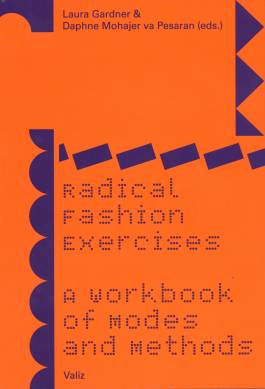
Radical Fashion Exercises: A workbook of modes and methods (cover), edited by Laura Gardner and Daphne Mohajer va Pesaran, published by Valiz and designed by Line Arngaard, 2023.
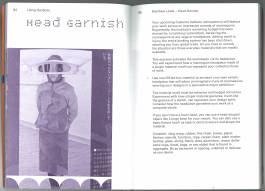
‘Head Garnish’ exercise by Matthew Linde for Radical Fashion Exercises (Valiz, 2023). Design and image by Line Arngaard.
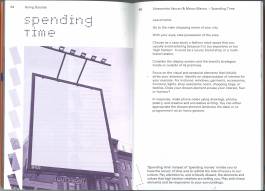
‘Spending Time’ exercise by Alessandra Vaccari for Radical Fashion Exercises (Valiz, 2023). Design and image by Line Arngaard.
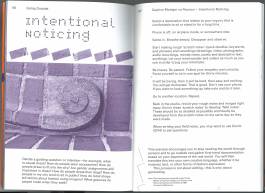
‘Intentional Noticing’ exercise by Daphne Mohajer va Pesaran for Radical Fashion Exercises (Valiz, 2023). Design and image by Line Arngaard.
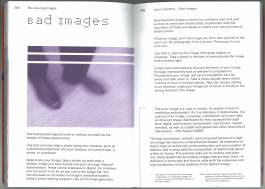
‘Bad Images’ exercise by Laura Gardner for Radical Fashion Exercises (Valiz, 2023). Design and image by Line Arngaard.