
LINDA LOPPA: THE MORE YOU GO INTO A SUBJECT, THE MORE YOU WILL FIND
Dobrila Denegri: Linda, whenever we talk about the fashion system, the world of fashion, or even fashion education, you often mention “a good tailored jacket” as a starting point... what does it mean for you?
Linda Loppa: My father was a tailor, so I'm coming from a tailor background, and for me, a good jacket is the utmost in good fashion. Today, I no longer see them. That's a small part of the challenge we'll face in the future. So, the tailoring is in my veins because I was born like that.
DD: When I hear you talking about “a good tailored jacket”, I understand it as a metaphor for the knowledge and ways of conveying knowledge... And talking about a way of conveying knowledge, I often think of what you proposed to do through the “ANARCHIVE”, which you realised partially in 2023 in Polimoda in collaboration with Massimiliano Giornetti.
LL: The “ANARCHIVE” started with my reflections about fashion archives in various museums. Garments lie there, behind boxes, behind closed doors. You hardly see a piece coming out. So I thought, well, let's be anarchic. We view the archive as a challenge to make the study and narration about a garment more dynamic. “ANARCHIVE” was born like that: from a wish to discuss pieces, discuss what a garment is in all its aspects. Not what we see, but how it has been conceived. What is the whole story of one simple jacket? Because there is one, an enormous, beautiful story behind a jacket. So, those kinds of things are motivating me more than conventional teaching.
DD: Still, education is something to adapt to the current situation we are facing, from digitalisation up to the environmental agenda... Education is precious...
LL: Very precious! Therefore, we must be mindful to do it well. To reflect on the way we are going to teach. Fashion schools are also becoming businesses. I have experienced both private and public schools. Situations are very different, but I approached them the same way. For me, it was the same way of managing a team and creating a platform. That's the only thing; if it's private or public, what's the difference? With no money, we did a lot at the Royal Academy in Antwerp. With a lot of money, we're doing a lot again with Polimoda in Florence. So, that's always been the drive for me.
DD: I am interested in curating and “opening” spaces that can function as meeting and experimentation points. When I say spaces, I mean occasions like this to meet and talk, show and share, brainstorm, and be together in a community of like-minded professionals... friends, basically. I sensed in Linda’s project “NFC - New Fashion Containers” a similar urge. I think we are all trying to envision which methods and research could be applied, expanding the educational field into a broader one that encompasses museum-like institutions and other spaces for presenting fashion-related productions and knowledge, but not exclusively.
Linda, how did your idea for “11 Containers” come to be?
LL: It was written in 2020, during the pandemic, and for me, it was about finding a new language for fashion. I felt pretty stuck in the same concept perpetuated by the existing institutions. I wrote the concept for 11 containers, and some time later, designers and architects from Toronto came across it on Instagram. We are working on it now. It might become real!
Among 11 containers, I thought the critical container would be something very close to this meeting in MACRO. The critical container refers to projects within which we must be critical, yet positively, in searching for solutions.
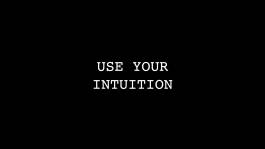
There is also a digital container. Then, the dining container would be about being together. Then, the history container, and within it, we should use history to predict the future. I'm really excited about that brain container. We should invite people who research and seek to understand the brain. What I discovered is that the brain has 11 sections, much like the 11 containers. The more you go into a subject, the more you will find. And that's intuition, I guess.
DD: I think that the concept of “11 Containers” anticipates our common thinking of spaces and ways in which we could go deeper into what I call “fashion-related artistic research”.
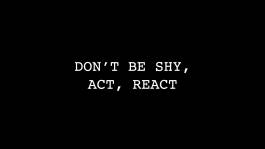
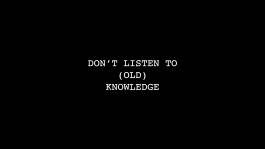
On the other hand, I liked how you came up with slogans that invite us to be more experimental, unconventional, daring, and, most of all, free in our ways of conceiving, creating, or practising fashion. They remind me of the “instructions” from Clemens’s book “Artistic Development in [Fashion] Design”.
LL: Indeed, Clemens’ instructions inspired me to make my quotes. So that conceptual thinking, if I might use the word “conceptual”, is important for me.
What he proposes for fashion design methods is very much in line with what I had in mind when writing about my vision for “New Fashion Containers”.
Generally, I think all of us in this room are thinking about how we need new platforms... or new educational formats... or new schools...