


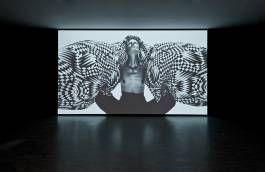
Ruth Hogben x Gareth Pugh, S/S 2011, Installation view. Photo by Wojciech Olech
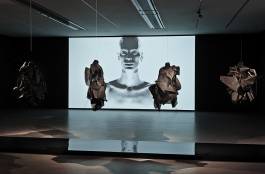
Ruth Hogben x Gareth Pugh, S/S 2011, Kim Hagelind, “Oscillons”, 2011. Installation view. Photo by Wojciech Olech
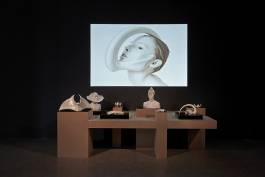
Ana Rajčević, “Animal: The Other Side of Evolution”, 2012. Installation view. Photo by Wojciech Olech
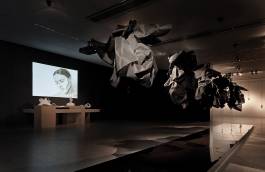
Ana Rajčević, “Animal: The Other Side of Evolution”, 2012. Kim Hagelind, “Oscillons”, 2011, Naomi Filmer, “Bodyscapes”. Installation view. Photo by Wojciech Olech
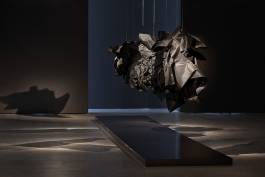
Kim Hagelind, “Oscillons”, 2011, Installation view. Photo by Wojciech Olech
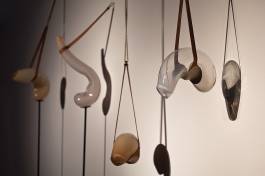
Naomi Filmer, “Bodyscapes”. Installation view. Photo by Wojciech Olech
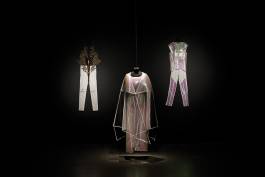
Yuima Nakazato, “Heaven”, 2013, Installation view. Photo by Wojciech Olech
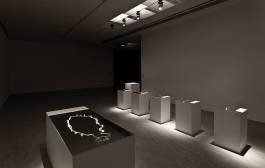
Tomoko Hayashi, “Tear Mirror - Jewel”, 2011, Installation view. Photo by Wojciech Olech
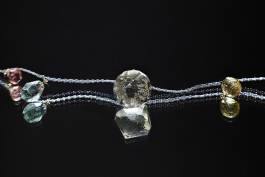
Tomoko Hayashi, “Tear Mirror - Jewel”, 2011, Installation view. Photo by Wojciech Olech
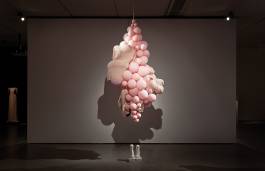
Minna Palmqvist, “Intimately Social 7.11”, 2011, Installation view. Photo by Wojciech Olech
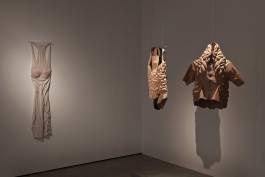
Minna Palmqvist, “Intimately Social 7.11”, 2011, Installation view. Photo by Wojciech Olech
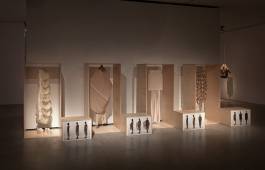
Mina Lundgren, “The Cube”, 2012, Installation view. Photo by Wojciech Olech
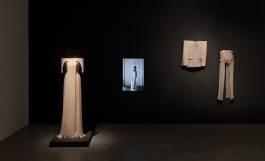
Emilia Tikka, “External Body", 2012, Installation view. Photo by Wojciech Olech
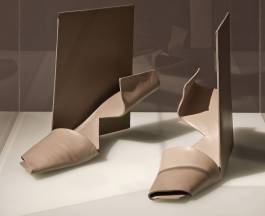
Marloes ten Bhömer, “Carbonfibreshoe #2”, 2003, Installation view. Photo by Wojciech Olech
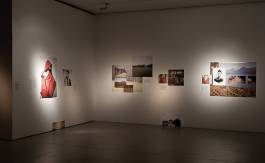
Bogomir Doringer, “Fashion and Despair”, 2010, Installation view. Photo by Wojciech Olech
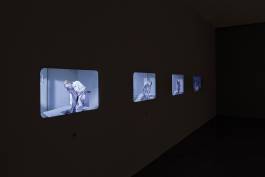
Hussein Chalayan, “The Absent Presence”, 2005, Installation view. Photo by Wojciech Olech
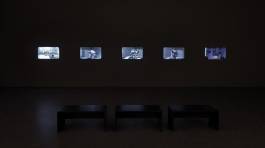
Hussein Chalayan, “The Absent Presence”, 2005, Installation view. Photo by Wojciech Olech
2013
WONDERINGMODE EXHIBITION
Wonderingmode is a hybrid term designed to capture the many possible meanings of the words “wonder” and “wondering” (such as marvel, amazement, miracle, prodigy, phenomenon, search, loss), as well as those of “mode,” which here suggests both “fashion” and “manner.”
Thus, ‘Wonderingmode’ becomes the title of an exhibition project that aims to bring together those creative paths that seek to push fashion beyond its conventional boundaries, grafting it with art, architecture or design.
Beyond the exhibition, which will take place at the Centre for Contemporary Art in Torun (Poland), “Wonderingmode” also signifies a state of mind for me, a wandering path where curiosity, the desire to be amazed, and even the acceptance of error are held on equal footing.
So this exhibition is just one stage (and I hope not the final one) in a quest for a type of fashion that goes beyond clothing, beyond the imperative of wearability, and favours the creation of objects and concepts that are hybrid in themselves, as the result of a grafting together of different sources of knowledge and different production processes.
In fact, when confronted with Ana Rajcevic's masks and jewellery or Hussein Chalayan, Iris van Herpen, Daniel Widrig, and Marloes ten Bhömer's wearable sculptures, one experiences a mix of fascination and amazement that raises the question: Is this fashion? Or art? Or architecture?
Or simply a convergence of all these disciplines and the exchange between their visual legacies?
Or perhaps even challenging the tradition of relying on overly narrow classification parameters for creations that inevitably blur the boundaries between the organic and the synthetic, between the body and what surrounds and even distorts it in its “natural” state.
Clothes and accessories from recent collections by Iris van Herpen, Yuima Nakazato, Emilia Tikka, Noemi Filmer, and Ana Rajcevic embed and reshape the body with their geometric, archaic, or science fiction-inspired forms, evoking the same awe and wonder that African sculptures and masks probably inspired in the Cubists, Dadaists, and Surrealists a century ago. More than garments, their creations are true masks and costumes fit for icons of transformation, such as Björk or Lady Gaga. However, they are also artefacts that invite us to wander with our minds and imaginations, posing questions and challenging us to define them and find their place.
These creations implicitly raise the question of fashion and its ever-changing nature. And so the word “wonderingmode” re-emerges, but this time emphasising its second part: “mode”.
In English, its meaning is clear (the way, the manner), and likewise in French (fashion), both of which are relevant to the question we have posed.
Furthermore, both date back to the mid-19th century, when fashion emerged as the cultural and societal phenomenon we recognise today. Etymologically, the word “fashion” originates from the Latin “modus” (the way, the manner) and is also linked to another word with a similar root, 'modo' (now, at present).
Although the term “le mode” existed in France as early as the second half of the fourteenth century, it was not until around 1845 that “la mode” appeared, signifying what we still understand by this term today: a complex mechanism of cyclical style changes, sudden and ephemeral, but nonetheless widely influential.
It is interesting to note that with the introduction and spread of this meaning, there has also been a linguistic change in the word itself, which now takes on a feminine article, becoming “la moda” instead of “il modo”.
From “il modo”, which indicated something authoritative and stable, we move on to “la moda”, which becomes the symbol and synonym of frivolity, transience and capriciousness. The destinies of fashion and women, including all the stereotypes associated with them, are thus inextricably intertwined, remaining, in most cases, somewhat distant from the possibility of being considered valid topics in philosophical or sociological discourse.
But fashion, having emerged at the same time as modernity, remains a phenomenon that cannot be omitted from a more in-depth cultural or social analysis of the modern world, just as the great apologists of modernism and postmodernism have argued: from Baudelaire, Mallarmé, Simmel and Benjamin to Barthes, Dorfles and others.
The psychological, social and cultural power of the fashion phenomenon did not escape them, but for some, the appeal of detail, of the fleeting and frivolous seasonal change in colour or cut, was not to be underestimated, as evidenced by one of the most remarkable cases of synthesis of thought, word and appearance.
It is a short yet captivating story connected with the name of Stéphane Mallarmé. In 1874, Mallarmé published “La Dernière Mode” (“The Latest Fashion”). This refined fashion magazine is unique not only for its illustrations and high-quality literary contributions but also for a series of columns authored by Mme de Ponty, Miss Satin, Ix, Zizi, Madame Charles, and many other female “signatures,” which are actually pseudonyms of the poet. From issue to issue, these columns often split into two, taking the reader on an imaginary journey into femininity and its many expressions. Here, writing acts as a mask, and every description of clothing—whether real or imagined—becomes an essay that offers insight into the aesthetic and spiritual ideals of the period, as well as into the mind of the author.
Mallarmé consults with the ladies, meticulously seeks out and reports on the latest fashion trends each season, but also dreams and lets his imagination run wild in the guise of his female alter egos, giving us, in a very special way, the opportunity to look beyond the superfluous and superficial aspects of fashion and search for meanings in its forms and dynamics that reflect reality and his aesthetic ideals.
This story makes me think that fashion today can also incorporate its “masculine” side, once again becoming “the way” to escape rapid change for its own sake (and the pace of industry and consumption), as suggested by the work of Minna Palmqvist, who has been developing the “Intimately Social” collection for several years. Or “the way” to restore fashion's function as a mirror that allows us to reflect on our cultural identity, which is necessarily changeable and constantly evolving, as Hussein Chalayan has demonstrated on several occasions, using both the expressive means of fashion and art.
And so “wonderingmode” becomes a journey that, in wandering and losing itself in the charm of hybrid objects and transdisciplinary creative processes, rediscovers the way (or the means) to reflect on fashion no longer only as the bearer of fleeting change, but as a system of signs that seeks to redefine itself.
Published in the Drome magazine
Ruth Hogben x Gareth Pugh, S/S 2011, Installation view. Photo by Wojciech Olech
Ruth Hogben x Gareth Pugh, S/S 2011, Kim Hagelind, “Oscillons”, 2011. Installation view. Photo by Wojciech Olech
Ana Rajčević, “Animal: The Other Side of Evolution”, 2012. Installation view. Photo by Wojciech Olech
Ana Rajčević, “Animal: The Other Side of Evolution”, 2012. Kim Hagelind, “Oscillons”, 2011, Naomi Filmer, “Bodyscapes”. Installation view. Photo by Wojciech Olech
Kim Hagelind, “Oscillons”, 2011, Installation view. Photo by Wojciech Olech
Naomi Filmer, “Bodyscapes”. Installation view. Photo by Wojciech Olech
Yuima Nakazato, “Heaven”, 2013, Installation view. Photo by Wojciech Olech
Tomoko Hayashi, “Tear Mirror - Jewel”, 2011, Installation view. Photo by Wojciech Olech
Tomoko Hayashi, “Tear Mirror - Jewel”, 2011, Installation view. Photo by Wojciech Olech
Minna Palmqvist, “Intimately Social 7.11”, 2011, Installation view. Photo by Wojciech Olech
Minna Palmqvist, “Intimately Social 7.11”, 2011, Installation view. Photo by Wojciech Olech
Mina Lundgren, “The Cube”, 2012, Installation view. Photo by Wojciech Olech
Emilia Tikka, “External Body", 2012, Installation view. Photo by Wojciech Olech
Marloes ten Bhömer, “Carbonfibreshoe #2”, 2003, Installation view. Photo by Wojciech Olech
Bogomir Doringer, “Fashion and Despair”, 2010, Installation view. Photo by Wojciech Olech
Hussein Chalayan, “The Absent Presence”, 2005, Installation view. Photo by Wojciech Olech
Hussein Chalayan, “The Absent Presence”, 2005, Installation view. Photo by Wojciech Olech