


2025
2011
SABINE SEYMOUR: I COINED THE TERM “FASHIONABLE TECHNOLOGY” TO DESCRIBE SYNERGIES BETWEEN DESIGN, FASHION, SCIENCE, AND TECHNOLOGY
“Forms Becoming Attitudes”
Conversations on Fashion Curating for the CURA Magazine
2009 - 2012
Ilaria Marotta, founding director of CURA magazine, was my collaborator at MACRO - Museum of Contemporary Art in Rome. In 2008, after we were all forced to leave the museum due to the change of the Mayor of Rome and consequently the museum’s new direction, Ilaria started a free-press magazine in 2009, for which she asked me to collaborate.
My column was called “Forms Becoming Attitudes” and in every issue I was contributing with texts or interviews to curators dealing with fashion display in museums and other platforms.
This must have been one of the very pioneering surveys on Fashion Curating, still a very new field, since all I spoke with were known within a very niche of like-minded professionals.
I started with Linda Loppa, a founding director of MoMu in Antwerp and, back then, a newly appointed director of Polimoda in Florence. Then followed conversations with Tomas Rajnai, Maria Luisa Frisa, Helena Hertov, Judith Clark, Barbara Franchin, Sabine Seymour, Kaat Debo, Valerie Steele, Emanuele Quinz and Luca Marchetti.
Most of these names are today established and recognised fashion scholars, curators and exhibition makers.
Sabine Seymour
Sabine Seymour is a designer, author, entrepreneur, and researcher, known for her work in fashionable technology and design. Seymour received a PhD and MSc in Social and Economic Sciences from the Vienna University of Economics and Columbia University in New York, and a MPS in Interactive Telecommunications from New York University.
She is the director of the Fashionable Technology Lab and Assistant Professor of Fashionable Technology at Parsons the New School for Design.
Seymour is the founder of Moondial Inc., a consulting company specialising in the integration of technology and fabrics.
Seymour is an editorial review board member of the International Journal of Mobile Human Computer Interaction and chaired the Rockefeller Foundation Grant–funded project Computational Fashion at Eyebeam Art+Technology Centre, New York.
Seymour has received numerous grants and awards, including the Michael Kalil Endowment for Smart Design Fellowship.
Dobrila Denegri: It would be interesting to begin our conversation by speaking about the way you got connected to the world of fashion and the world of technology, and how you started combining the two?
Sabine Seymour: My grandfather was a tailor, my mother is a trained fashion designer, and I was gifted my first computer, a Commodore 64, by my father when I was 12. Many years later, I am realising that this was the root of my current engagement in fashionable technology.
Today I am combining the two by developing commercial products, researching new facets in this field, consulting companies and research institutes, and researching trends and business reports.
DD: What were the challenges for you when you started with Fashionable Technology Studio, and how would you define the term you coined for it?
SS: I coined the term “Fashionable Technology” in 2000. It describes the synergies between design, fashion, science, and technology. The geek chic of computing in the 90s was in desperate need of aesthetics. And fashionable technology is a word play on wearable technology, referring to wearables in fashion. The challenge was the lack of a clear definition of the term to be used by practitioners, researchers, and marketers alike.
DD: In your opinion, which have been the most significant exhibitions dedicated to fashionable technology, or in general, what were important moments that triggered more serious reflection about this field of research, making it culturally more relevant?
SS: The 2003 “Extreme Textiles” exhibition at the Cooper Hewitt National Design Museum was a delineator and marked the fact that this area is fit for a museum. I co-curated the wearable section of ISEA in 2004, which brought attention to the field in the arts. Just in 2007, I co-curated “My Cyborg Future” at Newcastle’s Science Museum as part of “Dott07”, organised by John Thackara. I want to curate an exhibition that shows the breadth of the works in this area on a professional level, commission works, and bring explorations together.
DD: You work as a researcher, as well as a professor and writer/curator, so could you tell more about the projects you developed with fashionable wearables since the beginning of 2000 and how you connect theoretical and practical aspects of your work?
SS: I am collaborating with Parsons on a new project – “Amplification of Energy” - which focuses on localised energy harvesting, dynamic garment construction, and performance/installation aspects of fashionable technology that I am very interested in.
Recent projects developed by Moondial include “SENSE” (movement analysis), “VIEW” (dynamic visual interfaces on garments), and “SUN” (natural dynamic visual interfaces).
In 2003, we created “SlopeStyle”, which combined extreme sports, urban couture, and technology, focusing on mobile interactions and information that is now accessible via smartphones. The successful realisation of these core ideas for mainstream audiences confirms my role as a futurist. However, beyond developing concept designs, I am also fascinated by the theoretical aspects of this field, which are rooted in fashion, psychology, technology, health, and more.
DD: Talking about more theoretical aspects, you edited two books: “Fashionable Technology” and “Functional Aesthetic”. Could you tell us a bit more in detail about these two surveys, which are really opening new perspectives on fashion and lifestyle of the future…
SS: “Fashionable Technology” focuses on the interplay of electronic textiles and wearable technology, wearables for short, and fashion, design and science is a highly promising and topical subject. Offered in this book is a compact survey of the theory involved and an explanation of the role technology plays in a fabric or article of clothing. The practical application is explained in detail, and numerous illustrations serve as clarification. Over 50 well-known designers, research institutes, companies and artists, among them Philips, Burton, MIT Media Lab, XS Labs, New York University, Hussein Chalayan, Cute Circuit and International Fashion Machines, are introduced by means of their latest, often still unpublished, project, and a survey of their work to date. Given for the first time is a list of all the relevant information on research institutes, materials, publications, etc. A must for all those wishing to know everything about fashionable technology.
“Functional Aesthetics” was the sequel to the book “Fashionable Technology” (Springer 2008), and it explores state-of-the-art artistic and design examples with a focus on their aesthetic and functional aspects. Chapters such as “Context as Prerequisite”, “Body Sculpture”, or “Transparent Sustainability” provide in-depth studies of visionary projects between the poles of fashion, design, technology, and sciences, which could stimulate new developments in the blossoming field of Fashionable Technology. The book also includes relevant information on DIY resources, publications, inspirations, and much more.
DD: Through this field of research, one can see how technology is “penetrating” the body, “enveloping” the body, and connecting it with other bodies and the surrounding space. Could you tell us more about the practical applications of these new advanced devices and the potential new types of networks they might enable?
SS: The advances in wireless networks over the last decade have influenced the development of networks that can range from a body area network to a network of many people in many spaces and thus physically independent. The practical applications range from pure health monitoring to creating visual installations by and with people. I do have too many ideas to convey them in just one paragraph.
DD: The current dialogue between technology, art, fashion, and design is creating hybrids that demand new classifications, a fresh lexicon, and an innovative approach to presentation within the exhibition space. What role does “the frame” play in setting fashion artefacts, based on their intrinsic value and meaning? And what might be the most appropriate “frames”? Can you envisage an “ideal exhibition space” for all the hybridisations of fashion and technology being produced today?
SS: Fashionable technology objects are tangible and often interactive experiences. Such characteristics need novel forms of exhibition, often including the visitors as dynamic actors. I assume that with frame you refer to a theme? The exhibitions require a set of interactivity and exploration that is a new concept of displaying art or garments. However, this also requires the ability to duplicate work and have proper maintenance.
DD: Could you indicate some of the most cutting-edge research in the field of nanotech or biotech, and how you see these branches develop in future?
SS: Suzanne Lee’s “Biocouture” is a glimpse into the use of biotechnology to develop new forms of materials as 2nd skin. The prototype material “Absolute Black” by GZE integrates carbon nanotubes. Both technologies need to be further examined in the context of fashionable technology, including any health implications and biomimicry.
Published in cura.magazine issue 09
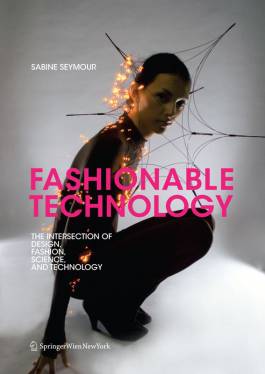
Fashionable Technology book cover

Functional Aesthetics book cover

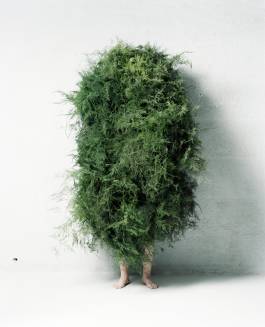
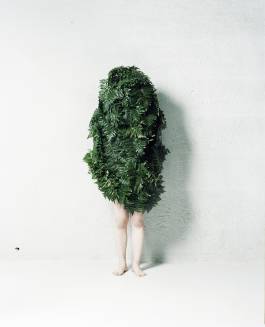
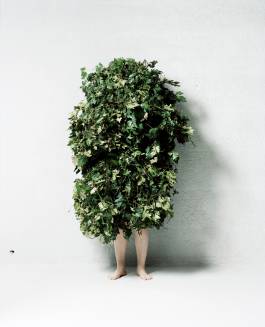
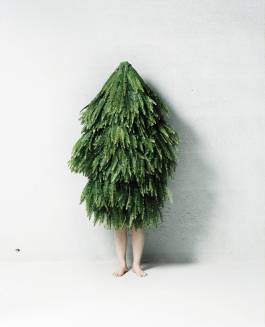


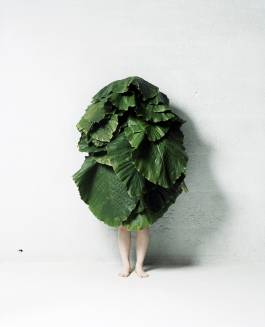
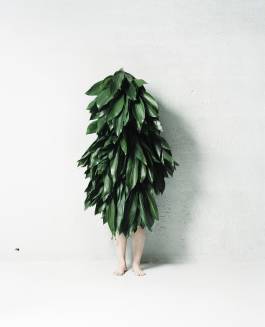

Azuma Makoto, "Leafman", Photography by Shunsuke Shiinoki
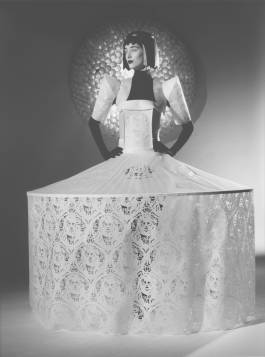
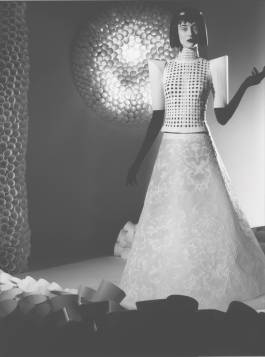
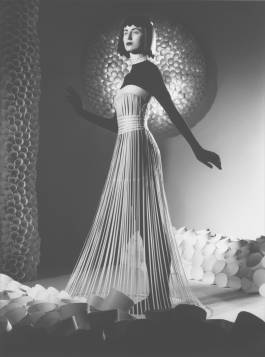
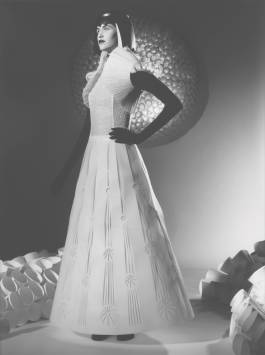
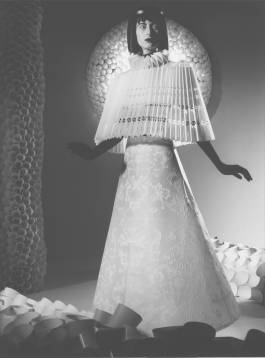
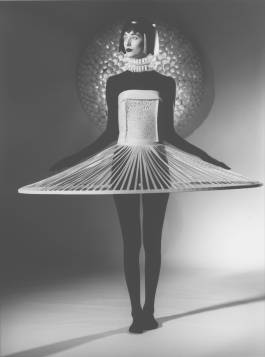
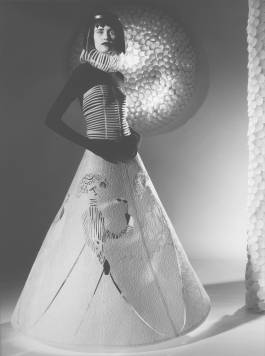
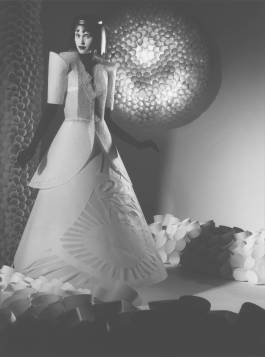
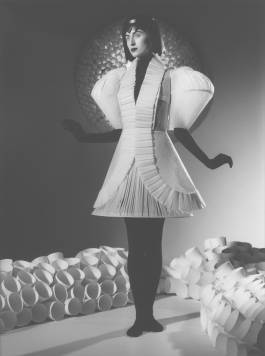
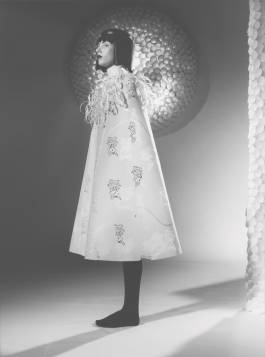
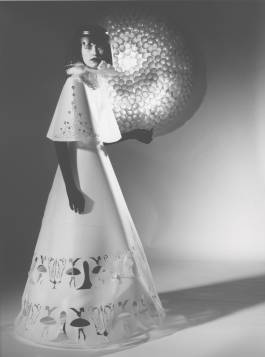
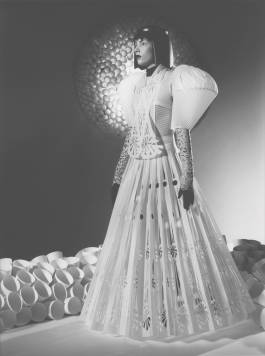
Jum Nakao, "Sewing the Invisible", Photography by Sandra Bordin
2025
“Forms Becoming Attitudes”
Conversations on Fashion Curating for the CURA Magazine
2009 - 2012
Ilaria Marotta, founding director of CURA magazine, was my collaborator at MACRO - Museum of Contemporary Art in Rome. In 2008, after we were all forced to leave the museum due to the change of the Mayor of Rome and consequently the museum’s new direction, Ilaria started a free-press magazine in 2009, for which she asked me to collaborate.
My column was called “Forms Becoming Attitudes” and in every issue I was contributing with texts or interviews to curators dealing with fashion display in museums and other platforms.
This must have been one of the very pioneering surveys on Fashion Curating, still a very new field, since all I spoke with were known within a very niche of like-minded professionals.
I started with Linda Loppa, a founding director of MoMu in Antwerp and, back then, a newly appointed director of Polimoda in Florence. Then followed conversations with Tomas Rajnai, Maria Luisa Frisa, Helena Hertov, Judith Clark, Barbara Franchin, Sabine Seymour, Kaat Debo, Valerie Steele, Emanuele Quinz and Luca Marchetti.
Most of these names are today established and recognised fashion scholars, curators and exhibition makers.
Sabine Seymour
Sabine Seymour is a designer, author, entrepreneur, and researcher, known for her work in fashionable technology and design. Seymour received a PhD and MSc in Social and Economic Sciences from the Vienna University of Economics and Columbia University in New York, and a MPS in Interactive Telecommunications from New York University.
She is the director of the Fashionable Technology Lab and Assistant Professor of Fashionable Technology at Parsons the New School for Design.
Seymour is the founder of Moondial Inc., a consulting company specialising in the integration of technology and fabrics.
Seymour is an editorial review board member of the International Journal of Mobile Human Computer Interaction and chaired the Rockefeller Foundation Grant–funded project Computational Fashion at Eyebeam Art+Technology Centre, New York.
Seymour has received numerous grants and awards, including the Michael Kalil Endowment for Smart Design Fellowship.
2011
SABINE SEYMOUR: I COINED THE TERM “FASHIONABLE TECHNOLOGY” TO DESCRIBE SYNERGIES BETWEEN DESIGN, FASHION, SCIENCE, AND TECHNOLOGY
Dobrila Denegri: It would be interesting to begin our conversation by speaking about the way you got connected to the world of fashion and the world of technology, and how you started combining the two?
Sabine Seymour: My grandfather was a tailor, my mother is a trained fashion designer, and I was gifted my first computer, a Commodore 64, by my father when I was 12. Many years later, I am realising that this was the root of my current engagement in fashionable technology.
Today I am combining the two by developing commercial products, researching new facets in this field, consulting companies and research institutes, and researching trends and business reports.
DD: What were the challenges for you when you started with Fashionable Technology Studio, and how would you define the term you coined for it?
SS: I coined the term “Fashionable Technology” in 2000. It describes the synergies between design, fashion, science, and technology. The geek chic of computing in the 90s was in desperate need of aesthetics. And fashionable technology is a word play on wearable technology, referring to wearables in fashion. The challenge was the lack of a clear definition of the term to be used by practitioners, researchers, and marketers alike.
DD: In your opinion, which have been the most significant exhibitions dedicated to fashionable technology, or in general, what were important moments that triggered more serious reflection about this field of research, making it culturally more relevant?
SS: The 2003 “Extreme Textiles” exhibition at the Cooper Hewitt National Design Museum was a delineator and marked the fact that this area is fit for a museum. I co-curated the wearable section of ISEA in 2004, which brought attention to the field in the arts. Just in 2007, I co-curated “My Cyborg Future” at Newcastle’s Science Museum as part of “Dott07”, organised by John Thackara. I want to curate an exhibition that shows the breadth of the works in this area on a professional level, commission works, and bring explorations together.
DD: You work as a researcher, as well as a professor and writer/curator, so could you tell more about the projects you developed with fashionable wearables since the beginning of 2000 and how you connect theoretical and practical aspects of your work?
SS: I am collaborating with Parsons on a new project – “Amplification of Energy” - which focuses on localised energy harvesting, dynamic garment construction, and performance/installation aspects of fashionable technology that I am very interested in.
Recent projects developed by Moondial include “SENSE” (movement analysis), “VIEW” (dynamic visual interfaces on garments), and “SUN” (natural dynamic visual interfaces).
In 2003, we created “SlopeStyle”, which combined extreme sports, urban couture, and technology, focusing on mobile interactions and information that is now accessible via smartphones. The successful realisation of these core ideas for mainstream audiences confirms my role as a futurist. However, beyond developing concept designs, I am also fascinated by the theoretical aspects of this field, which are rooted in fashion, psychology, technology, health, and more.
DD: Talking about more theoretical aspects, you edited two books: “Fashionable Technology” and “Functional Aesthetic”. Could you tell us a bit more in detail about these two surveys, which are really opening new perspectives on fashion and lifestyle of the future…
SS: “Fashionable Technology” focuses on the interplay of electronic textiles and wearable technology, wearables for short, and fashion, design and science is a highly promising and topical subject. Offered in this book is a compact survey of the theory involved and an explanation of the role technology plays in a fabric or article of clothing. The practical application is explained in detail, and numerous illustrations serve as clarification. Over 50 well-known designers, research institutes, companies and artists, among them Philips, Burton, MIT Media Lab, XS Labs, New York University, Hussein Chalayan, Cute Circuit and International Fashion Machines, are introduced by means of their latest, often still unpublished, project, and a survey of their work to date. Given for the first time is a list of all the relevant information on research institutes, materials, publications, etc. A must for all those wishing to know everything about fashionable technology.
“Functional Aesthetics” was the sequel to the book “Fashionable Technology” (Springer 2008), and it explores state-of-the-art artistic and design examples with a focus on their aesthetic and functional aspects. Chapters such as “Context as Prerequisite”, “Body Sculpture”, or “Transparent Sustainability” provide in-depth studies of visionary projects between the poles of fashion, design, technology, and sciences, which could stimulate new developments in the blossoming field of Fashionable Technology. The book also includes relevant information on DIY resources, publications, inspirations, and much more.
DD: Through this field of research, one can see how technology is “penetrating” the body, “enveloping” the body, and connecting it with other bodies and the surrounding space. Could you tell us more about the practical applications of these new advanced devices and the potential new types of networks they might enable?
SS: The advances in wireless networks over the last decade have influenced the development of networks that can range from a body area network to a network of many people in many spaces and thus physically independent. The practical applications range from pure health monitoring to creating visual installations by and with people. I do have too many ideas to convey them in just one paragraph.
DD: The current dialogue between technology, art, fashion, and design is creating hybrids that demand new classifications, a fresh lexicon, and an innovative approach to presentation within the exhibition space. What role does “the frame” play in setting fashion artefacts, based on their intrinsic value and meaning? And what might be the most appropriate “frames”? Can you envisage an “ideal exhibition space” for all the hybridisations of fashion and technology being produced today?
SS: Fashionable technology objects are tangible and often interactive experiences. Such characteristics need novel forms of exhibition, often including the visitors as dynamic actors. I assume that with frame you refer to a theme? The exhibitions require a set of interactivity and exploration that is a new concept of displaying art or garments. However, this also requires the ability to duplicate work and have proper maintenance.
DD: Could you indicate some of the most cutting-edge research in the field of nanotech or biotech, and how you see these branches develop in future?
SS: Suzanne Lee’s “Biocouture” is a glimpse into the use of biotechnology to develop new forms of materials as 2nd skin. The prototype material “Absolute Black” by GZE integrates carbon nanotubes. Both technologies need to be further examined in the context of fashionable technology, including any health implications and biomimicry.
Published in cura.magazine issue 09
Fashionable Technology book cover
Functional Aesthetics book cover
Azuma Makoto, "Leafman", Photography by Shunsuke Shiinoki
Jum Nakao, "Sewing the Invisible", Photography by Sandra Bordin
INSTAGRAM
@EXPERIMENTS.FASHION.ART