


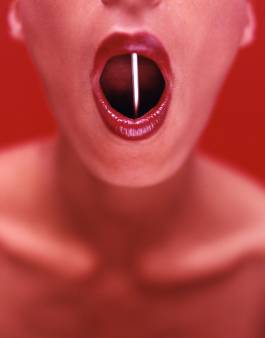
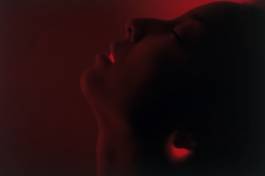
Naomi Filmer for Hussein Chalayan’s “A Long False Equator” AW 1996.

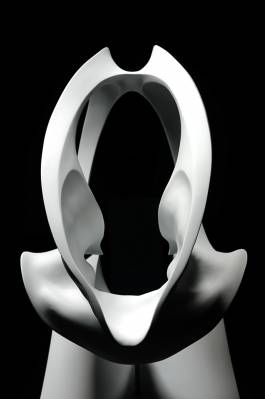
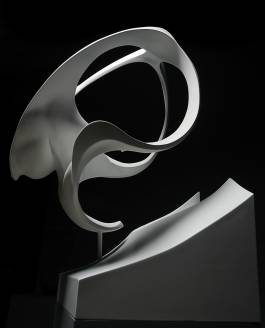
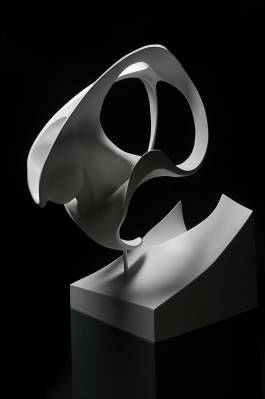
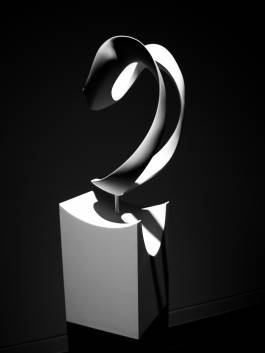
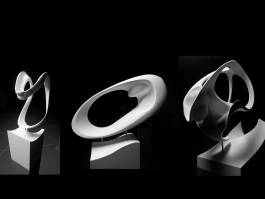
Naomi Filmer , “Breathing Volumes”, 2009 for “The Art of Fashion - Installing Allusions” exhibition, Museum Boijmans Van Beuningen, Rotterdam, Photo by Jeremy Forster
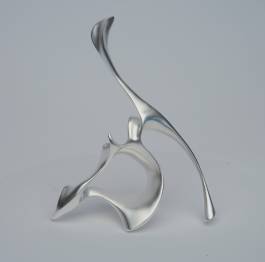
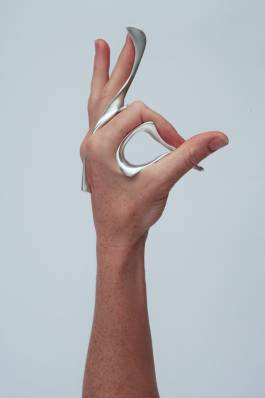
Naomi Filmer, “Hand Manipulation”, 1993.
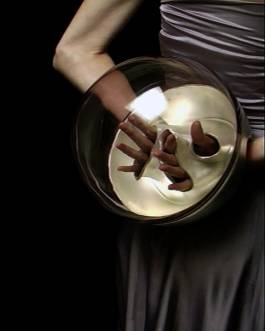
Naomi Filmer for Alexander McQueen’s “El Baile Der Toro Retorsido” SS 2002.


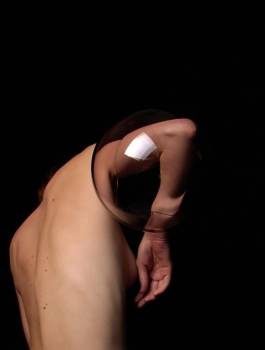
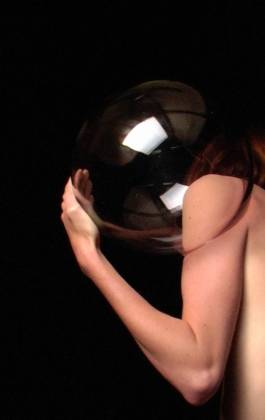
Naomi Filmer for the exhibition “Out of the Ordinary/Extraordinary Craft”, curated by Laurie Britton-Newell, V&A Museum, 2008.
2019
NAOMI FILMER: THE TRADITIONS AND DEFINITIONS OF JEWELLERY WERE SHIFTED, TESTED, AND CHALLENGED, AND I WAS FREE TO EXPLORE THIS TENSION BETWEEN JEWELLERY, THE BODY, AND THE OBJECT WITHOUT ANY COMMERCIAL CONCERN
Dobrila Denegri: You are trained in jewellery design, but your work was always about pushing the boundaries of what an adornment or an accessory can be. Conventionally, it stands for preciousness and durability. How did you interpret these qualities through your work?
Naomi Filmer: I studied 3D design originally, but went on to the jewellery MA at the RCA in the 90s. It was there that I learned more about contemporary jewellery and the dialogue and debate that defined it. At college, the traditions and definitions of jewellery were shifted, tested, and challenged, and I was free to explore this tension between jewellery, the body, and the object without any commercial concern.
My approach to jewellery as a medium was far from the traditional conventions of precious jewellery and luxury accessories. Instead, my focus was on representing the human body as a physical subject, as form and space, using jewellery as the vehicle to do so. Over the years of working on various projects across a broad spectrum of jewellery, I came to the conclusion that what is important, dominant, and precious is us. Our flesh, our form, sensation, and experience. Details of ourselves can be interpreted as adornment and abstracted as an object. I work with bodies to inform shape, manipulate material, direct process and even provide material with which to make. It’s been a long time since I made work to be worn on the body, yet this thinking continues in my work.
DD: More than adornments in the conventional sense, you speak about your works as “body-related-objects”. What is the nature of this relation between the body and the object? Is the body only the site or something more?
NF: The body is SO much more than a site for placement. It is also a site for sensation and experience. The body can feature in an object as a representation of ourselves … as metaphor, sculpture, or a reminder we can afford to be reminded of (mannequin prosthetics)… The body interacts as the director and facilitator of process and of crafting the work. Objects have the power to manifest our bodies as physical and material…
DD: What aspects of body or existence are the most interesting and challenging for you to explore and translate into something material and potentially even wearable?
NF: Volume and mass of flesh. Form and definition of anatomy. Body temperature. The act of breathing. The sound of ourselves….breathing, clearing the throat, stroking hair and skin. The manifestation of our material existence, such as the moisture from exhalation, sweat, saliva…
DD: What status do or should productions have which are on the edge between functional/usable and speculative?
NF: Status? Is it an issue of status or an issue of context to communicate these works? I find this is much spoken of in an educational and academic context. Status should vary according to the originality and quality of the work. In that way, I remain rather traditional.
DD: What is the most challenging for an artist/ design practitioner whose work is not commercially oriented, to maintain their creative practice?
NF: Socio-economic issues - earning money to fund more work and to fund one’s living. For me, this has been the biggest challenge. Teaching is a consistent vocation for me and supports my living, but it is not enough to fund other projects, so it is necessary to either work on otherwise funded projects/commissions or search for funding from a different source.
DD: What position does collaboration have in your work, and what type of collaborations do you value the most?
NF: a) Physical development of my work.
Collaborations have been imperative to the development of my work. Having collaborated with curators, designers, craftsmen, filmmakers and sound artists, I have fallen into conversations and occasions that I would not have otherwise encountered. My work has grown in scale and expanded in material choice. Mostly, I am no longer the maker of my work, so collaborating with other makers provides the opportunity to continue to explore and learn, to achieve a quality and difference that I otherwise could not reach if working alone. This way, my understanding of materials, process and craft continues to grow. For example, working with the glass blowers in Leerdam, in the Netherlands, was both informative and motivating. The conditions of glass blowing and working within their time remit required me to work in a very different way from other projects. I had to make decisions on the spur of the moment and direct them within their rhythm of making. The collaborations stretch me.
b) Professional networking.
Of course, collaborations also offer opportunities to exhibit my work in galleries and museums internationally, expanding my audience and broadening my professional network by meeting and working with experienced exhibition facilitators and fellow exhibitors.
c) Concept development - thinking through my developments.
One collaboration that has been important to me is with the curator Judith Clark. Our conversation over 20 years often returns to particular themes of gesture and pose that allude to movement, and to the significance of this in fashion exhibitions as display and bodily representation. This ongoing conversation teaches me that returning to an idea with changes in material, context, and positioning may seem small, but that each time new conversations are to be had, and that one ongoing conversation in one pathway can inform other lines of thought.
d) Organisation.
Finally, collaborations compel me to move faster and respond respectfully. It organises me. I am not productive alone - I need conversation, shared objectives and deadlines to get me going.
Naomi Filmer for Hussein Chalayan’s “A Long False Equator” AW 1996.
Naomi Filmer , “Breathing Volumes”, 2009 for “The Art of Fashion - Installing Allusions” exhibition, Museum Boijmans Van Beuningen, Rotterdam, Photo by Jeremy Forster
Naomi Filmer, “Hand Manipulation”, 1993.
Naomi Filmer for Alexander McQueen’s “El Baile Der Toro Retorsido” SS 2002.
Naomi Filmer for the exhibition “Out of the Ordinary/Extraordinary Craft”, curated by Laurie Britton-Newell, V&A Museum, 2008.