


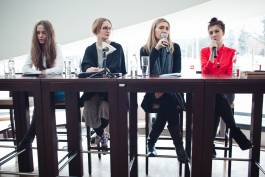
“Wonderingmode” Press conference, Ana Rajčević, Minna Palmqvist, Dobrila Denegri, Katarzyna Toczko, Photo by Natalia Miedziak.
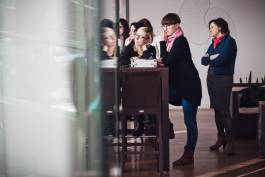
“Wonderingmode” Press conference, Aleksandra Mosiolek, Ewelina Czajkowska, Anna Kompanowska, Photo by Natalia Miedziak.
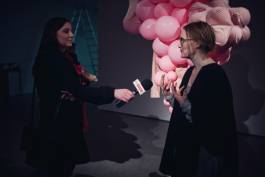
“Wonderingmode” Press conference, Minna Palmqvist, Photo by Natalia Miedziak.
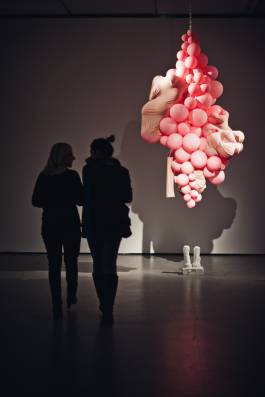
“Wonderingmode” exhibition preview, “Intimately Social” by Minna Palmqvist, Photo by Natalia Miedziak.
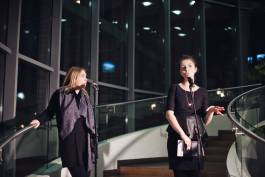
“Wonderingmode” opening of the exhibition, Dobrila Denegri, Katarzyna Toczko, Photo by Natalia Miedziak.
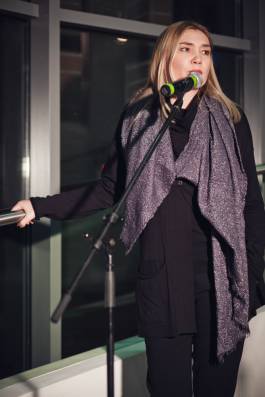
Opening of "Wonderingmode" exhibition. Dobrila Denegri, Photo by Natalia Miedziak.
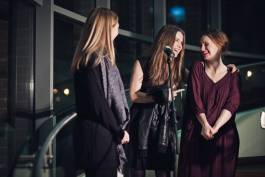
Opening of "Wonderingmode" exhibition, Dobrila Denegri, Ana Rajčević, Minna Palmqvist, Photo by Natalia Miedziak.
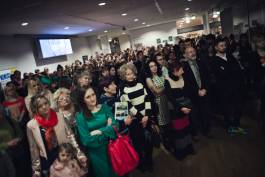
Opening of "Wonderingmode" exhibition, Photo by Natalia Miedziak.
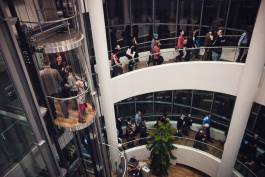
Opening of "Wonderingmode" exhibition, Photo by Natalia Miedziak.
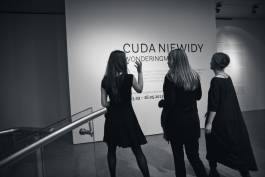
Opening of "Wonderingmode" exhibition, Dobrila Denegri, Ana Rajčević, Minna Palmqvist, Photo by Natalia Miedziak.
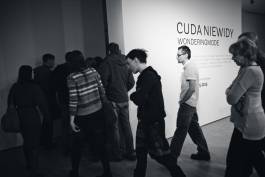
Opening of "Wonderingmode" exhibition, Photo by Natalia Miedziak.
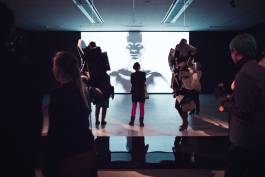
Opening of "Wonderingmode" exhibition, Ruth Hogben for Gareth Pugh, S/S 2011, Photo by Natalia Miedziak.
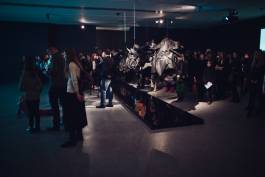
Opening of "Wonderingmode" exhibition, Ruth Hogben for Gareth Pugh, S/S 2011, Photo by Natalia Miedziak.
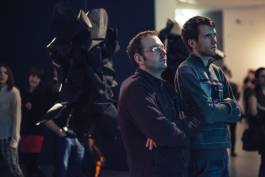
Opening of "Wonderingmode" exhibition, Kim Hagelind, “Oscillions”, Photo by Natalia Miedziak.
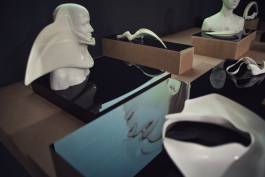
Opening of "Wonderingmode" exhibition, Ana Rajčević, “Animal - Another Side of Evolution”, Photo by Natalia Miedziak.
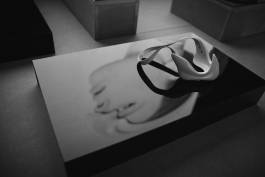
Opening of "Wonderingmode" exhibition, Ana Rajčević, “Animal - Another Side of Evolution”, Photo by Natalia Miedziak.

Opening of "Wonderingmode" exhibition, Ana Rajčević, Photo by Natalia Miedziak.
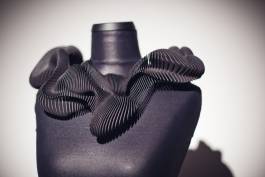
Opening of "Wonderingmode" exhibition, Daniel Widrig, “Kinesis”, Photo by Natalia Miedziak.
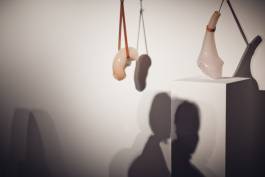
Opening of "Wonderingmode" exhibition, Naomi Filmer, “Suspended Body Scapes”, Photo by Natalia Miedziak.
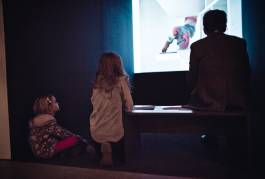
Opening of "Wonderingmode" exhibition, Anna-Nicole Ziesche, “Childhood Storage”, Photo by Natalia Miedziak.
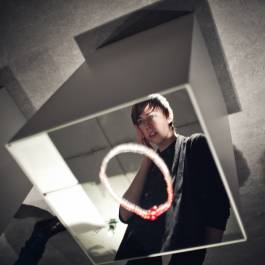
Opening of "Wonderingmode" exhibition, Tomoko Hayashi, “Tear Mirror”, Photo by Natalia Miedziak.
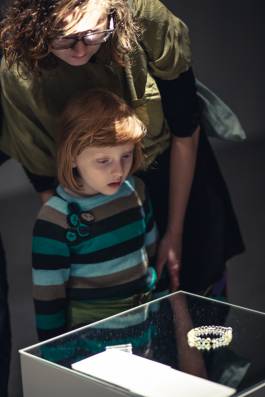
Opening of "Wonderingmode" exhibition, Tomoko Hayashi, “Tear Mirror”, Photo by Natalia Miedziak.
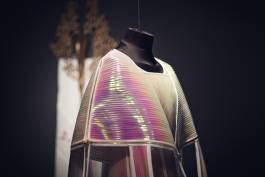
Opening of "Wonderingmode" exhibition, Yuima Nakazato, “Heaven”, Photo by Natalia Miedziak.
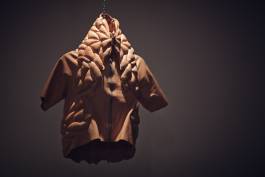
Opening of "Wonderingmode" exhibition, Minna Palmqvist, “Intimately Social”, Photo by Natalia Miedziak.
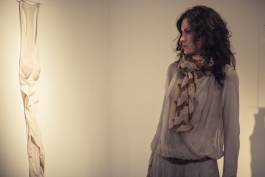
Opening of "Wonderingmode" exhibition, Minna Palmqvist, “Intimately Social”, Photo by Natalia Miedziak.
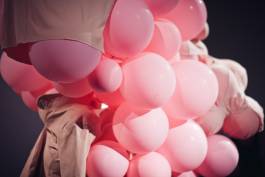
Opening of "Wonderingmode" exhibition, Minna Palmqvist, “Intimately Social”, Photo by Natalia Miedziak.
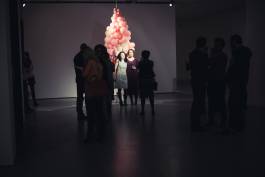
Opening of "Wonderingmode" exhibition, Minna Palmqvist, “Intimately Social”, Paulina Kuhn, Minna Palmqvist, Photo by Natalia Miedziak.
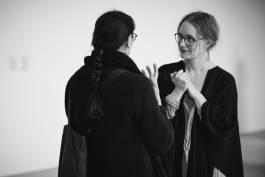
Opening of "Wonderingmode" exhibition, Biljana Tomić, Minna Palmqvist, Photo by Natalia Miedziak.
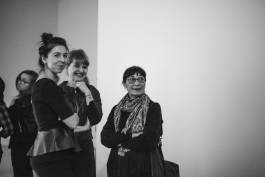
Opening of "Wonderingmode" exhibition, Katarzyna Toczko, Marta Kolacz, Biljana Tomić, Photo by Natalia Miedziak.
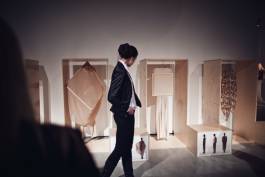
Opening of "Wonderingmode" exhibition, Mina Lundgren, “Cube”, Photo by Natalia Miedziak.
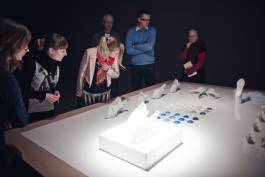
Opening of "Wonderingmode" exhibition, Marloes ten Bohmer, “Afterhours”, Photo by Natalia Miedziak.
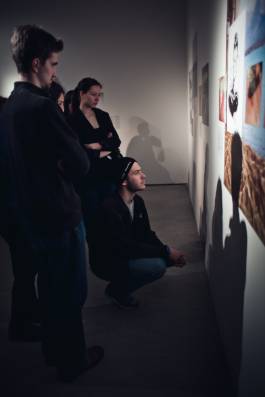
Opening of "Wonderingmode" exhibition, Bogomir Doringer, “Fashion and Despair”, Photo by Natalia Miedziak.
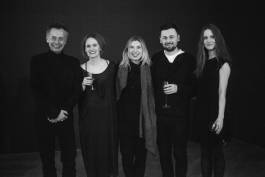
Opening of "Wonderingmode" exhibition, Martin van Dijk, Minna Palmqvist, Dobrila Denegri, Damian Bieniek, Ana Rajcevic, Photo by Natalia Miedziak.
2013
DOBRILA DENEGRI: I WAS INTERESTED IN THOSE APPROACHES IN WHICH I COULD RECOGNISE POSSIBLE ALTERNATIVE WAYS TO PRACTICE FASHION
Marcin Różyc: Do you agree with me that the art and fashion connection is very important, not only because they create together something artistic, something important for a culture, but this connection also sells fashion? Today, in a time of crisis, fashion consumers need something more than just an ad. Maybe we need something more intelligent during a crisis?
Dobrila Denegri: Today, certainly, we need something more creative and interesting, not only in terms of products but also in terms of concepts that lie behind them. Within the project “Wonderingmode”, I was interested in finding and highlighting those approaches that can subvert not only the conventional idea of the garment as something wearable, but also stress and potentially undermine the very notion of fashion as something superfluous, ephemeral, and subjected to the fast rhythm of change and consumption. So, for instance, I found a project of a Swedish designer, Minna Palmqvist, who makes the same collection over a few years, adding new models, but always under the same conceptual frame that she calls “Intimately Social”. Through this collection, she channels ideas which are quite critical towards the fashion industry and its homogenising imperatives. I was interested in those approaches that allowed me to recognise possible alternative ways to practice fashion, bypassing the notions perpetuated by the fashion industry and monolithic luxury brands.
MR: Today's fashion is the most creative sector of the economy. It gives so much art. What do you think?
DD: Thinking about future perspectives of fashion and economy, I am quite fascinated by all those experimental works that seek to fuse garments with sophisticated technological devices, creating what is commonly called “wearables” or “intelligent clothes”.
Applications of scientific research and technological advancements in the field of fashion and clothing are destined to proliferate, enhancing both the functional and aesthetic aspects of clothing. Consequently, clothes will incorporate devices that regulate body temperature, change colour according to the amount of light or heat, or exhibit similar features.
Apart from these seemingly sci-fi scenarios, I find interesting examples of using new and unexpected materials, such as in the case of Iris van Herpen, who creates incredible sculptural garments that are actual examples of contemporary haute couture. Together with architect Daniel Widrig, she has created “wearable sculptures” with new 3D printing techniques, which, being unique, redefine the notions of luxury and preciousness. Within the exhibition, I also wanted to showcase approaches that do not require high-tech to be fascinating, such as Tomoko Hayashi’s jewellery made from human tears and sugar, addressing the preciousness of human relations and emotions.
MR: At the exhibition, fashion is not so important. Uppermost is a hybrid?
DD: “Wonderingmode” aims to be an open-ended project, now realised as an exhibition accompanied by a symposium, which will take place in May with the participation of some of the artists/designers, as well as international fashion curators.
In this, like in the other occasions, I want to stress the notion of “transdisciplinarity” as defined by Wolfgang Welsch.
Personally, I find practices that mix and fuse different domains of knowledge and productive procedures incredibly interesting, creating something that doesn’t exactly fit into conventional categories of “art,” “fashion,” or other disciplines.
Most of the works we are showing in CoCA Torun resemble wearable sculptures, from Ana Rajcevic's jewellery and masks to Marloes Ten Bhomer's geometrical shoes, and up to the rainbow-coloured items from Yuima Nakazato's new menswear collection, “Heaven”.
Not by chance, it’s the icons of transformism like Björk or Lady Gaga who can wear models of these designers.
MR: Which of the objects in the exhibition are you most proud of?
DD: It’s hard for me to choose just one - but I’m excited to see them together as a part of the show!
MR: Why Chalayan? :)
DD: Most of the designers in the show are quite young, and not all of them are widely famous. But in their work, they follow the road that was initially taken by Hussein Chalayan, so he was for me an initial reference - a pioneer, so to speak.
Besides, I think that his works, such as “Aeroplane Dress” or similar pieces that can be moved/altered with a remote control, or which incorporate lasers or other technological devices, are among the most fascinating things I have seen.
He is truly an example of an innovative and visionary creator, and not by chance, he also showcases these concepts within an art context, where he pushes even further the ideas that inspire his fashion collections: concepts such as identity shift, nomadism, displacement, and transculturality.
Actually, here we are showing his short film “Absent Presence” (starring Tilda Swinton), which is a quite enigmatic story about fashion, science, identity and surveillance.
“Wonderingmode” Press conference, Ana Rajčević, Minna Palmqvist, Dobrila Denegri, Katarzyna Toczko, Photo by Natalia Miedziak.
“Wonderingmode” Press conference, Aleksandra Mosiolek, Ewelina Czajkowska, Anna Kompanowska, Photo by Natalia Miedziak.
“Wonderingmode” Press conference, Minna Palmqvist, Photo by Natalia Miedziak.
“Wonderingmode” exhibition preview, “Intimately Social” by Minna Palmqvist, Photo by Natalia Miedziak.
“Wonderingmode” opening of the exhibition, Dobrila Denegri, Katarzyna Toczko, Photo by Natalia Miedziak.
Opening of "Wonderingmode" exhibition. Dobrila Denegri, Photo by Natalia Miedziak.
Opening of "Wonderingmode" exhibition, Dobrila Denegri, Ana Rajčević, Minna Palmqvist, Photo by Natalia Miedziak.
Opening of "Wonderingmode" exhibition, Photo by Natalia Miedziak.
Opening of "Wonderingmode" exhibition, Photo by Natalia Miedziak.
Opening of "Wonderingmode" exhibition, Dobrila Denegri, Ana Rajčević, Minna Palmqvist, Photo by Natalia Miedziak.
Opening of "Wonderingmode" exhibition, Photo by Natalia Miedziak.
Opening of "Wonderingmode" exhibition, Ruth Hogben for Gareth Pugh, S/S 2011, Photo by Natalia Miedziak.
Opening of "Wonderingmode" exhibition, Ruth Hogben for Gareth Pugh, S/S 2011, Photo by Natalia Miedziak.
Opening of "Wonderingmode" exhibition, Kim Hagelind, “Oscillions”, Photo by Natalia Miedziak.
Opening of "Wonderingmode" exhibition, Ana Rajčević, “Animal - Another Side of Evolution”, Photo by Natalia Miedziak.
Opening of "Wonderingmode" exhibition, Ana Rajčević, “Animal - Another Side of Evolution”, Photo by Natalia Miedziak.
Opening of "Wonderingmode" exhibition, Ana Rajčević, Photo by Natalia Miedziak.
Opening of "Wonderingmode" exhibition, Daniel Widrig, “Kinesis”, Photo by Natalia Miedziak.
Opening of "Wonderingmode" exhibition, Naomi Filmer, “Suspended Body Scapes”, Photo by Natalia Miedziak.
Opening of "Wonderingmode" exhibition, Anna-Nicole Ziesche, “Childhood Storage”, Photo by Natalia Miedziak.
Opening of "Wonderingmode" exhibition, Tomoko Hayashi, “Tear Mirror”, Photo by Natalia Miedziak.
Opening of "Wonderingmode" exhibition, Tomoko Hayashi, “Tear Mirror”, Photo by Natalia Miedziak.
Opening of "Wonderingmode" exhibition, Yuima Nakazato, “Heaven”, Photo by Natalia Miedziak.
Opening of "Wonderingmode" exhibition, Minna Palmqvist, “Intimately Social”, Photo by Natalia Miedziak.
Opening of "Wonderingmode" exhibition, Minna Palmqvist, “Intimately Social”, Photo by Natalia Miedziak.
Opening of "Wonderingmode" exhibition, Minna Palmqvist, “Intimately Social”, Photo by Natalia Miedziak.
Opening of "Wonderingmode" exhibition, Minna Palmqvist, “Intimately Social”, Paulina Kuhn, Minna Palmqvist, Photo by Natalia Miedziak.
Opening of "Wonderingmode" exhibition, Biljana Tomić, Minna Palmqvist, Photo by Natalia Miedziak.
Opening of "Wonderingmode" exhibition, Katarzyna Toczko, Marta Kolacz, Biljana Tomić, Photo by Natalia Miedziak.
Opening of "Wonderingmode" exhibition, Mina Lundgren, “Cube”, Photo by Natalia Miedziak.
Opening of "Wonderingmode" exhibition, Marloes ten Bohmer, “Afterhours”, Photo by Natalia Miedziak.
Opening of "Wonderingmode" exhibition, Bogomir Doringer, “Fashion and Despair”, Photo by Natalia Miedziak.
Opening of "Wonderingmode" exhibition, Martin van Dijk, Minna Palmqvist, Dobrila Denegri, Damian Bieniek, Ana Rajcevic, Photo by Natalia Miedziak.