


2025
2009
LINDA LOPPA: CURATORS HAVE TO KNOW HOW TO EXPLAIN CONVINCINGLY THE REASON FOR THEIR CHOICES
“Forms Becoming Attitudes”
Conversations on Fashion Curating for the CURA Magazine
2009 - 2012
Ilaria Marotta, founding director of CURA magazine, was my collaborator at MACRO - Museum of Contemporary Art in Rome. In 2008, after we were all forced to leave the museum due to the change of the Mayor of Rome and consequently the museum’s new direction, Ilaria started a free-press magazine in 2009, for which she asked me to collaborate.
My column was called “Forms Becoming Attitudes” and in every issue I was contributing with texts or interviews to curators dealing with fashion display in museums and other platforms.
This must have been one of the very pioneering surveys on Fashion Curating, still a very new field, since all I spoke with were known within a very niche of like-minded professionals.
I started with Linda Loppa, a founding director of MoMu in Antwerp and, back then, a newly appointed director of Polimoda in Florence. Then followed conversations with Tomas Rajnai, Maria Luisa Frisa, Helena Hertov, Judith Clark, Barbara Franchin, Sabine Seymour, Kaat Debo, Valerie Steele, Emanuele Quinz and Luca Marchetti.
Most of these names are today established and recognised fashion scholars, curators and exhibition makers.
Linda Loppa, creative director, curator, opinion leader
Along with founding the Flanders Fashion Institute and the ModeNatie forum in Belgium, Loppa was the head of the fashion department at the Royal Academy of Fine Arts in Antwerp. She directed the MoMu — the Fashion Museum Antwerp, between 1998 and 2006. Loppa joined the Polimoda International Institute of Fashion Design & Marketing in Florence as director in 2007 and has overseen the institute’s establishment as a leading international school for design. In 2016, Loppa founded Linda Loppa Factory, a studio promoting art, culture, and education. She published two books: “Life is a Vortex” and “The 11 NFContainer Project”.
https://www.lindaloppafactory.com
Walter Van Beirendonck, Ann Demeulemeester, Dries van Noten, Dirk Van Saene, Dirk Bikkembergs, and Marina Yee are the “Antwerp Six”, and the “seventh” member is Martin Margiela. These well-known designers came out of the fashion academy when it was managed by Linda Loppa, who later became the director of one of the most prestigious Italian schools: Polimoda in Florence.
Linda Loppa discusses the initiative promoting young talents, entitled “Polimoda Fashion Week,” which has spread throughout Florence. She analyses her connection to contemporary art, which has left a strong imprint on her activity and her approach to fashion, and she reflects on how a “fashion curator” can be defined: a figure emerging at the intersection between the art world and the fashion world.
Dobrila Denegri: I would like to begin our conversation talking about the backdrop of our meeting: a city diffusely enlivened by the great number of initiatives devoted to fashion and young talents… a series of exhibitions and events taking place in institutional venues, like the Marino Marini Museum or the Florence National Library, and in places which offered themselves in a more immediate way to the public and to citizens, like the streets and the windows of the most prestigious fashion designers… Let’s start with the “occupation” of the windows and with the interaction with the urban fabric: “Polimoda Fashion Week,” gave young designers the possibility to show their creations at Hermès, Emilio Pucci, Max Mara, Versace and other designers’ boutiques, ideally linking Florence to Antwerp and Ghent, the two cities where for several years a similar event has taken place, which not only involves young creatives, but relies on the experience and the collaboration of internationally established curators like Jan Hoet in the case of this year’s “Vitrine – Gent.” Are these initiatives linked in any way?
Linda Loppa: About ten years ago, I started a similar experience in Antwerp entitled “Vetrine”, and I owe the inspiration, at least some of it, to Jan Hoet himself, a very charismatic curator, able to act as a real cultural catalyst. Of course, I remember his Documenta 9. Still, it was the exhibition “Chambres d’Amis” from 1986, which convinced me to follow contemporary art more closely, so much so that it represented a turning point in my life in the truest sense of the word. The way this exhibition emphasised the harmony between art and daily life struck me deeply. After meeting Anton Herbert, one of the greatest and most refined collectors in Belgium, I couldn’t avoid taking a radical step: I sold my house and my husband and I bought a large space of about 1500 square metres at the port of Antwerp. This space has become our new home and the headquarters of the Micheline Szwajcer Gallery, where over the years we have seen some extraordinary exhibitions and lived side by side with important artists like Daniel Buren, Luciano Fabro, Giovanni Anselmo, to mention but a few. Thanks to the new perspective that contemporary art opened up for me, I found new ways to present fashion outside traditional contexts, facing what has always been the greatest challenge: to attribute a symbolic and semantic value to a specific item of clothing.
DD: How do you rate your first Florence experience and, most of all, what kind of future developments can you foresee for “Polimoda Fashion Week?”
LL: The experiences developed in my years of activity in Belgium gave me the possibility to take a new direction in Florence with the first edition of “Polimoda Fashion Week”, which was welcomed with great enthusiasm by the participants and by the public. I took personal care of all the single segments of this event in the various venues, whether institutional or not. I matched the students’ works with the show windows where they were placed, always taking into account the correspondence between styles and themes. For example, the young designer Elena Savasta, who created a wonderful leather item inspired by Africa and initiation rites, was exhibited in the Hermès window because this year’s collection shows references to the Masai culture. Besides fashion students, who exhibited their models and interacted with the Ferragamo maison’s creative legacy, I also wanted to involve the marketing students in a peculiar accompaniment exercise, not only marketing but also conceptual, within the initiative titled “La sfilata delle parole” [“Fashion Show of Words”]. I also wanted to open a direct dialogue with the young creatives of the city, with a meeting in the historical literary café Giubbe Rosse. That has allowed me to discover the existence of a substratum, a creative humus which is very interesting and relatively new. Florence is like a mille-feuille cake; it is a city composed of several layers with few points of contact between each layer. This is the challenge for the next edition: to find a way to create interconnections between craftsmanship, jewellery, the great names of fashion design, and the young creatives of the various social strata, whose interest in fashion, creativity, art, and culture should be stimulated much more.
DD: I remember that a few years ago, when Germano Celant and Ingrid Sischy curated the Fashion Biennale in Florence. Fierce controversies broke out due to the presence of fashion designers in places commonly used for art displays. Now, with the initiative promoted by Polimoda, we see students and emerging designers create a dialogue with the spiritual legacy of an important Italian artist like Marino Marini… Does that mean that the way we see fashion has changed as well as its relationship with what we consider art and culture in the strictest sense of the word?
LL: I think that the situation is gradually changing. We had a very positive experience with the institutions, which were very generous with our students. As I mentioned, I am fascinated by the possibility of presenting an item of clothing in a different context and considering it as a carrier of meanings that help us reflect on cultural and social phenomena, just like a work of art. I don’t deny that there are differences: a work of art is always a work of art and it lasts forever; a piece of clothing generally has a short life, but it can lead different “lives” - within a collection which anticipates the season’s trends; in chain stores; it can live a new life as a vintage item or it can be kept and treated with care in an archive. Or it can be exhibited in a museum, which will recode its meaning, putting it into a specific historical perspective or about other artefacts whose semantic values help us define some cultural and social movements.
DD: Going back to important stages of your professional career, like the period in which you directed the Hogeschool Antwerpen, one of the most experimental and cutting edge fashion schools, or the FFI Flanders Fashion Institute foundation, and the MoMu Fashion Museum in Antwerp, I would like to ask you what were the most important aspects of your training and if you would define yourself a fashion curator.
LL: Contemporary art, which I’ve been following closely, has been of great importance for my training, especially when art and fashion were presented next to each other, as in the 1996 Fashion Biennale in Florence. In the nineties, there was much talk about body and corporality in art, and this reflection, carried on by Germano Celant and Ingrid Sischy, but also by some curators and critics, was very stimulating. I could also mention another fundamental influence: the book by Caroline Evans, “Fashion at the Edge”, an extraordinary analysis of contemporary fashion which offers a reading that is more profound than usual, tracing in fashion the same symptoms we had detected in the art production of the nineties: a dramatic and perturbing end-of-the-century image. I was so impressed by this book that I tried to translate it into an exhibition created with Judith Clark at the MoMu and at the London Victoria & Albert Museum, entitled “Malign Muses - When Fashion Turns Back”, an investigation of the relationship between fashion and history and, at the same time, a story of alienation, traumas, shadows and ghosts resurfacing through the creations of experimental fashion. Although I had various professional experiences, my greatest passion is always organising exhibitions.
DD: The new figure of the fashion curator has emerged in the last few years. In fact, you have included it in the didactic curriculum offered by Polimoda Institute. This introduces another interesting subject: what is a “fashion curator”? Is there a particular difference between a contemporary art curator and a fashion curator?
LL: I think that the creation of an exhibition requires great attention in three specific fields: I would identify the first with research. Personally, I often acted spontaneously and intuitively in my thematic choices. Still, I always investigated the themes so that I could present them in a way that was both historically faithful and not too academic or déjà vu. It is important to be faithful to history, but what counts is to interpret and re-contextualise in a contemporary way. The second fundamental element is to build a relationship with space: the real ability of the curator is in translating his or her ideas into the available space. The third relevant aspect, in my opinion, has to do with communication and didactics: curators have to know how to explain convincingly the reason for their choices and to give the audience the possibility to understand and learn. Many artists, as well as many designers, can present their creations appealingly and spectacularly, offering the audience a remarkable aesthetic experience. Still, it is the job of the curator to build a bridge with the public based on content, history and the concepts which give meaning to the ensemble.
Published in cura.artmagazine 02
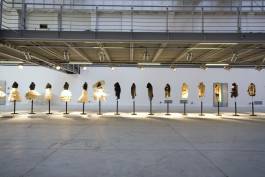
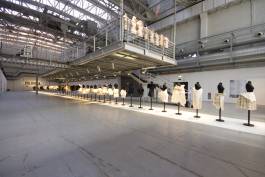
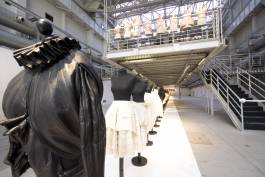
The exhibition “The Sculpture of Fashion” at Marino Marini Museum: 19 students of the Polimoda pattern-making course interpret fashion designers, bringing together art and the research of new volumes in sync with the human body.
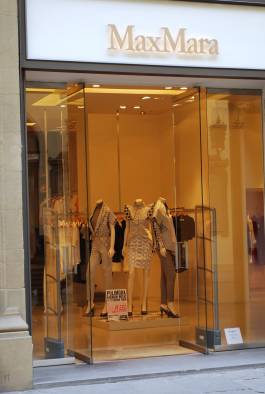
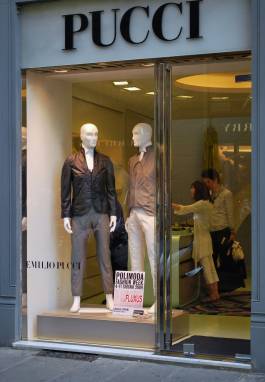
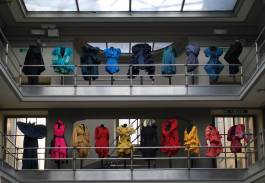
In 20 window displays of Polimoda Fashion Design students’ creations, organised as a path to be followed across the city centre, from Via dei Tornabuoni to Piazza della Repubblica, from Via Por Santa Maria to Piazza Antinori, from Piazza del Duomo to Via Roma. Collaboration with important brands, willing to recognise the quality of students’ work.
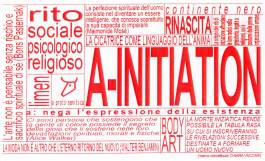
The trait d’union between these events is “A Fashion Show of Words”, a project curated by Polimoda Marketing Department.
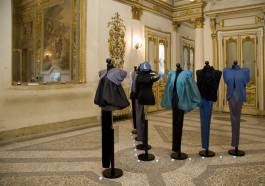
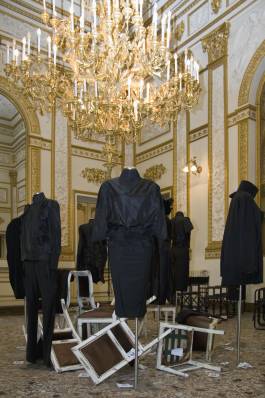
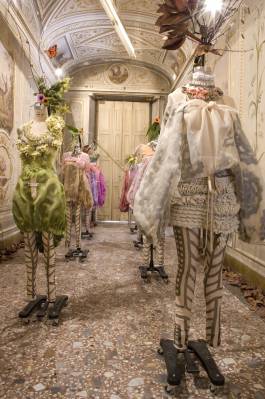
“Polimoda Fashion Week” students’ exhibition at Villa Favard, Polimoda headquarters.
2025
“Forms Becoming Attitudes”
Conversations on Fashion Curating for the CURA Magazine
2009 - 2012
Ilaria Marotta, founding director of CURA magazine, was my collaborator at MACRO - Museum of Contemporary Art in Rome. In 2008, after we were all forced to leave the museum due to the change of the Mayor of Rome and consequently the museum’s new direction, Ilaria started a free-press magazine in 2009, for which she asked me to collaborate.
My column was called “Forms Becoming Attitudes” and in every issue I was contributing with texts or interviews to curators dealing with fashion display in museums and other platforms.
This must have been one of the very pioneering surveys on Fashion Curating, still a very new field, since all I spoke with were known within a very niche of like-minded professionals.
I started with Linda Loppa, a founding director of MoMu in Antwerp and, back then, a newly appointed director of Polimoda in Florence. Then followed conversations with Tomas Rajnai, Maria Luisa Frisa, Helena Hertov, Judith Clark, Barbara Franchin, Sabine Seymour, Kaat Debo, Valerie Steele, Emanuele Quinz and Luca Marchetti.
Most of these names are today established and recognised fashion scholars, curators and exhibition makers.
Linda Loppa, creative director, curator, opinion leader
Along with founding the Flanders Fashion Institute and the ModeNatie forum in Belgium, Loppa was the head of the fashion department at the Royal Academy of Fine Arts in Antwerp. She directed the MoMu — the Fashion Museum Antwerp, between 1998 and 2006. Loppa joined the Polimoda International Institute of Fashion Design & Marketing in Florence as director in 2007 and has overseen the institute’s establishment as a leading international school for design. In 2016, Loppa founded Linda Loppa Factory, a studio promoting art, culture, and education. She published two books: “Life is a Vortex” and “The 11 NFContainer Project”.
https://www.lindaloppafactory.com
2009
LINDA LOPPA: CURATORS HAVE TO KNOW HOW TO EXPLAIN CONVINCINGLY THE REASON FOR THEIR CHOICES
Walter Van Beirendonck, Ann Demeulemeester, Dries van Noten, Dirk Van Saene, Dirk Bikkembergs, and Marina Yee are the “Antwerp Six”, and the “seventh” member is Martin Margiela. These well-known designers came out of the fashion academy when it was managed by Linda Loppa, who later became the director of one of the most prestigious Italian schools: Polimoda in Florence.
Linda Loppa discusses the initiative promoting young talents, entitled “Polimoda Fashion Week,” which has spread throughout Florence. She analyses her connection to contemporary art, which has left a strong imprint on her activity and her approach to fashion, and she reflects on how a “fashion curator” can be defined: a figure emerging at the intersection between the art world and the fashion world.
Dobrila Denegri: I would like to begin our conversation talking about the backdrop of our meeting: a city diffusely enlivened by the great number of initiatives devoted to fashion and young talents… a series of exhibitions and events taking place in institutional venues, like the Marino Marini Museum or the Florence National Library, and in places which offered themselves in a more immediate way to the public and to citizens, like the streets and the windows of the most prestigious fashion designers… Let’s start with the “occupation” of the windows and with the interaction with the urban fabric: “Polimoda Fashion Week,” gave young designers the possibility to show their creations at Hermès, Emilio Pucci, Max Mara, Versace and other designers’ boutiques, ideally linking Florence to Antwerp and Ghent, the two cities where for several years a similar event has taken place, which not only involves young creatives, but relies on the experience and the collaboration of internationally established curators like Jan Hoet in the case of this year’s “Vitrine – Gent.” Are these initiatives linked in any way?
Linda Loppa: About ten years ago, I started a similar experience in Antwerp entitled “Vetrine”, and I owe the inspiration, at least some of it, to Jan Hoet himself, a very charismatic curator, able to act as a real cultural catalyst. Of course, I remember his Documenta 9. Still, it was the exhibition “Chambres d’Amis” from 1986, which convinced me to follow contemporary art more closely, so much so that it represented a turning point in my life in the truest sense of the word. The way this exhibition emphasised the harmony between art and daily life struck me deeply. After meeting Anton Herbert, one of the greatest and most refined collectors in Belgium, I couldn’t avoid taking a radical step: I sold my house and my husband and I bought a large space of about 1500 square metres at the port of Antwerp. This space has become our new home and the headquarters of the Micheline Szwajcer Gallery, where over the years we have seen some extraordinary exhibitions and lived side by side with important artists like Daniel Buren, Luciano Fabro, Giovanni Anselmo, to mention but a few. Thanks to the new perspective that contemporary art opened up for me, I found new ways to present fashion outside traditional contexts, facing what has always been the greatest challenge: to attribute a symbolic and semantic value to a specific item of clothing.
DD: How do you rate your first Florence experience and, most of all, what kind of future developments can you foresee for “Polimoda Fashion Week?”
LL: The experiences developed in my years of activity in Belgium gave me the possibility to take a new direction in Florence with the first edition of “Polimoda Fashion Week”, which was welcomed with great enthusiasm by the participants and by the public. I took personal care of all the single segments of this event in the various venues, whether institutional or not. I matched the students’ works with the show windows where they were placed, always taking into account the correspondence between styles and themes. For example, the young designer Elena Savasta, who created a wonderful leather item inspired by Africa and initiation rites, was exhibited in the Hermès window because this year’s collection shows references to the Masai culture. Besides fashion students, who exhibited their models and interacted with the Ferragamo maison’s creative legacy, I also wanted to involve the marketing students in a peculiar accompaniment exercise, not only marketing but also conceptual, within the initiative titled “La sfilata delle parole” [“Fashion Show of Words”]. I also wanted to open a direct dialogue with the young creatives of the city, with a meeting in the historical literary café Giubbe Rosse. That has allowed me to discover the existence of a substratum, a creative humus which is very interesting and relatively new. Florence is like a mille-feuille cake; it is a city composed of several layers with few points of contact between each layer. This is the challenge for the next edition: to find a way to create interconnections between craftsmanship, jewellery, the great names of fashion design, and the young creatives of the various social strata, whose interest in fashion, creativity, art, and culture should be stimulated much more.
DD: I remember that a few years ago, when Germano Celant and Ingrid Sischy curated the Fashion Biennale in Florence. Fierce controversies broke out due to the presence of fashion designers in places commonly used for art displays. Now, with the initiative promoted by Polimoda, we see students and emerging designers create a dialogue with the spiritual legacy of an important Italian artist like Marino Marini… Does that mean that the way we see fashion has changed as well as its relationship with what we consider art and culture in the strictest sense of the word?
LL: I think that the situation is gradually changing. We had a very positive experience with the institutions, which were very generous with our students. As I mentioned, I am fascinated by the possibility of presenting an item of clothing in a different context and considering it as a carrier of meanings that help us reflect on cultural and social phenomena, just like a work of art. I don’t deny that there are differences: a work of art is always a work of art and it lasts forever; a piece of clothing generally has a short life, but it can lead different “lives” - within a collection which anticipates the season’s trends; in chain stores; it can live a new life as a vintage item or it can be kept and treated with care in an archive. Or it can be exhibited in a museum, which will recode its meaning, putting it into a specific historical perspective or about other artefacts whose semantic values help us define some cultural and social movements.
DD: Going back to important stages of your professional career, like the period in which you directed the Hogeschool Antwerpen, one of the most experimental and cutting edge fashion schools, or the FFI Flanders Fashion Institute foundation, and the MoMu Fashion Museum in Antwerp, I would like to ask you what were the most important aspects of your training and if you would define yourself a fashion curator.
LL: Contemporary art, which I’ve been following closely, has been of great importance for my training, especially when art and fashion were presented next to each other, as in the 1996 Fashion Biennale in Florence. In the nineties, there was much talk about body and corporality in art, and this reflection, carried on by Germano Celant and Ingrid Sischy, but also by some curators and critics, was very stimulating. I could also mention another fundamental influence: the book by Caroline Evans, “Fashion at the Edge”, an extraordinary analysis of contemporary fashion which offers a reading that is more profound than usual, tracing in fashion the same symptoms we had detected in the art production of the nineties: a dramatic and perturbing end-of-the-century image. I was so impressed by this book that I tried to translate it into an exhibition created with Judith Clark at the MoMu and at the London Victoria & Albert Museum, entitled “Malign Muses - When Fashion Turns Back”, an investigation of the relationship between fashion and history and, at the same time, a story of alienation, traumas, shadows and ghosts resurfacing through the creations of experimental fashion. Although I had various professional experiences, my greatest passion is always organising exhibitions.
DD: The new figure of the fashion curator has emerged in the last few years. In fact, you have included it in the didactic curriculum offered by Polimoda Institute. This introduces another interesting subject: what is a “fashion curator”? Is there a particular difference between a contemporary art curator and a fashion curator?
LL: I think that the creation of an exhibition requires great attention in three specific fields: I would identify the first with research. Personally, I often acted spontaneously and intuitively in my thematic choices. Still, I always investigated the themes so that I could present them in a way that was both historically faithful and not too academic or déjà vu. It is important to be faithful to history, but what counts is to interpret and re-contextualise in a contemporary way. The second fundamental element is to build a relationship with space: the real ability of the curator is in translating his or her ideas into the available space. The third relevant aspect, in my opinion, has to do with communication and didactics: curators have to know how to explain convincingly the reason for their choices and to give the audience the possibility to understand and learn. Many artists, as well as many designers, can present their creations appealingly and spectacularly, offering the audience a remarkable aesthetic experience. Still, it is the job of the curator to build a bridge with the public based on content, history and the concepts which give meaning to the ensemble.
Published in cura.artmagazine 02
The exhibition “The Sculpture of Fashion” at Marino Marini Museum: 19 students of the Polimoda pattern-making course interpret fashion designers, bringing together art and the research of new volumes in sync with the human body.
In 20 window displays of Polimoda Fashion Design students’ creations, organised as a path to be followed across the city centre, from Via dei Tornabuoni to Piazza della Repubblica, from Via Por Santa Maria to Piazza Antinori, from Piazza del Duomo to Via Roma. Collaboration with important brands, willing to recognise the quality of students’ work.
The trait d’union between these events is “A Fashion Show of Words”, a project curated by Polimoda Marketing Department.
“Polimoda Fashion Week” students’ exhibition at Villa Favard, Polimoda headquarters.
INSTAGRAM
@EXPERIMENTS.FASHION.ART