


2025
2010
BARBARA FRANCHIN: I CONSIDER MYSELF A SEISMOGRAPH
“Forms Becoming Attitudes”
Conversations on Fashion Curating for the CURA Magazine
2009 - 2012
Ilaria Marotta, founding director of CURA magazine, was my collaborator at MACRO - Museum of Contemporary Art in Rome. In 2008, after we were all forced to leave the museum due to the change of the Mayor of Rome and consequently the museum’s new direction, Ilaria started a free-press magazine in 2009, for which she asked me to collaborate.
My column was called “Forms Becoming Attitudes” and in every issue I was contributing with texts or interviews to curators dealing with fashion display in museums and other platforms.
This must have been one of the very pioneering surveys on Fashion Curating, still a very new field, since all I spoke with were known within a very niche of like-minded professionals.
I started with Linda Loppa, a founding director of MoMu in Antwerp and, back then, a newly appointed director of Polimoda in Florence. Then followed conversations with Tomas Rajnai, Maria Luisa Frisa, Helena Hertov, Judith Clark, Barbara Franchin, Sabine Seymour, Kaat Debo, Valerie Steele, Emanuele Quinz and Luca Marchetti.
Most of these names are today established and recognised fashion scholars, curators and exhibition makers.
Barbara Franchin
Barbara Franchin founded International Talent Support (ITS), an emerging design competition and scouting platform, in 2002. ITS was created to provide support, visibility, and opportunities to young designers from around the world. Over the years, its jurors have included prominent figures such as Raf Simons, Nick Knight, Franca Sozzani, and Cathy Horyn. Past finalists have gone on to hold roles at Stella McCartney, Alexander McQueen, and Balenciaga, among many other brands.
Franchin was born and brought up in Trieste, Italy. She graduated with a degree in accountancy and initially worked in real estate for a short period. Her first professional encounter with fashion occurred after befriending a local dressmaker.
In early 2001, she launched Eve, a creative agency that employs concept and graphic designers, art directors, audiovisual professionals, and event planners. In 2002, Franchin launched the first edition of ITS following Eve's initial success. Selected through a long and rigorous process, the shortlisted designers are hosted in Franchin's hometown, Trieste, for its annual final, which draws hundreds of guests and members of the press. Besides promoting emerging designers through the competition itself, ITS also grants industry internships and placements at companies including Swarovski, Vogue, and Diesel.
In January 2019, ITS found a new 7,000-square-foot home in the building occupied by Fondazione CRTrieste. The new headquarters — named ITS Arcademy, to merge archive and academy — houses the organisation’s offices, as well as the ITS Creative Archive featuring outfits, accessories and talents’ portfolios gathered from the talent scouting contest’s past editions. Additionally, ITS Arcademy hosts workshops, educational and training activities involving former finalists, winners, and jurors.
https://itsweb.org
Dobrila Denegri: I would like to begin our conversation by discussing what inspired you to pursue a career in fashion: what educational background do you have, and how did you develop your career in this field?
Barbara Franchin: I “stumbled” into the fashion industry rather by chance... it was love at first sight. Towards the end of high school, I met a girl who was a designer in a small shop near my house. At first, I was her customer, but soon after, we began working together, and we spent five years making custom-made clothes. That's where I became fascinated by how a piece of fabric could be structured and transformed around the body, and I learned a lot about how to make a dress, about shapes, cuts, materials and techniques. Our paths then diverged because I realised what I really liked to do, what had become an irresistible passion: creating encounters, bringing things and people together and seeking the spark of creativity. So I discovered that the event I had in mind was what companies in the sector needed, and that's how my journey began. Ironically, my studies in accounting - which seemed so far removed from this sector - were essential in making my business venture possible.
DD: Could you tell us the story of ITS – what were the initial motivations, and how has this project evolved over the years?
BF: ITS was born from the desire to promote young creativity in all its forms and expressions, from the desire to give these young people the opportunity to show what they are capable of, in front of a competent audience made up of professionals in the sector who can help them continue on their path (or make them understand that it might be better to change direction...). Also from the need for a bridge between schools and the world of work. From the outset, I imagined including more creative expressions, creating a meeting place where there were no barriers or divisions, where people could share and exchange opinions, get to know each other and talk together about projects and possibilities. That is why, over the years, we have added photography and accessories to fashion as well as jewellery. As always, we have many “dreams in the drawer” and we already have projects ready to develop areas such as creative cooking, perfumes, videos and graphics... but for now, it has not yet been possible.
DD: The theme around which this column revolves is fashion curating. So far, we have spoken with Linda Loppa, Maria Luisa Frisa and Judith Clark, focusing mainly on exhibitions that have contributed to the development of a more articulate, and even more theoretical, reflection on the complex phenomenon that is fashion.
From your point of view, what is a “fashion curator”?
BF: I don't really know what a fashion curator is, let alone whether I am one or not. However, I do know what I consider to be the most interesting aspect of fashion: seeking out creativity wherever it may be found, travelling the world to discover it, selecting it and finally showcasing it, giving it a space from which to express itself. If this can be considered the task of a fashion curator, then I believe I fall into that category.
DD: Would you describe your activity as a “fashion curator”?
BF: I prefer to consider myself a seismograph. I record what happens, I show a mirror of contemporary life, the ‘here and now’ of young creativity, without judging.
DD: When discussing your practice, you have referred to responsibility and risk. What does it mean for you to take on these responsibilities?
BF: Taking them on means doing my job with profound intellectual honesty, taking responsibility for my choices and for the talents we have supported over the years. It means never ceasing to devote all my efforts to seeking out and supporting the best young talents, never doing anything superficially, with an open mind ready to question and make mistakes.
DD: Alongside the events you are organising to promote young talent, and I would say as a result of this activity, you have created a substantial collection of models and portfolios, effectively laying the foundations for a new museum of contemporary fashion. Could you tell us about your collection and its potential?
BF: In ten years of creative research, we have built up an impressive archive: over 150 outfits, 70 accessories, 530 photography projects, more than 9,000 portfolios... We are cataloguing fanatics, and we never throw anything away. Earlier, I mentioned a seismograph, and our archive is a veritable seismogram: it documents the evolution of creativity over the last decade, anticipating trends and revealing talents that have since exploded onto the scene. It is a unique heritage, of enormous value to the sector, an archive that exists nowhere else in the world. It captures, as if in a photograph, the creative expressions of young people who are still totally free from market constraints and from having to submit to production rules. We have been working for some time on an exhibition that will showcase and display to the public this material that has been “hidden” in our showroom until now. The potential of such an archive is obvious: a permanent museum could be set up, and travelling exhibitions could be organised. It represents a source of inspiration for the production of new creativity.
DD: Today, we can see that the dialogue between art, fashion and design is generating radical hybridisations that require a new codification, a new lexicon and a new form of presentation within exhibition structures. Fashion and design no longer seem so alien to the context of art. How does the “frame” within which a fashion artefact is placed affect its intrinsic value and meaning? And what might be the most suitable “frames” today? Could you imagine an ideal exhibition space for all the hybridisations that are emerging today between fashion and other disciplines?
BF: I don't think I can answer such a complex and multifaceted question in just a few words. The debate between content and container, particularly at a time of hybridisation of genres such as this, is endless and fascinating, but... I can only refer back to the previous question and say what I imagine for the ITS collection museum. We would like to call it ARCHIVIO, an active, evolving, constantly growing place... a “container” capable of accommodating such different elements. A clean, honest space, both a place of work and research. Certainly not an “altar” to creativity.
Published in cura.magazine issue 08
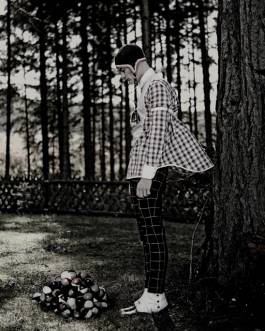
Alice Knackfuss
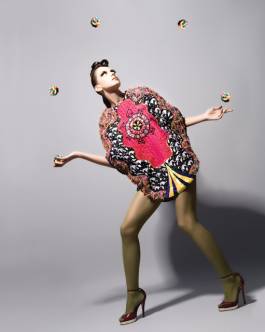
Ankur Gupta
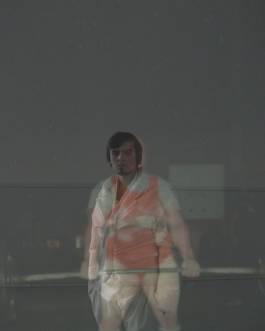
Annemarie Boesch
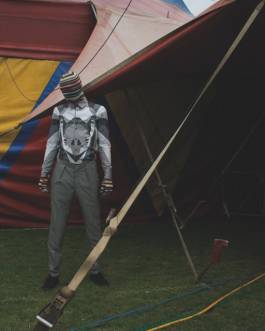
Bronwen Marshall
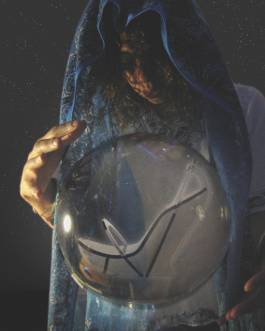
Chau Har Lee
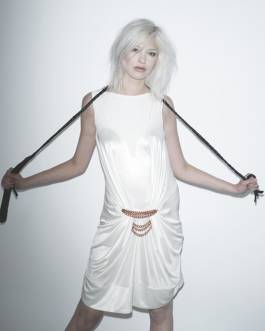
David Steinhorst
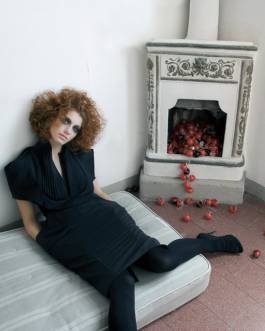
Deniz Demirsoy
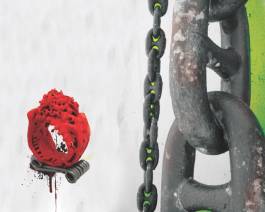
Doron Taubenfeld
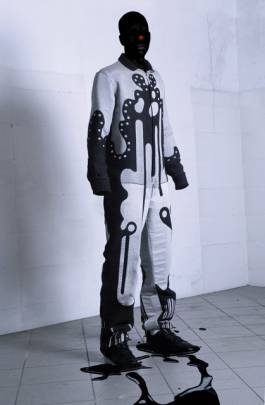
Elise Gettliffe
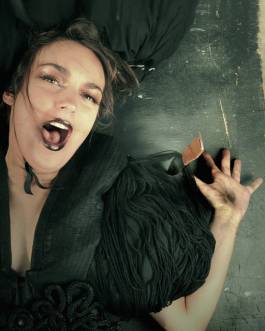
Erika Comin
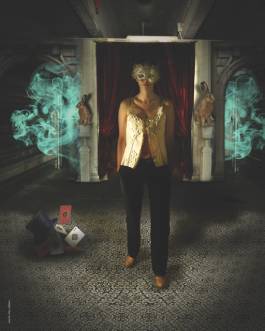
Gili Rozin Adi Singfer
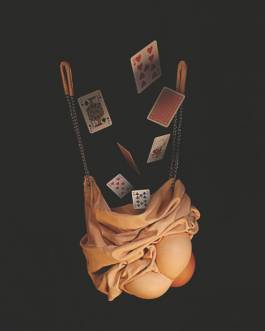
Helen Robotham
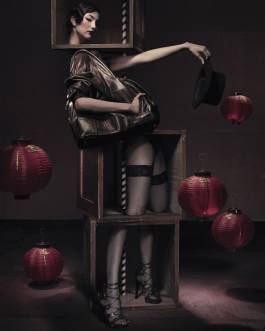
Hoiming Fung Baldwin Pui
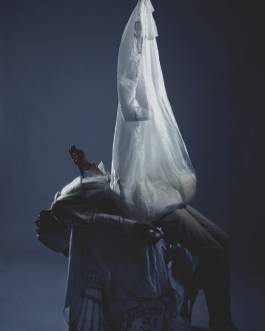
Jasper Chadprajong
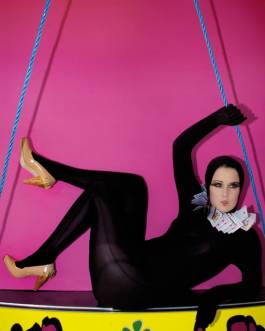
Joanne Stoker
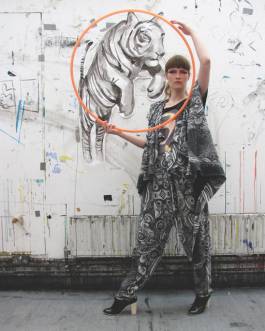
Johanne Kappel Andersen
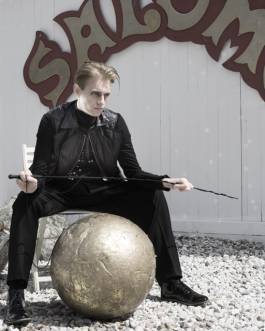
Josefine Jarzombek
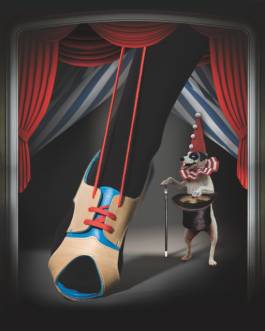
Juultje Meerdink
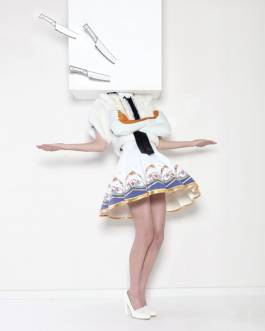
Karisia Paponi
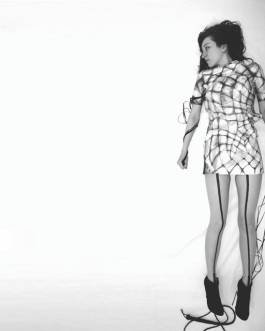
Liam Evans
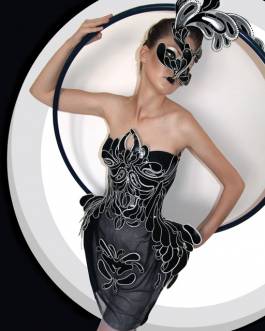
Maria Lavigina
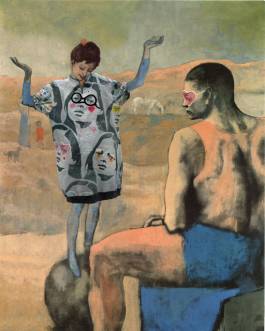
Masha Lamzina
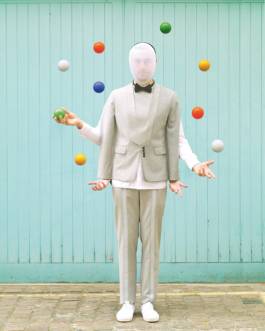
Mason Jung
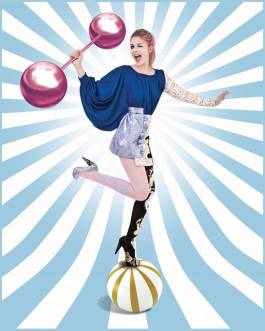
Michael Van Der Ham
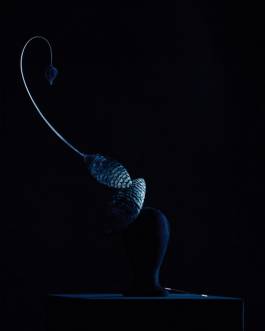
Nicholas Liu
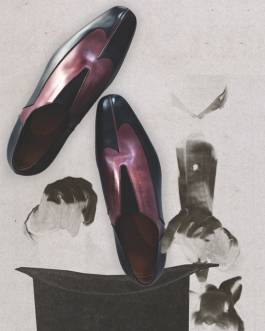
Nilay Erol
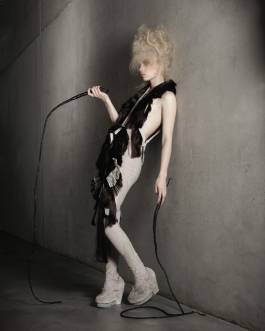
Saara Lepokorpi
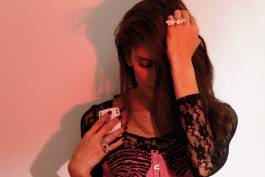
Sophie Billie Brahe
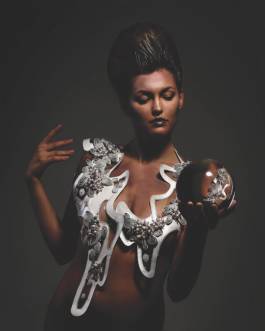
Tatiana Pogrebnyak
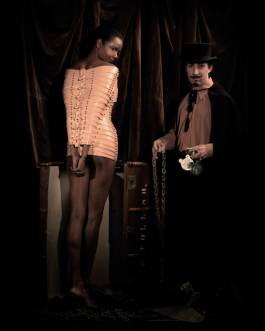
Una Burke
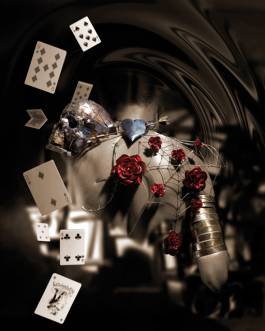
Valentim Quaresma
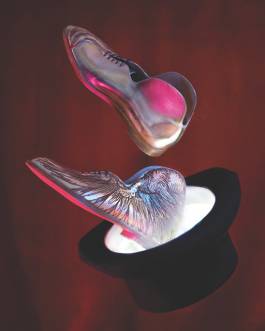
Weronika Lesniak
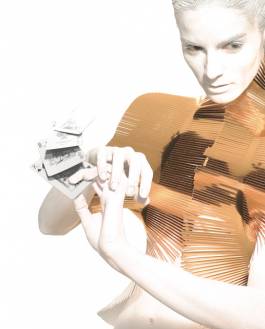
Yuima Nakazato
2025
“Forms Becoming Attitudes”
Conversations on Fashion Curating for the CURA Magazine
2009 - 2012
Ilaria Marotta, founding director of CURA magazine, was my collaborator at MACRO - Museum of Contemporary Art in Rome. In 2008, after we were all forced to leave the museum due to the change of the Mayor of Rome and consequently the museum’s new direction, Ilaria started a free-press magazine in 2009, for which she asked me to collaborate.
My column was called “Forms Becoming Attitudes” and in every issue I was contributing with texts or interviews to curators dealing with fashion display in museums and other platforms.
This must have been one of the very pioneering surveys on Fashion Curating, still a very new field, since all I spoke with were known within a very niche of like-minded professionals.
I started with Linda Loppa, a founding director of MoMu in Antwerp and, back then, a newly appointed director of Polimoda in Florence. Then followed conversations with Tomas Rajnai, Maria Luisa Frisa, Helena Hertov, Judith Clark, Barbara Franchin, Sabine Seymour, Kaat Debo, Valerie Steele, Emanuele Quinz and Luca Marchetti.
Most of these names are today established and recognised fashion scholars, curators and exhibition makers.
Barbara Franchin
Barbara Franchin founded International Talent Support (ITS), an emerging design competition and scouting platform, in 2002. ITS was created to provide support, visibility, and opportunities to young designers from around the world. Over the years, its jurors have included prominent figures such as Raf Simons, Nick Knight, Franca Sozzani, and Cathy Horyn. Past finalists have gone on to hold roles at Stella McCartney, Alexander McQueen, and Balenciaga, among many other brands.
Franchin was born and brought up in Trieste, Italy. She graduated with a degree in accountancy and initially worked in real estate for a short period. Her first professional encounter with fashion occurred after befriending a local dressmaker.
In early 2001, she launched Eve, a creative agency that employs concept and graphic designers, art directors, audiovisual professionals, and event planners. In 2002, Franchin launched the first edition of ITS following Eve's initial success. Selected through a long and rigorous process, the shortlisted designers are hosted in Franchin's hometown, Trieste, for its annual final, which draws hundreds of guests and members of the press. Besides promoting emerging designers through the competition itself, ITS also grants industry internships and placements at companies including Swarovski, Vogue, and Diesel.
In January 2019, ITS found a new 7,000-square-foot home in the building occupied by Fondazione CRTrieste. The new headquarters — named ITS Arcademy, to merge archive and academy — houses the organisation’s offices, as well as the ITS Creative Archive featuring outfits, accessories and talents’ portfolios gathered from the talent scouting contest’s past editions. Additionally, ITS Arcademy hosts workshops, educational and training activities involving former finalists, winners, and jurors.
https://itsweb.org
2010
BARBARA FRANCHIN: I CONSIDER MYSELF A SEISMOGRAPH
Dobrila Denegri: I would like to begin our conversation by discussing what inspired you to pursue a career in fashion: what educational background do you have, and how did you develop your career in this field?
Barbara Franchin: I “stumbled” into the fashion industry rather by chance... it was love at first sight. Towards the end of high school, I met a girl who was a designer in a small shop near my house. At first, I was her customer, but soon after, we began working together, and we spent five years making custom-made clothes. That's where I became fascinated by how a piece of fabric could be structured and transformed around the body, and I learned a lot about how to make a dress, about shapes, cuts, materials and techniques. Our paths then diverged because I realised what I really liked to do, what had become an irresistible passion: creating encounters, bringing things and people together and seeking the spark of creativity. So I discovered that the event I had in mind was what companies in the sector needed, and that's how my journey began. Ironically, my studies in accounting - which seemed so far removed from this sector - were essential in making my business venture possible.
DD: Could you tell us the story of ITS – what were the initial motivations, and how has this project evolved over the years?
BF: ITS was born from the desire to promote young creativity in all its forms and expressions, from the desire to give these young people the opportunity to show what they are capable of, in front of a competent audience made up of professionals in the sector who can help them continue on their path (or make them understand that it might be better to change direction...). Also from the need for a bridge between schools and the world of work. From the outset, I imagined including more creative expressions, creating a meeting place where there were no barriers or divisions, where people could share and exchange opinions, get to know each other and talk together about projects and possibilities. That is why, over the years, we have added photography and accessories to fashion as well as jewellery. As always, we have many “dreams in the drawer” and we already have projects ready to develop areas such as creative cooking, perfumes, videos and graphics... but for now, it has not yet been possible.
DD: The theme around which this column revolves is fashion curating. So far, we have spoken with Linda Loppa, Maria Luisa Frisa and Judith Clark, focusing mainly on exhibitions that have contributed to the development of a more articulate, and even more theoretical, reflection on the complex phenomenon that is fashion.
From your point of view, what is a “fashion curator”?
BF: I don't really know what a fashion curator is, let alone whether I am one or not. However, I do know what I consider to be the most interesting aspect of fashion: seeking out creativity wherever it may be found, travelling the world to discover it, selecting it and finally showcasing it, giving it a space from which to express itself. If this can be considered the task of a fashion curator, then I believe I fall into that category.
DD: Would you describe your activity as a “fashion curator”?
BF: I prefer to consider myself a seismograph. I record what happens, I show a mirror of contemporary life, the ‘here and now’ of young creativity, without judging.
DD: When discussing your practice, you have referred to responsibility and risk. What does it mean for you to take on these responsibilities?
BF: Taking them on means doing my job with profound intellectual honesty, taking responsibility for my choices and for the talents we have supported over the years. It means never ceasing to devote all my efforts to seeking out and supporting the best young talents, never doing anything superficially, with an open mind ready to question and make mistakes.
DD: Alongside the events you are organising to promote young talent, and I would say as a result of this activity, you have created a substantial collection of models and portfolios, effectively laying the foundations for a new museum of contemporary fashion. Could you tell us about your collection and its potential?
BF: In ten years of creative research, we have built up an impressive archive: over 150 outfits, 70 accessories, 530 photography projects, more than 9,000 portfolios... We are cataloguing fanatics, and we never throw anything away. Earlier, I mentioned a seismograph, and our archive is a veritable seismogram: it documents the evolution of creativity over the last decade, anticipating trends and revealing talents that have since exploded onto the scene. It is a unique heritage, of enormous value to the sector, an archive that exists nowhere else in the world. It captures, as if in a photograph, the creative expressions of young people who are still totally free from market constraints and from having to submit to production rules. We have been working for some time on an exhibition that will showcase and display to the public this material that has been “hidden” in our showroom until now. The potential of such an archive is obvious: a permanent museum could be set up, and travelling exhibitions could be organised. It represents a source of inspiration for the production of new creativity.
DD: Today, we can see that the dialogue between art, fashion and design is generating radical hybridisations that require a new codification, a new lexicon and a new form of presentation within exhibition structures. Fashion and design no longer seem so alien to the context of art. How does the “frame” within which a fashion artefact is placed affect its intrinsic value and meaning? And what might be the most suitable “frames” today? Could you imagine an ideal exhibition space for all the hybridisations that are emerging today between fashion and other disciplines?
BF: I don't think I can answer such a complex and multifaceted question in just a few words. The debate between content and container, particularly at a time of hybridisation of genres such as this, is endless and fascinating, but... I can only refer back to the previous question and say what I imagine for the ITS collection museum. We would like to call it ARCHIVIO, an active, evolving, constantly growing place... a “container” capable of accommodating such different elements. A clean, honest space, both a place of work and research. Certainly not an “altar” to creativity.
Published in cura.magazine issue 08
Alice Knackfuss
Ankur Gupta
Annemarie Boesch
Bronwen Marshall
Chau Har Lee
David Steinhorst
Deniz Demirsoy
Doron Taubenfeld
Elise Gettliffe
Erika Comin
Gili Rozin Adi Singfer
Helen Robotham
Hoiming Fung Baldwin Pui
Jasper Chadprajong
Joanne Stoker
Johanne Kappel Andersen
Josefine Jarzombek
Juultje Meerdink
Karisia Paponi
Liam Evans
Maria Lavigina
Masha Lamzina
Mason Jung
Michael Van Der Ham
Nicholas Liu
Nilay Erol
Saara Lepokorpi
Sophie Billie Brahe
Tatiana Pogrebnyak
Una Burke
Valentim Quaresma
Weronika Lesniak
Yuima Nakazato
INSTAGRAM
@EXPERIMENTS.FASHION.ART