


2025
2009
TOMAS RAJNAI: TO ME, FASHION IS A WAY TO EXPLORE OR POSE QUESTIONS
“Forms Becoming Attitudes”
Conversations on Fashion Curating for the CURA Magazine
2009 - 2012
Ilaria Marotta, founding director of CURA magazine, was my collaborator at MACRO - Museum of Contemporary Art in Rome. In 2008, after we were all forced to leave the museum due to the change of the Mayor of Rome and consequently the museum’s new direction, Ilaria started a free-press magazine in 2009, for which she asked me to collaborate.
My column was called “Forms Becoming Attitudes” and in every issue I was contributing with texts or interviews to curators dealing with fashion display in museums and other platforms.
This must have been one of the very pioneering surveys on Fashion Curating, still a very new field, since all I spoke with were known within a very niche of like-minded professionals.
I started with Linda Loppa, a founding director of MoMu in Antwerp and, back then, a newly appointed director of Polimoda in Florence. Then followed conversations with Tomas Rajnai, Maria Luisa Frisa, Helena Hertov, Judith Clark, Barbara Franchin, Sabine Seymour, Kaat Debo, Valerie Steele, Emanuele Quinz and Luca Marchetti.
Most of these names are today established and recognised fashion scholars, curators and exhibition makers.
Tomas Rajnai
Tomas Rajnai is an artistic director, having previously co-founded the Swedish creative collective ODD Projects. Rajnai has worked in New York and London, and currently lives in Stockholm, where he studied MA Curation at Stockholm University.
Based in Stockholm, ODD Projects encompassed a variety of disciplines, acting as a press and publicity agency to promote artists and designers. ODD Projects' work included the fashion tradeshow +46, progressive boutique Aplace and the magazines ODD and ODD At Large, as well as the official Stockholm Fashion Week magazine. Rajnai and ODD Projects also curated several different fashion shows, exhibitions and events in Stockholm, alongside a lecture series with a wide variety of international creatives.
As of 2020, Rajnai has been artistic director of O, a performing arts company in Sweden.
http://tomasrajnai.blogspot.com/
Andrea Ayala Closa and Bogomir Doringer – two of the most original emerging designers, who aim to challenge the very definition of fashion, which they feel is inadequate for their creations. She, Spanish, prefers to talk about “ways of rethinking clothing”, while he, Serbian, feels that his creations and the way he presents them are tools for making his own social and political statement.
The two designers were chosen by young Swedish curator Tomas Rajnai for the exhibition “AlterMode”, which was also conceived and created as a reflection on fashion and its intrinsic meaning, as analysed by German sociologist Georg Simmel at the beginning of the last century. This is the reason for continuing to investigate what the figure of the “fashion curator” can mean today, at a time when the most cutting-edge young designers seem to belong more to the world of art and exhibition spaces than to shop windows and showrooms.
Dobrila Denegri: I would like to ask you about the genesis of the exhibition “Alter/Mode - Worlds in-between: Fashion beyond clothes” and ways in which you wanted to explore, together with designers involved, creative processes and strategies that intersect art and fashion.
Tomas Rajnai: Over the years, I have been very interested in and often confused by the many worlds within fashion and the lack of clear terminology in the fashion world I know and come from. Many designers I have met and worked with in the past are not at all interested in the fashion world that discusses trends or next season; they have been part of a fashion system and struggle to see it from another perspective. They have been within a framework but have never truly felt at home. For me, fashion begins with the idea, the sketches, and the inspirational world where the designer seeks stimulus for the next project or collection. To me, fashion is a way to explore or pose questions; it invites someone to explore utopian or dystopian worlds. It feels very direct and impacts me profoundly. It is never about trends or seasons, at least not the kind of fashion I am interested in. However, discussing these questions has been difficult because the word "fashion" carries hundreds of different meanings.
I wanted to find ways in which I could explore this part. So I was asking: is it possible to separate fashion from trends, shopping and also the functionality of clothes? When I posed this question to designers and other professionals working in this field, I got as many answers as people I asked. It was a question that everyone had strong opinions about, answering with things like: if you can’t use it, it can’t be fashion, or that it had to relate to the body, etc. There were very strong reactions, which were really interesting to hear.
DD: What determined the choice of designers – Andrea Ayala Closa and Bogomir Doringer – that you involved in this project, and are there others that dwell in this hybrid “world in between” whom you find particularly significant? How is their work redefining notions of fashion and art? Are they able to create a new vocabulary that would be more adequate to define and describe their work?
TR: The exhibition “Alter/Mode - Worlds in-between: Fashion beyond clothes” was working through two contradictory sides: on the one side, at the Gallery Jonas Kleerup, I wanted to present the notion of “insideness”. This notion is something that I could see very much in Andrea Ayala Closa’s work. A sort of becoming part of her world, becoming one with the other visitors, but also becoming one with Ayala Closa’s world. I chose the gallery Jonas Kleerup since it’s a newly opened place and it really stands out from the “institutional” world. The earlier exhibitions at this gallery were not supported by a theoretical context but rather a feeling and strong power to present new artists and works, and in certain areas this is not always welcomed.
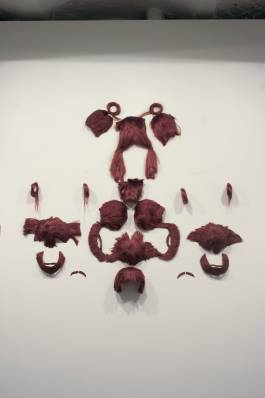
In the other gallery space called Weld, I wanted to work with the other side, which was “outsideness”, a notion which is really visible in Bogomir Doringer’s work. He creates a sort of dystopian world, but by becoming strong as an individual.
These two aspects, “outsideness” and “insideness”, met in this exhibition.
German sociologist George Simmel wrote in 1904 about fashion as something separate from trends and shopping for the first time; he discussed these contradictory aspects: on the one hand, we dress to look similar to a group, and on the other, we dress to distinguish ourselves from the group – and when these two sides meet, it becomes a way to understand fashion.
It is really interesting to see fashion from these two sides, and it was challenging to work on this issue through an exhibition.
In these two galleries, I worked with Live-streamed video walls, so if you were standing in Gallery Jonas Kleerup, you could see Andrea Ayala Closa’s work, but you could also look at the wall where a big projector was screening Bogomir Doringers' room live. And if you were standing in the gallery Weld, you could see Bogomir Doringers' work, but also look at the live screening wall where you could see Ayala Closas' work live. So the two rooms were trying to become one, and also trying to become one part instead of two contradictory sides, and trying to become fashion separated from trends, shopping and the functionality of clothes.
DD: I got the impression that besides London, Antwerp, Amsterdam and Arnhem, Stockholm is also becoming a creative hub. There are a number of interesting young designers, whose approach to fashion is very experimental and innovative… How do you see the Swedish, and generally Nordic, contemporary fashion scene, and which initiatives (magazines, exhibitions or similar types of projects) would you indicate as particularly interesting at the moment?
TR: When I started to be involved in the “alternative” fashion scene – I am saying alternative since we started outside the main area – trying to show the international press and buyers a new scene in Sweden that wasn’t about minimalism or blond furniture. People that we invited to Stockholm certainly got a shock seeing all these young new designers working with fashion in a different way. I think it's sort of a backlash; the new generation here is sick and tired of the lack of variation, and the wearable denim is not the only way of working with fashion in Sweden. I think there are a lot of interesting initiatives in the Nordic region, people who are engaged in creating new meanings and pushing the boundaries of fashion as we know it. Among designers or artists working with fashion as a medium I would like to mention Moon Spoon Saloon from Copenhagen, which is a really interesting initiative by the designer Sarah Sachs, photographer Noam Greist and artist Tal R, and its really interesting to see how they present a totally new world for each season, really engaging the story through history and contemporary situations and expressions. In Sweden, I would like to mention Anna Sarah Dåvik, who works in this borderline between fashion and art, and it’s really about her view on the world that can be lived through her projects.
But there are so many initiatives, magazines, photographers that I would like to mention as well as students that I am working with now and who are really affected by this new way of seeing fashion as a way of expression instead of dressing a target group. I think the future will show many new collaborations and projects from the Nordic Region. There are so many names and projects that are interesting at the moment.
DD: Would you define yourself as “fashion curator”? How could you describe this particular figure that recently emerged, and do you see differences between art and fashion curator in their competencies and approaches?
TR: Actually, this was something I wrote together with the exhibition “Alter/Mode”, but actually I am not a fashion curator, I am a curator, and I see no difference except that if you are interested in working more critically with fashion as the artistic expression.
DD: What are, according to you, potential platforms for the activity of a “fashion curator”?
TR: I think for curators working with fashion, it’s a huge potential. There is a rise in fashion exhibitions; almost every museum needs at least one fashion exhibition per year. This is because they see the number of people that visit the museum through the fashion exhibition, it’s a form that everyone can relate to, and it attracts a wider audience. This becomes a way for the museums to attract a new audience to see their collections. But I think that a lot of the exhibitions with fashion as the theme are often very basic and almost never critically viewed. Instead, it becomes an exhibition with clothes by multi-national companies and almost a way to get new sponsors for the museum. There are so many ways to work with a fashion exhibition in the same way as working with different exhibitions and mediums. At the moment, I am working on an exhibition where fashion is a part of many expressions. I think this is not something that the younger artists reflect upon, that they could work with clothes but also use film or sculpture as a medium, and when this is mixed, they can really express their ideas to the fullest. To categorise belongs more to the old days, I would say.
DD: Could you imagine a corresponding institution, such as a “kunsthalle”, but dedicated to fashion? If yes, what would it be like?
TR: A fashionkunsthalle would be a dream, but I would say that MoMu, the Fashion Museum in Antwerp, is like that; they focus on temporary exhibitions with situations or themes/designers that they connect to our time or history. They are also working with exhibitions in a very interesting way.
To imagine a kunsthalle devoted to temporary exhibitions only dedicated to fashion, I would build it more like a big project house showing all aspects of fashion. On one floor, I would invite fashion designers and present the ideas of the collections and projects before they become clothes, and also invite architects, artists, and choreographers to work together with the fashion designers to develop the ideas of the collection into a new medium. I would also devote one part to fashion films, both experimental films, fashion-show films and also fashion-inspired cinema films and documentaries, to have the first fashion cinema in the world. Another room would be more of a Utopian world, where a continuous group show would grow, and also to show the collections in relation to each other, but also to take away the borderlines between the fashion nations and nations outside Paris, London, Milano and New York. In this room, a new map would be drawn, continuously showing emerging talents at the beginning of their careers.
Pubblished in cura.artmagazine issue 03
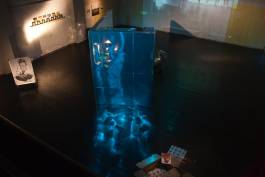
Bogomir Doringer, “Fashion and Despair”, exhibition view “ALTER/MODE A world in between: fashion beyond clothes”, Weld, Stockholm, 2009.
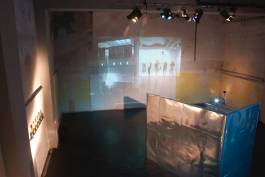
Bogomir Doringer, “Fashion and Despair”, exhibition view “ALTER/MODE A world in between: fashion beyond clothes”, Weld, Stockholm, 2009.
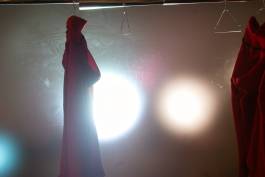
Bogomir Doringer, “Fashion and Despair”, exhibition view “ALTER/MODE A world in between: fashion beyond clothes”, Weld, Stockholm, 2009.
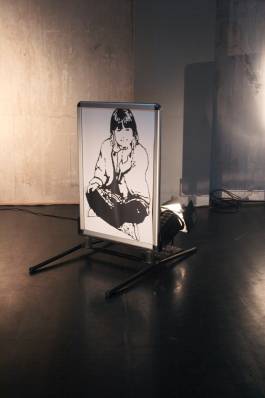
Bogomir Doringer, “Fashion and Despair”, exhibition view “ALTER/MODE A world in between: fashion beyond clothes”, Weld, Stockholm, 2009.
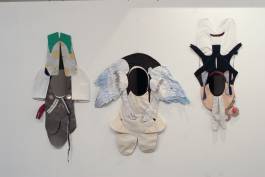
Andrea Ayala Closa, exhibition view “ALTER/MODE A world in between: fashion beyond clothes”, Galleri Kleerup, Stockholm, 2009.
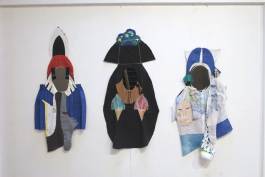
Andrea Ayala Closa, exhibition view “ALTER/MODE A world in between: fashion beyond clothes”, Galleri Kleerup, Stockholm, 2009.
Andrea Ayala Closa, exhibition view “ALTER/MODE A world in between: fashion beyond clothes”, Galleri Kleerup, Stockholm, 2009.
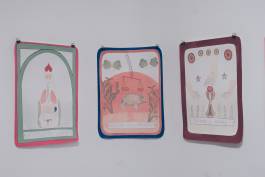
Andrea Ayala Closa, exhibition view “ALTER/MODE A world in between: fashion beyond clothes”, Galleri Kleerup, Stockholm, 2009.
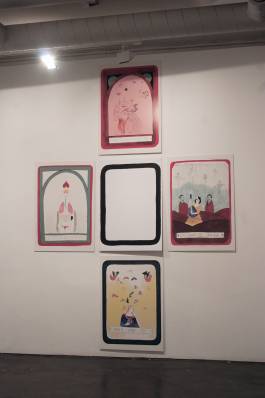
Andrea Ayala Closa, exhibition view “ALTER/MODE A world in between: fashion beyond clothes”, Galleri Kleerup, Stockholm, 2009.
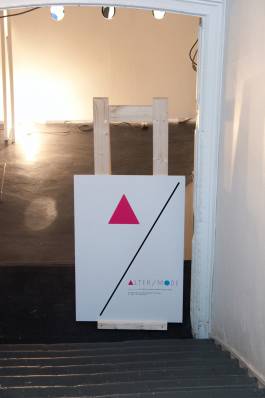
Exhibition view “ALTER/MODE A world in between: fashion beyond clothes”, Galleri Kleerup, Stockholm, 2009.
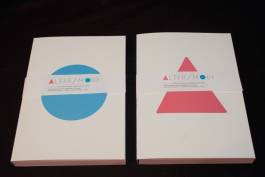
Catalogue “ALTER/MODE A world in between: fashion beyond clothes”
2025
“Forms Becoming Attitudes”
Conversations on Fashion Curating for the CURA Magazine
2009 - 2012
Ilaria Marotta, founding director of CURA magazine, was my collaborator at MACRO - Museum of Contemporary Art in Rome. In 2008, after we were all forced to leave the museum due to the change of the Mayor of Rome and consequently the museum’s new direction, Ilaria started a free-press magazine in 2009, for which she asked me to collaborate.
My column was called “Forms Becoming Attitudes” and in every issue I was contributing with texts or interviews to curators dealing with fashion display in museums and other platforms.
This must have been one of the very pioneering surveys on Fashion Curating, still a very new field, since all I spoke with were known within a very niche of like-minded professionals.
I started with Linda Loppa, a founding director of MoMu in Antwerp and, back then, a newly appointed director of Polimoda in Florence. Then followed conversations with Tomas Rajnai, Maria Luisa Frisa, Helena Hertov, Judith Clark, Barbara Franchin, Sabine Seymour, Kaat Debo, Valerie Steele, Emanuele Quinz and Luca Marchetti.
Most of these names are today established and recognised fashion scholars, curators and exhibition makers.
Tomas Rajnai
Tomas Rajnai is an artistic director, having previously co-founded the Swedish creative collective ODD Projects. Rajnai has worked in New York and London, and currently lives in Stockholm, where he studied MA Curation at Stockholm University.
Based in Stockholm, ODD Projects encompassed a variety of disciplines, acting as a press and publicity agency to promote artists and designers. ODD Projects' work included the fashion tradeshow +46, progressive boutique Aplace and the magazines ODD and ODD At Large, as well as the official Stockholm Fashion Week magazine. Rajnai and ODD Projects also curated several different fashion shows, exhibitions and events in Stockholm, alongside a lecture series with a wide variety of international creatives.
As of 2020, Rajnai has been artistic director of O, a performing arts company in Sweden.
http://tomasrajnai.blogspot.com/
2009
TOMAS RAJNAI: TO ME, FASHION IS A WAY TO EXPLORE OR POSE QUESTIONS
Andrea Ayala Closa and Bogomir Doringer – two of the most original emerging designers, who aim to challenge the very definition of fashion, which they feel is inadequate for their creations. She, Spanish, prefers to talk about “ways of rethinking clothing”, while he, Serbian, feels that his creations and the way he presents them are tools for making his own social and political statement.
The two designers were chosen by young Swedish curator Tomas Rajnai for the exhibition “AlterMode”, which was also conceived and created as a reflection on fashion and its intrinsic meaning, as analysed by German sociologist Georg Simmel at the beginning of the last century. This is the reason for continuing to investigate what the figure of the “fashion curator” can mean today, at a time when the most cutting-edge young designers seem to belong more to the world of art and exhibition spaces than to shop windows and showrooms.
Dobrila Denegri: I would like to ask you about the genesis of the exhibition “Alter/Mode - Worlds in-between: Fashion beyond clothes” and ways in which you wanted to explore, together with designers involved, creative processes and strategies that intersect art and fashion.
Tomas Rajnai: Over the years, I have been very interested in and often confused by the many worlds within fashion and the lack of clear terminology in the fashion world I know and come from. Many designers I have met and worked with in the past are not at all interested in the fashion world that discusses trends or next season; they have been part of a fashion system and struggle to see it from another perspective. They have been within a framework but have never truly felt at home. For me, fashion begins with the idea, the sketches, and the inspirational world where the designer seeks stimulus for the next project or collection. To me, fashion is a way to explore or pose questions; it invites someone to explore utopian or dystopian worlds. It feels very direct and impacts me profoundly. It is never about trends or seasons, at least not the kind of fashion I am interested in. However, discussing these questions has been difficult because the word "fashion" carries hundreds of different meanings.
I wanted to find ways in which I could explore this part. So I was asking: is it possible to separate fashion from trends, shopping and also the functionality of clothes? When I posed this question to designers and other professionals working in this field, I got as many answers as people I asked. It was a question that everyone had strong opinions about, answering with things like: if you can’t use it, it can’t be fashion, or that it had to relate to the body, etc. There were very strong reactions, which were really interesting to hear.
DD: What determined the choice of designers – Andrea Ayala Closa and Bogomir Doringer – that you involved in this project, and are there others that dwell in this hybrid “world in between” whom you find particularly significant? How is their work redefining notions of fashion and art? Are they able to create a new vocabulary that would be more adequate to define and describe their work?
TR: The exhibition “Alter/Mode - Worlds in-between: Fashion beyond clothes” was working through two contradictory sides: on the one side, at the Gallery Jonas Kleerup, I wanted to present the notion of “insideness”. This notion is something that I could see very much in Andrea Ayala Closa’s work. A sort of becoming part of her world, becoming one with the other visitors, but also becoming one with Ayala Closa’s world. I chose the gallery Jonas Kleerup since it’s a newly opened place and it really stands out from the “institutional” world. The earlier exhibitions at this gallery were not supported by a theoretical context but rather a feeling and strong power to present new artists and works, and in certain areas this is not always welcomed.
In the other gallery space called Weld, I wanted to work with the other side, which was “outsideness”, a notion which is really visible in Bogomir Doringer’s work. He creates a sort of dystopian world, but by becoming strong as an individual.
These two aspects, “outsideness” and “insideness”, met in this exhibition.
German sociologist George Simmel wrote in 1904 about fashion as something separate from trends and shopping for the first time; he discussed these contradictory aspects: on the one hand, we dress to look similar to a group, and on the other, we dress to distinguish ourselves from the group – and when these two sides meet, it becomes a way to understand fashion.
It is really interesting to see fashion from these two sides, and it was challenging to work on this issue through an exhibition.
In these two galleries, I worked with Live-streamed video walls, so if you were standing in Gallery Jonas Kleerup, you could see Andrea Ayala Closa’s work, but you could also look at the wall where a big projector was screening Bogomir Doringers' room live. And if you were standing in the gallery Weld, you could see Bogomir Doringers' work, but also look at the live screening wall where you could see Ayala Closas' work live. So the two rooms were trying to become one, and also trying to become one part instead of two contradictory sides, and trying to become fashion separated from trends, shopping and the functionality of clothes.
DD: I got the impression that besides London, Antwerp, Amsterdam and Arnhem, Stockholm is also becoming a creative hub. There are a number of interesting young designers, whose approach to fashion is very experimental and innovative… How do you see the Swedish, and generally Nordic, contemporary fashion scene, and which initiatives (magazines, exhibitions or similar types of projects) would you indicate as particularly interesting at the moment?
TR: When I started to be involved in the “alternative” fashion scene – I am saying alternative since we started outside the main area – trying to show the international press and buyers a new scene in Sweden that wasn’t about minimalism or blond furniture. People that we invited to Stockholm certainly got a shock seeing all these young new designers working with fashion in a different way. I think it's sort of a backlash; the new generation here is sick and tired of the lack of variation, and the wearable denim is not the only way of working with fashion in Sweden. I think there are a lot of interesting initiatives in the Nordic region, people who are engaged in creating new meanings and pushing the boundaries of fashion as we know it. Among designers or artists working with fashion as a medium I would like to mention Moon Spoon Saloon from Copenhagen, which is a really interesting initiative by the designer Sarah Sachs, photographer Noam Greist and artist Tal R, and its really interesting to see how they present a totally new world for each season, really engaging the story through history and contemporary situations and expressions. In Sweden, I would like to mention Anna Sarah Dåvik, who works in this borderline between fashion and art, and it’s really about her view on the world that can be lived through her projects.
But there are so many initiatives, magazines, photographers that I would like to mention as well as students that I am working with now and who are really affected by this new way of seeing fashion as a way of expression instead of dressing a target group. I think the future will show many new collaborations and projects from the Nordic Region. There are so many names and projects that are interesting at the moment.
DD: Would you define yourself as “fashion curator”? How could you describe this particular figure that recently emerged, and do you see differences between art and fashion curator in their competencies and approaches?
TR: Actually, this was something I wrote together with the exhibition “Alter/Mode”, but actually I am not a fashion curator, I am a curator, and I see no difference except that if you are interested in working more critically with fashion as the artistic expression.
DD: What are, according to you, potential platforms for the activity of a “fashion curator”?
TR: I think for curators working with fashion, it’s a huge potential. There is a rise in fashion exhibitions; almost every museum needs at least one fashion exhibition per year. This is because they see the number of people that visit the museum through the fashion exhibition, it’s a form that everyone can relate to, and it attracts a wider audience. This becomes a way for the museums to attract a new audience to see their collections. But I think that a lot of the exhibitions with fashion as the theme are often very basic and almost never critically viewed. Instead, it becomes an exhibition with clothes by multi-national companies and almost a way to get new sponsors for the museum. There are so many ways to work with a fashion exhibition in the same way as working with different exhibitions and mediums. At the moment, I am working on an exhibition where fashion is a part of many expressions. I think this is not something that the younger artists reflect upon, that they could work with clothes but also use film or sculpture as a medium, and when this is mixed, they can really express their ideas to the fullest. To categorise belongs more to the old days, I would say.
DD: Could you imagine a corresponding institution, such as a “kunsthalle”, but dedicated to fashion? If yes, what would it be like?
TR: A fashionkunsthalle would be a dream, but I would say that MoMu, the Fashion Museum in Antwerp, is like that; they focus on temporary exhibitions with situations or themes/designers that they connect to our time or history. They are also working with exhibitions in a very interesting way.
To imagine a kunsthalle devoted to temporary exhibitions only dedicated to fashion, I would build it more like a big project house showing all aspects of fashion. On one floor, I would invite fashion designers and present the ideas of the collections and projects before they become clothes, and also invite architects, artists, and choreographers to work together with the fashion designers to develop the ideas of the collection into a new medium. I would also devote one part to fashion films, both experimental films, fashion-show films and also fashion-inspired cinema films and documentaries, to have the first fashion cinema in the world. Another room would be more of a Utopian world, where a continuous group show would grow, and also to show the collections in relation to each other, but also to take away the borderlines between the fashion nations and nations outside Paris, London, Milano and New York. In this room, a new map would be drawn, continuously showing emerging talents at the beginning of their careers.
Pubblished in cura.artmagazine issue 03
Bogomir Doringer, “Fashion and Despair”, exhibition view “ALTER/MODE A world in between: fashion beyond clothes”, Weld, Stockholm, 2009.
Bogomir Doringer, “Fashion and Despair”, exhibition view “ALTER/MODE A world in between: fashion beyond clothes”, Weld, Stockholm, 2009.
Bogomir Doringer, “Fashion and Despair”, exhibition view “ALTER/MODE A world in between: fashion beyond clothes”, Weld, Stockholm, 2009.
Bogomir Doringer, “Fashion and Despair”, exhibition view “ALTER/MODE A world in between: fashion beyond clothes”, Weld, Stockholm, 2009.
Andrea Ayala Closa, exhibition view “ALTER/MODE A world in between: fashion beyond clothes”, Galleri Kleerup, Stockholm, 2009.
Andrea Ayala Closa, exhibition view “ALTER/MODE A world in between: fashion beyond clothes”, Galleri Kleerup, Stockholm, 2009.
Andrea Ayala Closa, exhibition view “ALTER/MODE A world in between: fashion beyond clothes”, Galleri Kleerup, Stockholm, 2009.
Andrea Ayala Closa, exhibition view “ALTER/MODE A world in between: fashion beyond clothes”, Galleri Kleerup, Stockholm, 2009.
Andrea Ayala Closa, exhibition view “ALTER/MODE A world in between: fashion beyond clothes”, Galleri Kleerup, Stockholm, 2009.
Exhibition view “ALTER/MODE A world in between: fashion beyond clothes”, Galleri Kleerup, Stockholm, 2009.
Catalogue “ALTER/MODE A world in between: fashion beyond clothes”
INSTAGRAM
@EXPERIMENTS.FASHION.ART