


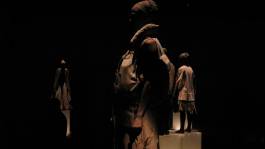
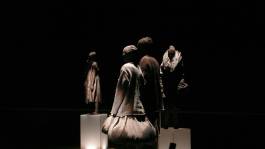
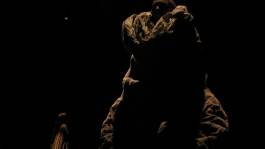
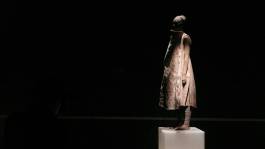
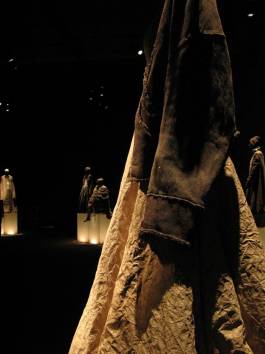
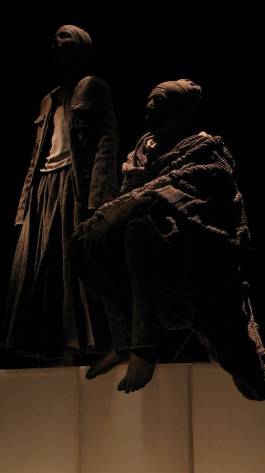
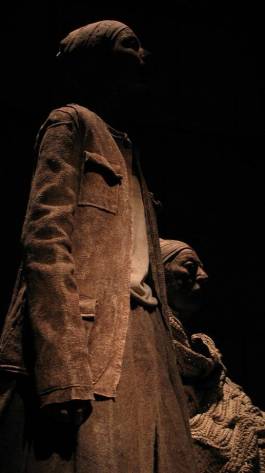
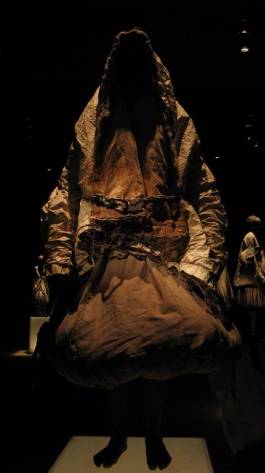
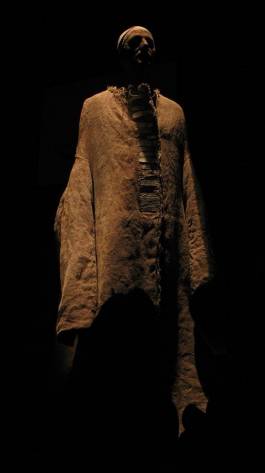
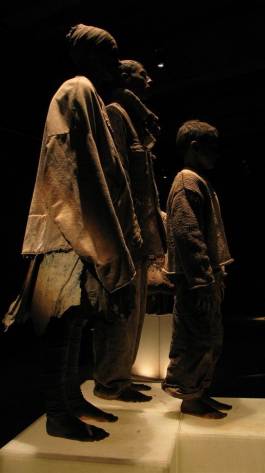
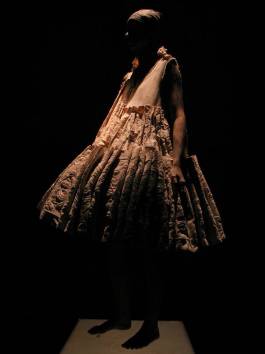
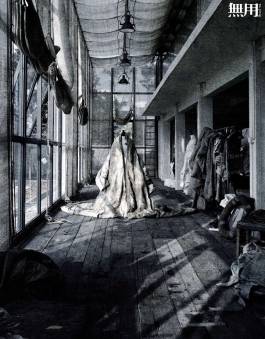
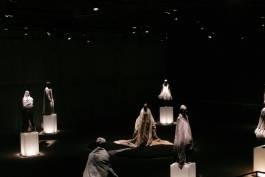
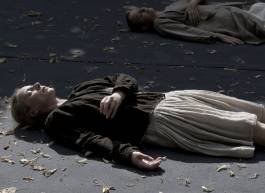
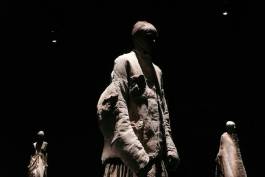
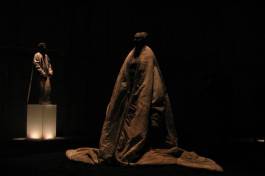
Ma Ke - Wayong, “The Eath”, 2007, collaboration with: graphic artist anothermountainman, film director Jia Zhang-ke, lighting master Thierry Dreyfus, makeup artist Stéphane Marais.
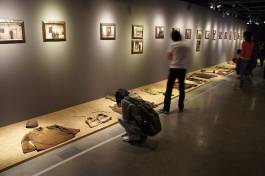
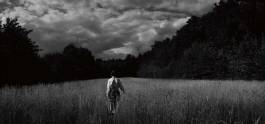
Ma Ke, “My Land My People”, 2011.
2015
MA KE "MY LAND MY PEOPLE"
Ou Ning
Bishan Commune: How to Start Your Own Utopia
Ou Ning is known for his diverse and polyhedral activity, which spans contemporary art and graphic design, architecture and urbanism, and extends to social and cultural activism. But what is less known about him is his early ‘love affair’ with poetry and publishing, his obsession with “architectural fiction” and his unstoppable urge for storytelling, which takes different literary shapes: poems, essays, short stories and numerous annotations. Ou Ning is a wanderer, a tireless traveller through different urban and rural landscapes, distant geographies and infinite literary worlds. He describes himself as restless, as someone who is permanently on the move, feeling at home everywhere and suffering from “incoherent homesickness” at the same time.
Ou Ning, with his nomadic imagery and his prolific writings, annotated in what is a traveller’s diary par excellence - a Moleskine notebook - finds in the Florentine National Library an ideal place for a temporary settling. At Polimoda’s “Momenting the Memento” event, he is showing, for the first time in Italy, the four-year effort he has made to restart the rural reconstruction movement in China through art and education in his community-based “Bishan Project”.
Ou Ning is fascinated by “architectural fiction”, with Calvino’s “Invisible Cities”, Edward Carey’s “Observatory Mansions”, Fritz Lang’s “Metropolis”, Kubrick’s “2001: A Space Odyssey”, Ridley Scott’s “Bladerunner”, Peter Greenaway’s “The Belly of an Architect” and other books or films pervaded by utopian and dystopian visions. The same type of vision connotes contemporary China: a place in such rapid transformation that it appears as a piece of “architectural fiction” itself. Ou Ning’s work is all about that new, contradictory China, where insatiable new cities are swallowing villages, where concrete is covering fields and deserts, and rapid urbanisation is becoming a synonym for the proliferation of soulless production conglomerates and pollution.
“Bishan Comune” is Ou Ning’s critical stand against all of this. It’s a village treasuring old architecture and traditions, which every year becomes a meeting place for contemporary artists, architects, designers, fashion designers, musicians and filmmakers who work together to create an alternative social model, a kind of commune vowed to bring new forms of education and emancipation among the rural population of Southern China.
“Bishan Project” is a social experiment, utopian and anarchic in spirit, idealist yet pragmatically engaged to make a difference. It is a ‘factory’ of ideas and new creative approaches, but also a site for preserving knowledge about dying-out crafts. It is a ‘country’ with its own symbols (coat-of-arms, flag, money) as well as a prototype of a more egalitarian social structure, which tends to slip out from the rules of the dominant capitalistic market system. In the “Bishan Comune”, progress stands for an intellectual value; it is equivalent to sustainability and to the human ability to integrate with the cycles of nature.
Like similar artistic initiatives such as “AVL-Ville” - Atelier Van Lieshout’s 'free state' established in the port of Rotterdam, “The Land” - Rirkrit Tiravanija and Kamin Lertchaiprasert’s ‘free farming’ project in Thailand, Jorge and Lucy Orta’s meta-state “Antartica” or Slovenian collective NSK’s artist-state-passports-issuing action, Ou Ning’s “Bishan Comune” is a trigger for reflecting about the relation between individual and collective. In the moment when processes of globalisation and neoliberalism are devastating the environment and depriving people of their elementary rights in the name of “progress”, this kind of artistic activism is an invitation to envision, embrace, and create new social and cultural paradigms.
Ma Ke
My Land My People
Ou Ning’s “Bishan Commune” embraces a wide range of creative practices with the aim of reconnecting craft with art, bridging the gap between new and old, between the futuristic and the ancestral. In this attempt, it is perfectly in tune with the philosophy of one of the most fascinating figures of Chinese contemporary fashion: Ma Ke. They both share the same attention towards Chinese cultural tradition and its roots and ramifications, which entangle everything: history, spirituality, ethics, people’s mentality and wisdom. They both seek ways to address social cleavages caused by China's cultural and economic boom.
This is the primary motive for laying special focus on Ma Ke’s project “My Land My People” at the Italian premiere of “Bishan Commune” at the National Library, within the frame of the “Momenting the Memento” event.
With the “My Land My People” project, Ma Ke takes us on a journey through places that seem far away and remote, not just geographically but also temporally. They are the face of that China which is about to be swept away by the country’s own hunger for modernisation and progress.
Thus, this project, just as Ma Ke’s art&fashion label Wuyong (literally translated ‘useless’), is all about retrieval: images and garnets are like fragments of some lost time, which she recovers and delicately transforms into something new. They are testimonies of her creative process, which seems slow and immersive, just as calligraphic writing or the ceremony of tea can be. Designing clothes for her is like a ritual; it freezes time, allowing us to feel, relish, and discover another temporal dimension and another state of mind. It's a state of mind akin to the sense of wonder before the marvels of nature. It demands silence and offers peace. It’s a precondition for creating a different type of fashion through garments that appear almost magical for their aura of timelessness, yet remain strongly evocative, like a piece of collective memory, in which different, almost opposite cultural codes are intermixed: the ancestral Orient is interwoven with the post-industrial Occident.
Ma Ke’s work carries an ethical and engaged message: fashion, as art and culture at large, must raise awareness of the environmental threats our world faces. It has to be a way of interconnecting with nature, which she describes as a model that fashion should follow since “it launches only four collections - the four seasons - every year. Yet, none of them has ever been boring.”
Ou Ning (b. 1969, Zhangjiang, Guangdong, China) as an activist is a founder of U-thèque, an independent film and video organization and “Bishan Commune”, an intellectual group who devote themselves to rural reconstruction movement in China; as an editor and graphic designer, he is known for his seminal book “New Sound of Beijing”; as a curator, he initiated the festival “Get It Louder” (2005, 2007,2010) and launched the sound project “Power Station”, co-organized by Serpentine Gallery and Astrup Fearnley Museum of Modern Art; as an artist, he is known for the urban research projects such as “San Yuan Li”, commissioned by 50th Venice Biennale (2003), and “Da Zha Lan", commissioned by the Kulturstiftung des Bundes. He is a frequent contributor to various magazines, books and exhibition catalogues and has lectured around the world. In 2009, he was appointed chief curator of the Shenzhen & Hong Kong Bi-City Biennale of Urbanism and Architecture, and was chosen as a jury member for the 8th Benesse Prize at the 53rd Venice Biennale. He is now the curator of “The Solutions: Design and Social Engineering” for the 2011 Chengdu Biennale and the founder of the new literary bimonthly “Chutzpah Magazine”, launched in 2011. He’s based in Beijing and is the director of the Shao Foundation and a member of the Asian Art Council 2011 at the Guggenheim Museum.
Ma Ke (b. 1971, Changchun, China) is one of the most prolific fashion designers working in China today. She graduated from the Suzhou Institute of Silk Textile Technology in 1992 and studied womenswear at Central Saint Martins in London. In 1996, she set up her own label, Exception de Mixmind. Ma Ke's designs are celebrated for their use of environmentally friendly fabrics and recycled materials, and for their manufacture using traditional dyeing, weaving and embroidery techniques, most notably those of the Dong people of Southern China. Ma Ke's interest in the crossover between contemporary art and fashion led her to establish the artistic brand Wuyong (Useless) in 2006. Wuyong examines the concept of 'uselessness' and how this interpretation varies across different perspectives.
Published on the Polimoda website during the IFFTI Conference
Ma Ke - Wayong, “The Eath”, 2007, collaboration with: graphic artist anothermountainman, film director Jia Zhang-ke, lighting master Thierry Dreyfus, makeup artist Stéphane Marais.
Ma Ke, “My Land My People”, 2011.